If your house smells like smoke, you have three realistic choices: clean it yourself, pay for professional remediation, or sell as-is to a buyer who accounts for the smell in the offer. Which one is right depends on how deep the odor goes, how much cash and time you have, and how much a conventional buyer’s discount would cost you. This guide walks through each path with real cost figures, what Rhode Island law expects you to disclose, and how to decide.
TL;DR
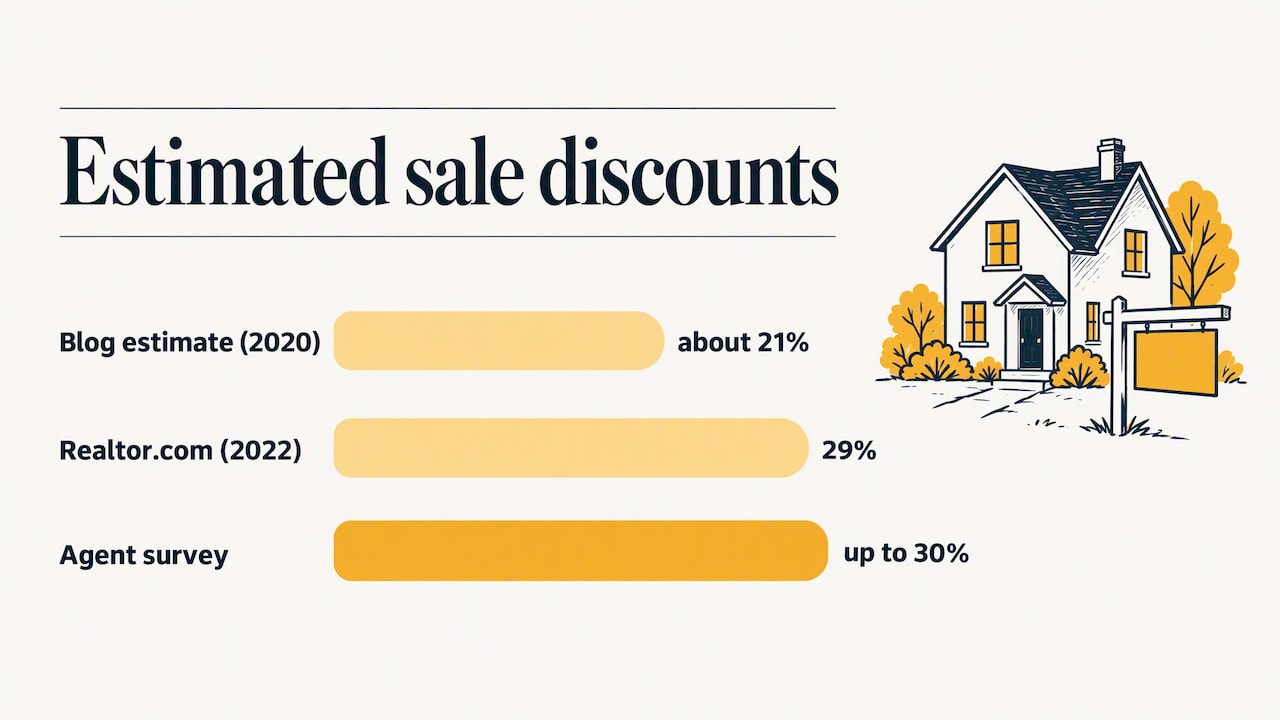
- Indoor smoking can cut a home’s sale price substantially. Published estimates range from about 21% to 30%, and the most-cited figure is 29%.
- Air fresheners and open windows do not fix the problem. Cleaning surfaces and replacing saturated materials such as carpet does far more.
- Professional remediation typically runs $2,000 to $12,000 and takes 1 to 5 days, longer for complex jobs.
- Rhode Island sellers must disclose known deficient conditions in writing before signing a purchase agreement, so hiding the smell is not an option.
- If you cannot afford or wait for remediation, selling as-is for cash avoids the repair-and-showing cycle altogether.
Table of Contents
- What smoke odor does to a sale
- Why smoke smell is so hard to remove
- What you can do yourself
- When you need a professional, and what it costs
- Disclosure: what Rhode Island sellers must say
- Three ways to sell a smoke-affected house
- Our perspective
- Selling as-is to Rhody Home Buyer
- A practical order of operations
- FAQ
- Sources
What smoke odor does to a sale
Buyers decide quickly. Smell is one of the first things they register at the door, and smoke is among the hardest to explain away. Studies cited by Realtor.com in 2022 found that homes with remnants of indoor smoking can sell for 29 percent less than comparable properties. Other estimates vary: a survey of real estate agents put the hit at as much as 30%, while a 2020 industry blog estimated about 21% nationally for a heavily smoked-in house.
Treat those numbers as a range, not a quote for your home. They come from surveys and estimates, not from an appraisal of your property. But the direction is consistent: a house that smells of smoke gets lower offers, fewer showings that turn into second visits, and more requests for credits at inspection.
On a $400,000 house, even the low end of that range is tens of thousands of dollars. That is the number to compare against what cleaning or remediation would cost you.
Why smoke smell is so hard to remove
Smoke is not only an airborne smell. Particles and residue settle into drywall, ceilings, carpet, padding, curtains, cabinets and ductwork, then slowly release odor again. The CDC says smoke particles can migrate throughout a home, even when smoking was confined to one room, and that there is no safe level of secondhand smoke exposure.
Researchers at Lawrence Berkeley National Laboratory describe how tobacco residue on surfaces can react with indoor ozone and nitrous acid, forming ultrafine particles and tobacco-specific nitrosamines. This residue is often called thirdhand smoke. It is why a house can smell fine on a cool day and reek in July, and why a fresh coat of paint over stained walls often fails.
Fire-restoration expert Ragsdale, quoted by U.S. News, notes that smoke persists because residue stays in appliances, cabinets, walls, ceilings and ventilation components. Anything you skip becomes the source of the smell that comes back.
What you can do yourself
DIY cleaning makes sense when the smoke came from light, occasional smoking, a small kitchen incident, or a single room. It costs mostly time and supplies. Work from the top of the room down, and work in this order.
Start with the source materials
Remove anything that is both porous and saturated. Old carpet, carpet padding, upholstered furniture, mattresses and heavy drapes hold smoke. United Policyholders’ restoration guidance says insulation, carpet padding, carpets and upholstered furniture can retain smoke and may need removal when the odor persists. Tossing them is often cheaper than fighting them.
If the pile of furniture, boxes and old belongings is part of the problem, a cleanout before cleaning makes every later step faster. A cleanout plan for photo-ready listings lays out how to clear a house in a couple of weeks.
Clean hard surfaces thoroughly
Oklahoma State University Extension’s guidance recommends cleaning interior walls and hard surfaces, cleaning or deodorizing carpets, upholstery, window coverings and mattresses, and having HVAC units and ductwork professionally cleaned. In practice that means:
- Vacuum floors, upholstery and ceilings with a HEPA-filter vacuum.
- Wash walls, ceilings, trim, windows and light fixtures with a degreasing cleaner or a vinegar solution.
- Wipe the insides of cabinets, closets and appliances.
- Launder or professionally clean curtains and soft goods.
- Replace the furnace filter and have ducts cleaned.
A 2023 study of a smoke-contaminated house found that surface cleaning reduced indoor smoke VOC concentrations more effectively than portable air cleaners, and held up longer than opening windows. Surfaces are where the work is.
If the scale of cleaning is beyond a weekend, a professional deep clean before listing can cover the surfaces, though a general cleaner is not the same as smoke remediation for a heavily smoked house.
What does not work
The CDC says that opening windows and running fans, air conditioners, air purifiers or ventilation systems does not get rid of secondhand smoke, which travels through cracks and ventilation. Air fresheners and candles only cover the smell for a day. Oklahoma State’s extension also cautions that ozone generators present health and property dangers and should not be used by homeowners themselves.
One more risk with masking: a house sprayed for showings that smells again after closing invites a dispute. If you knew about the underlying smoke damage and said nothing, you may be exposed legally.
Paint and sealing
Primer and paint help only after the surfaces are cleaned. Sealing is a last step in severe cases, which Ragsdale describes as something to do when needed after thorough cleaning. Paint over residue and the odor can bleed back through.
When you need a professional, and what it costs
Call a remediation company when the smell is in every room, comes back after cleaning, follows a fire, or comes from the HVAC system. Smoke in ductwork gets redistributed when you restart the system, so United Policyholders recommends cleaning and testing HVAC equipment and ductwork before turning it back on.
Here is what published cost guides report:
| Item | Reported cost | Source |
|---|---|---|
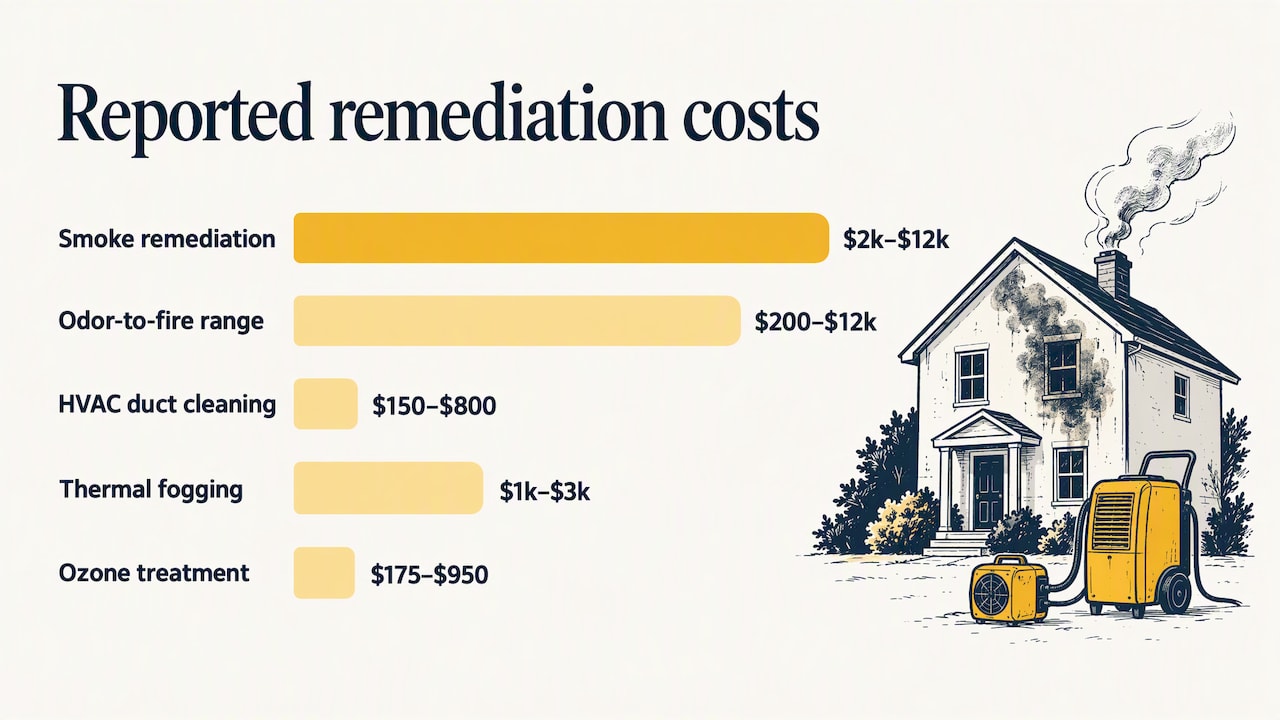
| Whole-house smoke remediation | $2,000 to $12,000, typically 1 to 5 days, up to two weeks for complex jobs | HomeGuide |
| Cigarette smoke, complete home restoration | $2,000 to $8,000 on average | HomeGuide |
| Full range, from light odor to fire damage | $200 to $12,000 | Angi |
| HVAC duct cleaning | $150 to $800 | Angi |
| Thermal fogging | $1,000 to $3,000 | Yelp cost guide |
| Ozone treatment | $175 to $950 | Yelp cost guide |
These are national averages. Get at least two written quotes from Rhode Island contractors, and ask whether the price includes replacing carpet, padding and drywall, which are often separate line items.
Remediation does not always pay for itself. If it costs $8,000 and recovers a discount of $40,000, it is worth it. If your house also needs a roof, a kitchen and a new furnace, odor work is one expense among many, and you may do better selling the house in its current condition.
Disclosure: what Rhode Island sellers must say
You cannot sell your way around the smell by staying quiet. Under Rhode Island General Laws §5-20.8-2, a seller must deliver a written disclosure as soon as practicable and no later than before signing an agreement to transfer the property. It must state every deficient condition of which you have actual knowledge. The statute covers a house or building with one to four dwelling units.
The statutory form also asks about fireplaces, chimneys, wood-burning stoves, heating systems, electrical systems, hazardous waste or contaminants, mold, ventilation-system modifications and moisture damage. Those are items that may reveal or contribute to smoke-related conditions. If you know about smoke damage, lingering odor, or a past fire, talk to a Rhode Island real estate attorney about how to word it.
Smoke detectors are a separate matter. A 2012 Connecticut legislative research report states that sellers of occupied Rhode Island residential properties must have required smoke detectors installed before transfer and provide a fire-department certificate showing inspection within 60 days of sale. The state sales-disclosure form also asks whether smoke and carbon-monoxide detectors are installed and working, and it points sellers to the local fire marshal for property-specific requirements. That is about detectors, not odor. Rules and fees change, so confirm with your town’s fire department before you list.
Three ways to sell a smoke-affected house
| Clean and list | Remediate and list | Sell as-is for cash | |
|---|---|---|---|
| Upfront cost | Supplies, labor, possible new flooring | Often $2,000 to $12,000 | None to you |
| Time before sale | Days to weeks, plus listing time | Remediation, then listing and showings | Offer can come quickly; see how we close below |
| Price risk | Smell can persist and draw discounts | Lowest odor risk | Offer reflects the home’s condition |
| Showings and buyer financing | Yes | Yes | No |
| Best when | Light, localized smoke | Heavy odor, strong market, time to spare | Tight on money or time, or other repairs needed |
The first two make sense for sellers who have the budget and time. The third is for sellers who do not, such as an inherited house, a household in financial hardship, or a landlord with a unit nobody wants to tour.
Our page on net proceeds when you repair or sell as-is shows how to run the math on your own numbers. Compare what you would net after remediation, agent commissions, carrying costs and months of showings against a cash offer. If you are weighing a conventional discount, our breakdown of what to expect when you skip repairs covers it too.
Our perspective
We buy houses in Rhode Island as-is, and smoke odor comes up often: homes where someone smoked for decades, estates where the family cannot face the cleanup, rentals after a tenant left. The pattern we see is that sellers overestimate how well a quick fix will work and underestimate how long a traditional sale takes once buyers smell the house.
Our advice is plain. If the smell is mild and you have the time, clean the surfaces and replace the carpet. If it is in the walls and the ducts, price the remediation before you decide anything. And if you are already stretched, do not spend money chasing a smell you may not fully win. We make offers based on the After Repaired Value, which means we account for what the house is worth once it is fixed and deduct the work it needs. You skip cleaning, repairs, agent fees and commissions, and you close on a timeline that suits you. We would rather give you a clear number and let you compare it with your other options than push you into anything.
— Dave
Selling as-is to Rhody Home Buyer
If cleaning and remediation are not realistic, we can make you a cash offer on the house exactly as it is, smoke odor included. No agent fees, no commissions, no cleaning, no repairs. Start at Rhody Home Buyer or read how cash home sales work first. Our guide to selling as-is and closing in 7 to 21 days explains the timeline in more detail.
A practical order of operations
If you are still deciding, this sequence avoids wasted money:
- Find out how deep the problem goes. Smell the house after it has been closed up on a warm day. Check the closets, the HVAC vents and the ceiling above where people smoked.
- Get two remediation quotes and one cash offer. Compare all three against your realistic net from a traditional listing.
- Write down what you know about smoke, fire, or odor history, and review it with a Rhode Island real estate attorney before any disclosure form is signed.
- Choose the path that nets you the most after costs and time, not the one with the highest headline price.
Our pages on accepting a cash offer by net proceeds and cash offers versus financing can help with step two.
FAQ
Do I have to tell buyers my house smells like smoke?
In Rhode Island you must disclose, in writing, every deficient condition you actually know about before signing a purchase agreement. Smoke damage, a past fire or contamination you know of belongs in that conversation. Ask a Rhode Island real estate attorney how to describe it on the form.
How long does cigarette smell last in a house?
Without real cleaning it can last for years, because residue stays in walls, ceilings, carpet and ducts and keeps releasing odor. Surface cleaning and removing porous materials is what shortens it. Airing the house out does not, according to the CDC.
Is it safe to live in a house that has been smoked in?
The CDC says no level of secondhand smoke exposure is safe, and residue on surfaces can react to form harmful compounds. If you or someone you are selling to has asthma, young children or other health concerns, ask a doctor about the risk and have the house cleaned or remediated before anyone moves in.
Can I just sell my smoke-damaged house as-is?
Yes. You can sell to a cash buyer who purchases homes in any condition, and the offer will reflect the smell and any repairs needed. You still follow Rhode Island disclosure rules. We explain how this works on our as-is selling page.
Sources
- What to Know When Buying a House From Smokers, Realtor.com
- How to get rid of thirdhand smoke in your home, Yelp
- Improve Your Home Value Without Spending a Dime, Santiago Properties
- Preventing Exposure to Secondhand Smoke in the Home, CDC
- After the Smoke Clears: Indoor Chemistry of Thirdhand Smoke, Lawrence Berkeley National Laboratory
- How to Repair Your House After a Fire, U.S. News
- Smoke Restoration Guide, United Policyholders
- Removing Smoke Odor Following A Fire, Oklahoma State University Extension
- The persistence of smoke VOCs indoors, PMC
- How Much Does Smoke Remediation Cost?, HomeGuide
- How Much Does Smoke Remediation Cost?, Angi
- Cost of Damage Restoration, Yelp
- Rhode Island General Laws §5-20.8-2
- Smoke Detectors and the Seller’s Obligations, Connecticut General Assembly
- Rhode Island Real Estate Sales Disclosure Form
- Prepare Your Home for Sale with a Deep Clean
- Realtor Cleanout Playbook