
Yes, you can sell a fire-damaged house, and you have three real paths: repair the home and list it, sell it as-is to a cash buyer, or sell just the land. The right choice depends on how bad the damage is, how much cash you have on hand, where your insurance claim stands, and how fast you need to close. There’s no universal best answer, only the one that fits your numbers.
TL;DR:
- Fire damage often makes homes ineligible for traditional financing, leading cash buyers to dominate and offers to range from 30% to 60% below pre-fire value.
- Repairing a house can recover about 60% to 80% of its pre-fire value but requires time, permits, and upfront costs that may not make sense if repairs run over schedule or costs are underestimated.
- Selling as-is to a cash buyer takes 7 to 14 days, with offers based on after-repair value minus repair costs and risks; getting multiple bids improves negotiating leverage.
- Selling the land is the fastest path if rebuilding is unviable, with lot value calculated from comparable sales minus demolition and permit costs, appealing mainly to builders and developers.
- Having detailed documentation, including fire reports, assessments, bids, permits, and insurance records, is crucial before deciding which selling path maximizes net proceeds.
Table of Contents
- How Fire Damage Affects Home Value and Buyer Eligibility
- Option A: Repair and List on the Open Market
- Option B: Sell As-Is to a Cash Buyer or Investor
- Option C: Sell the Land (Lot Sale or Teardown)
- Comparing Net Proceeds and Timelines Across All Three Paths
- Insurance Payouts and Selling: What to Get in Writing
- Disclosures and Documents That Protect You Legally
- Your Action Checklist for Selling After a Fire
- What Rhody Home Buyer Sees on the Ground
- What the Conventional Advice Gets Wrong
- Get a Cash Offer From Rhody Home Buyer
- Where to Learn More
- Sources
- FAQ
How Fire Damage Affects Home Value and Buyer Eligibility
Fire damage isn’t one thing. It falls into rough tiers, and each tier changes who’s even allowed to buy your house.
Partial structural damage, damaged framing, compromised roof sections, electrical system issues, cuts deeper, and this is where lenders start backing away. Total loss, where the structure isn’t safely habitable, essentially removes traditional buyers from the equation entirely.
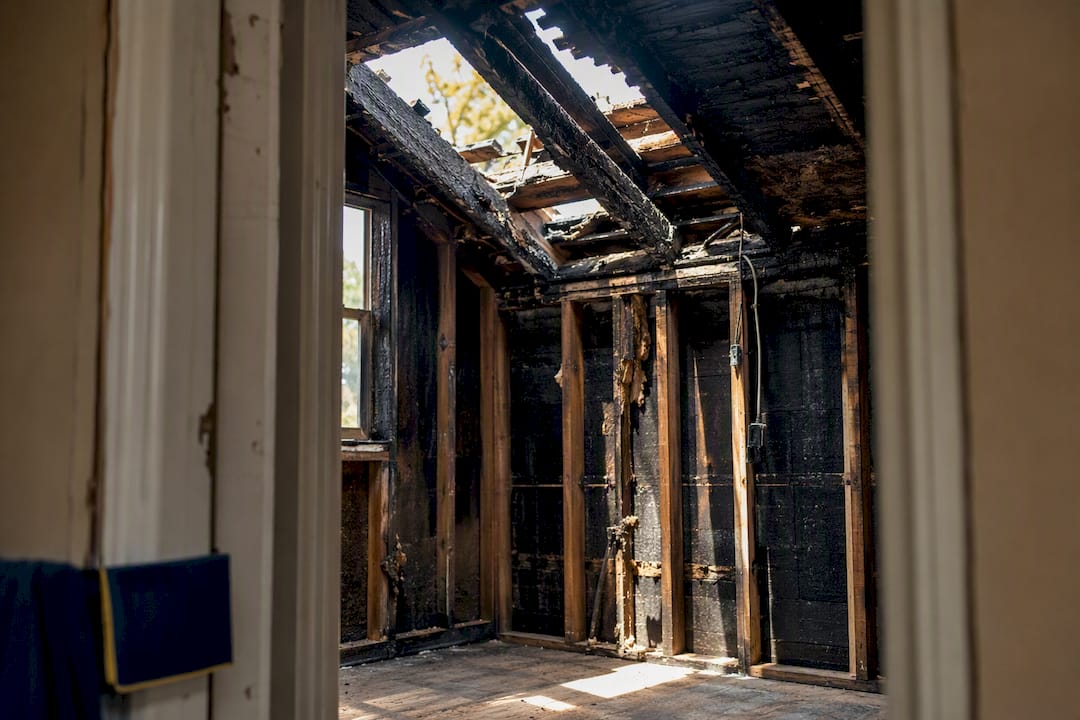
That last point matters more than most sellers realize. Mortgage lenders require the home to meet basic habitability standards before they’ll fund a purchase, and an appraiser flags major fire damage automatically. That’s why cash buyers dominate this niche: they’re not waiting on a bank’s approval.
Hidden damage compounds the problem. A house that looks repaired can still hide:
- Water damage from firefighting efforts, which invites mold within days
- Compromised electrical wiring that an inspector won’t clear without a full rewire
- Weakened structural members hidden behind new drywall
- Lingering smoke odor trapped in insulation or ductwork
Buyers price all of that uncertainty in. Even a cosmetic-looking fix gets discounted if the paperwork proving the repair doesn’t exist.
Option A: Repair and List on the Open Market
Repairing first makes sense when the damage is minor to moderate, your insurance payout covers most of the work, and you have the cash or credit to cover the gap. It’s the path that gets you closest to full pre-fire market value, but it demands patience most sellers in a fire situation don’t have.
The realistic sequence looks like this:
- Get a professional damage assessment and a written scope of work.
- Pull permits before any structural, electrical, or plumbing repair begins.
- Complete repairs and pass required inspections.
- Order a fresh appraisal reflecting the After Repaired Value (ARV).
- List with full disclosure of the fire history and repair documentation.
Restoration on moderate damage commonly recovers an estimated 60% to 80% of pre-fire value once the work is done and inspected. But that number only holds if you calculate net proceeds correctly: sale price minus repair cost minus carrying costs (mortgage, insurance, property taxes) for however many months the work and listing take.
Pro Tip: Run two spreadsheets before you commit. One assumes repairs finish on schedule; one assumes they run three months over. If the “late” scenario still beats selling as-is, repair-and-list is worth it. If it doesn’t, don’t gamble your cash on the optimistic version.
Option B: Sell As-Is to a Cash Buyer or Investor
Cash buyers and investors purchase fire-damaged homes precisely because they don’t need financing approval, and they build repair costs plus a margin of uncertainty directly into their offer. That uncertainty premium, often called a buyer risk discount, is the price you pay for speed and zero repair obligation.
Closing windows on these deals commonly run 7 to 14 days, sometimes stretching to 30 depending on title work and how fast paperwork clears. Offers on unrepaired fire-damaged homes typically land 30% to 60% below pre-fire market value, with severity and local demand driving where in that range you fall.
To get the strongest offer, treat this like any other negotiation. Buyers will want to see:
- A copy of the fire marshal’s report
- Any professional damage assessment already completed
- Your insurance claim status and settlement details, if available
- Current mortgage payoff amount
Getting more than one offer is the single biggest lever you control. Solicit bids from at least two or three buyers and let them compete on price and closing terms, not just speed. A detailed look at how cash sales work shows how quickly the paperwork moves once you’ve picked a buyer.
Pro Tip: Ask every cash buyer for their offer basis in writing, specifically whether it’s built off an ARV calculation or a flat “as seen” number. An ARV-based offer usually reflects the actual math better than a gut-feel lowball.
Option C: Sell the Land (Lot Sale or Teardown)
When the fire caused a total loss and rebuilding doesn’t pencil out, selling the land itself often beats every repair scenario, especially in markets where lot demand outpaces available inventory.
Estimating land value starts with comparable lot sales in your area, then subtracts demolition costs and any permit fees required to clear the structure. Depending on your municipality, demolition permits and debris removal can eat a meaningful chunk of the lot’s raw value, so get a demolition quote before you set an asking price.
Buyers for standalone lots tend to be:
- Builders looking for infill opportunities in established neighborhoods
- Developers assembling multiple parcels
- Individual buyers planning a custom rebuild
Land sales generally move faster than repair-and-list because there’s no construction timeline attached, though they still take longer than a straight cash-for-house deal since buyers need time to confirm zoning and buildability.
Comparing Net Proceeds and Timelines Across All Three Paths
Running the numbers side by side is the only way to know which path actually nets you more. Here’s the framework:
| Path | Typical Timeline | Sale Price vs. Pre-Fire Value | Upfront Cost | Buyer Pool |
|---|---|---|---|---|
| Repair and list | 3 to 6 months | 60% to 80% | High (repairs, permits, carrying costs) | Traditional buyers, financed |
| Sell as-is for cash | 7 to 30 days | 40% to 60% | Minimal | Investors, cash buyers |
| Sell the land | 1 to 4 months | Varies by lot demand | Demolition and permit fees | Builders, developers |
The as-is pricing incorporates the pre-fire market value minus full repair costs and an additional discount for buyer risk, which represents the premium for uncertainties the buyer assumes.
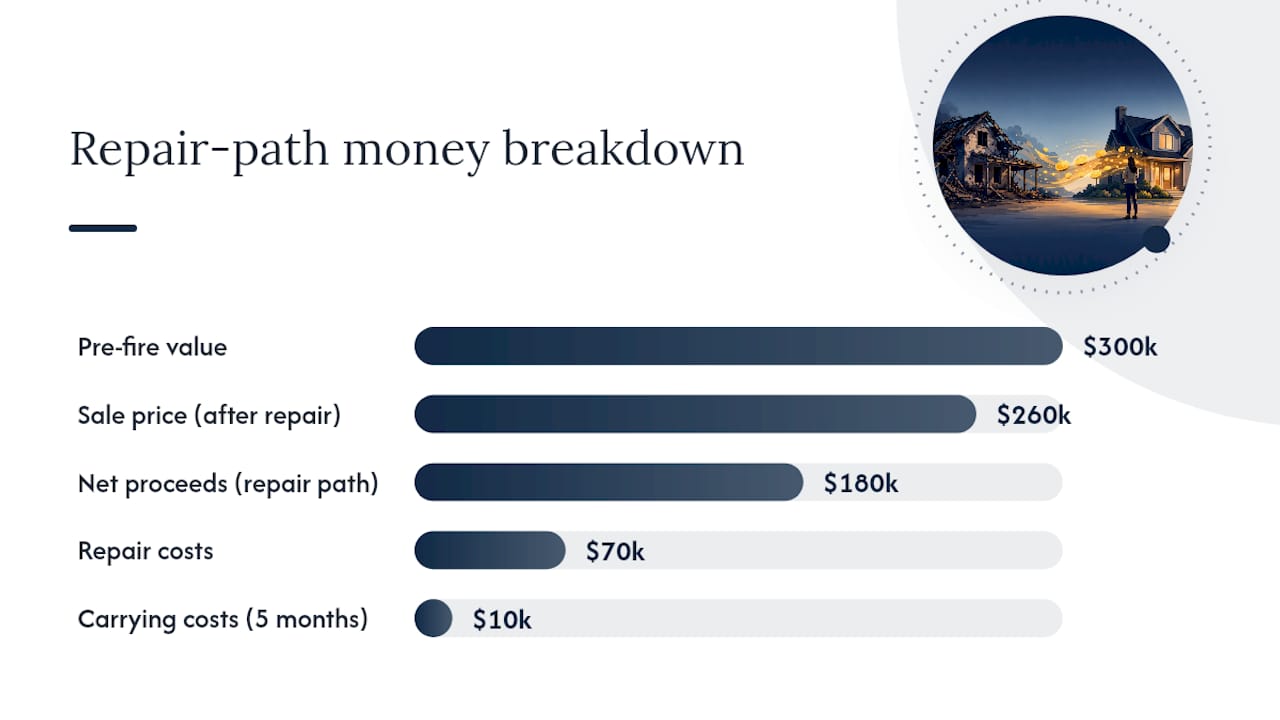
Here’s a worked example. Say a home was worth $300,000 before the fire, and itemized contractor bids put full repair at $70,000. Compare that to a repair-first path where you spend $70,000, carry the property for five months at $2,000 a month ($10,000), and sell at $260,000. That nets $180,000. In this scenario, cash wins, but the gap narrows fast if repair costs come in lower or the market is hot.
Insurance Payouts and Selling: What to Get in Writing
Your insurance settlement belongs to you as the policyholder, not automatically to whoever buys the house, though if you still have a mortgage, your lender is likely listed as a loss payee and will need to sign off on how funds are disbursed.
You can often sell while a claim is still open, but confirm that in writing with your adjuster before you list. NAIC guidance is blunt on this point: don’t assume your settlement will match a neighbor’s, since coverage limits, deductibles, and policy language vary widely, and if something feels off, your state insurance department is the right place to raise it.
Rebuilding after a major disaster commonly takes 18 to 24 months from claim to completed reconstruction, according to NAIC disaster claim guidance, which is exactly why so many owners choose to sell rather than wait it out.
Keep copies of every claim document, adjuster correspondence, and receipt for emergency repairs. Ready specifically recommends saving those receipts since they support both your claim and your future disclosure paperwork.
Disclosures and Documents That Protect You Legally
Every state requires sellers to disclose known fire damage on the property disclosure form. Skip this and you’re exposed to a lawsuit years after closing, even if the buyer never asks directly.
Documentation does double duty: it satisfies your legal disclosure duty and it reassures buyers that repairs were done properly. Before you list or field cash offers, assemble:
- The fire marshal’s incident report
- A professional damage assessment
- Itemized contractor bids for any repair work, completed or proposed
- Copies of permits pulled for repairs already finished
- Your insurance claim records and settlement summary
Unpermitted repair work is one of the fastest ways to tank buyer confidence or blow up a deal at inspection. If a previous owner or contractor patched something without pulling permits, disclose that too rather than hoping it goes unnoticed. Some cash buyers, including those who specialize in properties with code violations or unpermitted work, will still make an offer, but they’ll price the uncertainty in.
Your Action Checklist for Selling After a Fire
Move through these steps in order rather than jumping straight to listing or calling the first buyer who responds.
- Wait for official clearance before re-entering the property, and photograph everything once it’s safe.
- Secure the fire marshal’s report and file your insurance claim immediately.
- Get a professional damage assessment and two or three itemized contractor bids.
- Order an ARV appraisal so you know what repaired value actually looks like.
- Decide your path: repair and list, sell as-is, or sell the land, based on the math above.
- If selling as-is, solicit multiple cash offers and compare terms, not just price.
- Loop in your mortgage lender early to confirm payoff amount and loss-payee requirements.
Pro Tip: Don’t skip step 4 even if you’re leaning toward a cash sale. Knowing your ARV gives you a real number to compare against any offer, so you’re negotiating from data instead of guessing.
What Rhody Home Buyer Sees on the Ground
Most homeowners who reach out after a fire fall into one of two groups: people with enough insurance coverage and patience to rebuild, and people who need out now because the carrying costs or the emotional weight of the property has become too much. Offers are typically based on After Repaired Value, then subtracting repair costs and a risk margin, the same math walked through above.
If you’re vetting any cash buyer, ask directly: What’s your closing timeline? Are there closing costs on my end? Is this offer contingent on inspection, or is it final? A buyer who can’t answer those clearly in one conversation probably isn’t ready to close as fast as they claim.
What the Conventional Advice Gets Wrong
Most guides on selling a fire-damaged house treat “sell as-is” like a last resort, something you settle for once repair falls through. That framing misses the actual math. As-is isn’t a downgrade; it’s a legitimate path with its own logic, and for a lot of sellers it nets more real dollars once carrying costs and repair overruns are factored in honestly.
The bigger failure I see is sellers skipping the itemized contractor bid step because they assume it’s a formality. It isn’t. That bid is what turns your risk discount from a guess into a number you can argue with. Without it, you’re negotiating blind against a buyer who has already done the math.
Prioritize documentation before you prioritize a decision. Get the fire report, the assessment, and the bids first. The right path, repair, as-is, or land, becomes obvious once those numbers exist. Chasing a decision before the paperwork is backward, and it’s the single most common reason sellers leave money on the table.
— Dave
Get a Cash Offer From Rhody Home Buyer
This service offers an alternative to waiting out a repair timeline: no contractor bids to chase, no financing approval to wait on, no agent commissions eating into your payout. If your fire-damaged property in Rhode Island needs a fast, certain close instead of months of restoration and listing prep, this is built for exactly that situation.

This fits homeowners without the cash to fund repairs, anyone facing a hard deadline like a foreclosure clock or a probate timeline, and owners who simply don’t want to manage contractors and inspections after everything they’ve already dealt with. They purchase homes as-is and base offers on After Repaired Value, with flexible closing on your timeline.
Before you request an offer, have your ARV estimate, fire marshal report, and current mortgage payoff amount ready. It speeds up the conversation. You can see how the cash process works or go straight to Rhody Home Buyer’s site to request your no-obligation cash offer today.
Where to Learn More
For insurance-specific questions, NAIC’s consumer guidance covers claims and settlement disputes. Ready.gov’s home fire resource walks through immediate safety and documentation steps. For a broader look at the selling sequence, Redfin’s guide to fire-damaged sales and Blue Key Home Buyers’ cash-offer breakdown both offer useful worksheets.
This article is general information, not a substitute for advice from a qualified financial advisor. Consult a qualified financial professional about your own circumstances before acting on anything here.
Sources
FAQ
How Much Value Does Fire Damage Take Off a House?
Cosmetic smoke damage typically reduces value by 10% to 20%, while structural damage or total loss can cut it far more since conventional financing usually disappears entirely. As-is cash offers on damaged homes often land 30% to 60% below pre-fire value depending on severity.
Can I Sell My House Before My Insurance Claim Closes?
In most cases yes, but confirm it in writing with your adjuster first, since your lender may hold loss-payee rights over settlement funds. NAIC guidance recommends contacting your state insurance department if anything about the settlement process feels unclear.
What Can Be Salvaged After a House Fire?
Metal items, some appliances, and structurally sound framing behind smoke damage can often be salvaged after professional cleaning, but anything with heavy smoke saturation, melted plastic, or water exposure usually needs replacement. A professional damage assessment is the only reliable way to know what’s worth restoring versus removing.
Is It Hard to Sell a Fire-Damaged House Compared to a Termite-Damaged One?
Both scenarios narrow your buyer pool because lenders hesitate to finance structural risk, but fire damage usually requires more disclosure documentation since building permits and inspection records are involved. Cash buyers handle both situations regularly and price the repair cost into their offer either way.
Does Rhody Home Buyer Purchase Homes With Structural Fire Damage?
Rhody Home Buyer purchases houses as-is across Rhode Island, including homes with significant fire damage, basing offers on After Repaired Value rather than requiring repairs first. Current offer terms and next steps are available directly on the Rhody Home Buyer site.