
Yes, you can sell a house with mold, and plenty of homeowners do it every year. Your three realistic paths are remediating before you list, disclosing the problem and pricing around it, or selling as-is to a cash buyer. Before you pick one, stop any active leak, photograph the damage, and save every invoice you have. That paper trail protects you no matter which path you choose.
TL;DR:
- FHA or VA financed buyers require documented mold remediation before loan approval, making remediation essential for targeting these financing options.
- Limited, well-documented mold under 10 square feet can often be managed with DIY cleaning or minor repairs, minimizing costs and enabling transparent disclosures.
- Complex cases involving active leaks or mold behind walls typically warrant remediation, as unresolved issues can deter buyers and cause appraisal failures.
- Selling as-is is a practical option when the mold problem is small, repairs are costly or slow, or a quick sale is needed without risking loan funding complications.
Table of Contents
- Can You Sell With Mold? Your Three Options
- How Mold Affects Home Value, Buyers, and Financing
- Remediation Cost Ranges and What Actually Drives the Price
- Step-by-Step: What Each Selling Path Actually Looks Like
- Deciding Between Remediation, Disclosure, and a Cash Sale
- Disclosure Rules and Your Legal Exposure as a Seller
- What to Expect During Inspection and Testing
- Your Next Steps If You’re Selling With Mold
- Why an As-Is Cash Option Matters for Mold-Affected Homes
- Get a Cash Offer Without Fixing the Mold First
- Sources
- FAQ
Can You Sell With Mold? Your Three Options
Every seller with a mold problem is really choosing between speed, cost, and risk transfer. There’s no wrong answer here, just different tradeoffs depending on your equity, your timeline, and how much cash you have on hand right now.
Remediate, then list. You hire a contractor, fix the moisture source, remove the affected materials, and get documentation showing the work is done. This path targets conventional buyers using FHA or VA financing, since those loans are the ones most likely to stall over a damp basement or a moldy bathroom ceiling. It only makes financial sense when the repair cost is modest relative to what it unlocks in resale value or buyer pool.
Disclose and sell as-is with a price adjustment. You skip the repair, put the mold in writing on your disclosure form, and let the market price it in. This works best when the mold is limited, well documented, and the moisture cause is already fixed. Buyers who go this route tend to be more experienced, often paying cash or planning renovations anyway.
Sell to a cash buyer. You skip both remediation and pricing negotiations by selling to an investor who buys as-is. This is the fastest route and the one with the least financing risk, since there’s no appraisal contingency to trip over.
- Remediate first if you need FHA/VA buyers or top dollar
- Disclose and price down if the mold is limited and documented
- Sell as-is to a cash buyer if speed and certainty matter more than maximizing price
Whichever path you choose, transparency is what keeps you out of a lawsuit later. Buyers who feel misled after closing are the ones who sue.
How Mold Affects Home Value, Buyers, and Financing
Visible mold or a musty smell shrinks your buyer pool before anyone even makes an offer. Buyers touring a home with obvious water stains or mildew odor tend to walk, or they lowball, assuming worse problems hide behind the walls.
The bigger obstacle is financing. Appraisers working FHA and VA loans are trained to flag evidence of dampness or active mold, and HUD’s valuation protocol allows an appraisal to be conditioned “as repaired,” meaning the lender won’t fund the loan until the issue is fixed. That single flag can kill a deal that was otherwise ready to close, especially since HUD’s appraisal appendices instruct appraisers to note dampness evidence specifically.
This is exactly why cash and investor buyers close mold-affected homes more reliably than financed buyers. There’s no appraiser deciding whether your loan can fund, and no lender demanding proof of remediation before wiring money. Price adjustments for disclosed mold vary widely depending on severity and location, but sellers should expect buyers to negotiate a discount, a repair credit, or both rather than pay full market price for a home with a known moisture problem.
Remediation Cost Ranges and What Actually Drives the Price
The mold itself is rarely the expensive part. The moisture source behind it usually is.
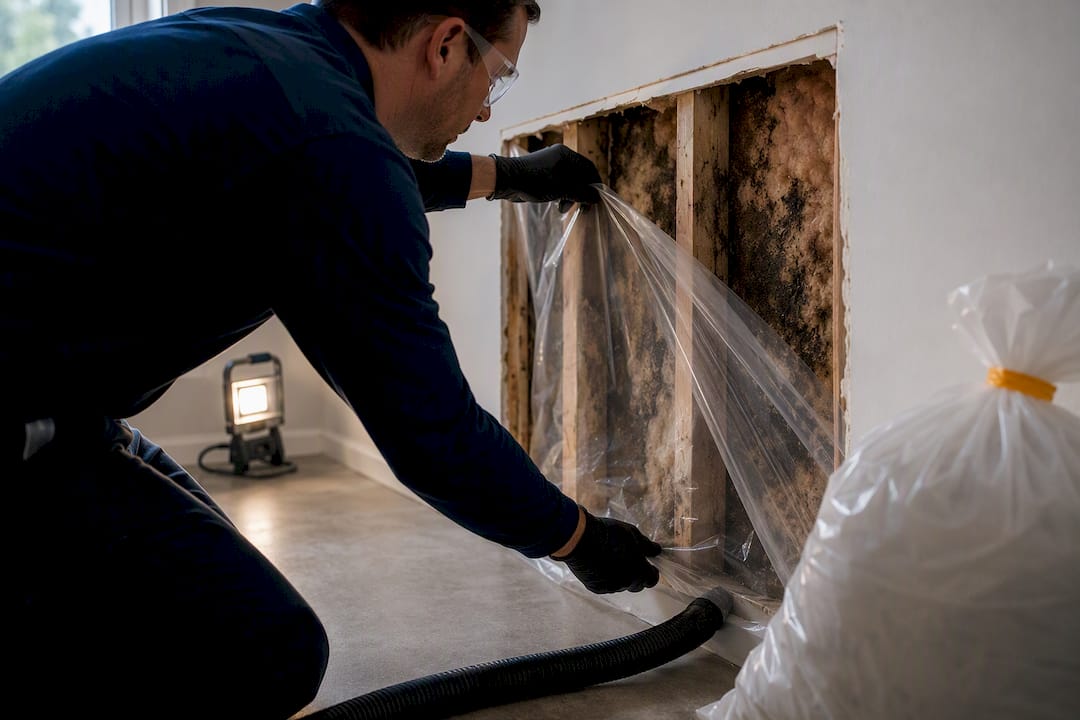
Contained, surface-level mold cleanup, think a bathroom ceiling or a small patch behind a leaking sink, tends to cost far less than a job involving crawlspaces, HVAC systems, or wall cavities where mold has spread behind drywall. Once contractors have to open walls, replace insulation, or run ductwork cleaning, the bill climbs fast. The EPA’s guidance puts a practical line in the sand: moldy areas under about 10 square feet are often manageable as a DIY cleanup project. Anything larger, or anything involving HVAC systems, should go to a professional following a proper remediation plan.
Pro Tip: Get at least two written estimates that separate “moisture repair” line items from “mold cleanup” line items. Sellers frequently discover the roof leak or plumbing fix costs more than the mold removal itself.
For jobs that exceed the DIY threshold, EPA remediation guidance calls for containment, personal protective equipment, and full removal of contaminated materials, not just surface treatment. Skipping those steps is how amateur remediation spreads spores into previously clean rooms.
- Small, contained cleanup: lower cost, often DIY-eligible per EPA thresholds
- Larger jobs (crawlspace, HVAC, wall cavities): professional remediation required, higher cost
- Moisture-source repair (roof, plumbing, grading): frequently the largest line item on the invoice
- Insurance rarely helps here. Standard homeowners policies commonly exclude or cap mold coverage, so don’t assume a claim will offset the bill.
Step-by-Step: What Each Selling Path Actually Looks Like
Here’s what each path involves in practice, from first phone call to closing table.
- Remediate then list. Get an inspection to scope the damage, get contractor bids, complete the remediation work, and collect clearance documentation or a contractor warranty. Budget several weeks for scheduling and completion before you’re ready to list, longer if structural repairs are involved.
- List as-is with disclosure. Document the mold’s history in writing, including when it was discovered and any partial repairs made. Provide a written estimate for what remediation would cost so buyers can negotiate from real numbers instead of guessing. Expect price or credit negotiations during the option period, and a standard escrow timeline once terms are set.
- Sell to a cash buyer. Request a written offer that spells out the closing date, the net proceeds you’ll walk away with, and whether any holdbacks apply. Confirm there’s no financing contingency and no repair-credit renegotiation hiding in the fine print. Closing windows on cash offers are typically measured in days to a couple of weeks, not months.
Pro Tip: Before signing anything, ask directly whether the offer can change after a walkthrough. A legitimate as-is cash offer shouldn’t shrink once someone sees the mold you already disclosed.
The remediation and repair route makes the most sense when fixing the problem clearly unlocks a bigger pool of financed buyers. The as-is route makes sense when the numbers don’t support that bet.
Deciding Between Remediation, Disclosure, and a Cash Sale
Run through this checklist before committing to a direction:
- How much equity do you have, and can it absorb a price reduction without leaving you underwater?
- What does a written repair estimate actually say, and does it change your answer?
- Are your likely buyers financing with FHA or VA loans, where appraisal flags are more common?
- How fast do you genuinely need to close?
Ongoing leaks, HVAC contamination, or mold suspected behind walls push hard toward remediation, since those issues tend to surface in inspections anyway and scare off buyers regardless of price. Disclosure-and-price tends to be the financially rational choice when the mold is limited, the moisture source is already fixed, and the repair cost is small relative to the price hit. Effective Agents’ guidance on disclosure notes that remediation rarely returns its cost dollar for dollar, so spend on repairs only when it removes a genuine financing obstacle. When speed matters more than squeezing out the last few thousand dollars, a cash buyer becomes the pragmatic fallback.
Disclosure Rules and Your Legal Exposure as a Seller
There’s no single federal law requiring mold disclosure. What you actually owe buyers comes from your state’s disclosure form and common law duties around known defects, which means the exact wording and required detail vary depending on where the home sits.
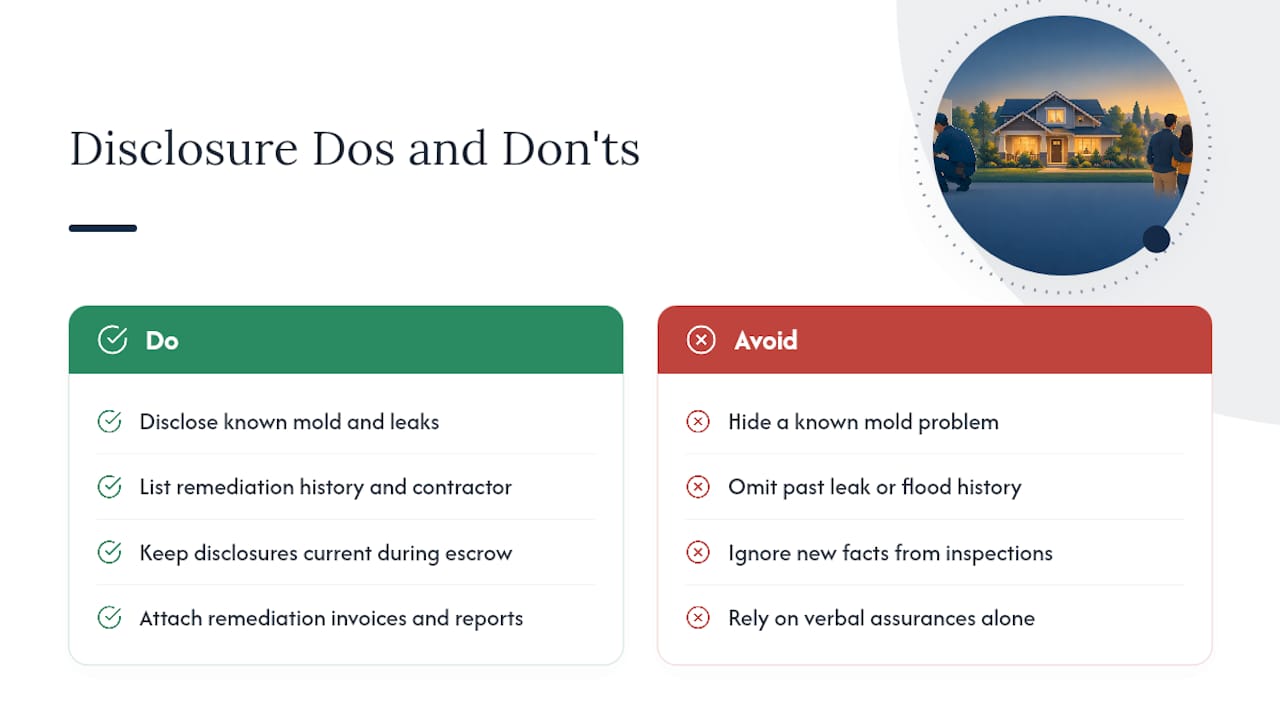
Most states require you to disclose known mold, past water intrusion, and any remediation history on the standard seller disclosure form. Industry guidance on mold disclosure is blunt about the risk: sellers who knowingly hide a mold problem expose themselves to legal claims after closing, even if remediation was never legally required in the first place.
The items to disclose typically include any past leak or flooding event, whether remediation was performed and by whom, and whether moisture issues are ongoing. Keep those disclosures current through the entire escrow period. If new information surfaces, like a leak discovered during a buyer’s inspection, update your disclosure rather than letting it slide. Documentation is your best defense: invoices from remediation contractors, moisture meter readings, and any clearance reports turn “the seller said it was fine” into a paper trail a court can actually verify.
What to Expect During Inspection and Testing
A home inspector will typically note visible mold, moisture staining, and musty odors, along with any conditions that suggest a moisture source, like grading problems or roof wear. That written report becomes the buyer’s leverage point in negotiation, so expect questions the moment it lands in their hands.
Here’s what surprises a lot of sellers: neither the CDC nor the EPA recommends routine lab testing for mold. Both agencies focus on the practical fix, removing the mold and correcting the moisture, rather than identifying the exact species growing in your crawlspace. If a buyer requests testing anyway, you can reasonably push back and suggest a moisture inspection instead, since that’s what actually determines whether the problem will recur.
When buyers ask for remediation credits or threaten to walk under a contingency, have your documentation ready: remediation invoices, moisture readings, and any contractor warranties you’ve collected. Sellers who show up with paperwork negotiate from a stronger position than sellers who show up with promises.
Your Next Steps If You’re Selling With Mold
The fastest way forward starts with three actions:
- Stop any active water intrusion immediately, even a temporary fix
- Photograph the damage and gather every remediation invoice you have
- Choose your path and put your disclosure in writing before you list
Remediation tends to pay off when it unlocks FHA or VA buyers. Disclosure-and-price tends to win when the mold is limited and already contained.
| Situation | Best-fit path | Typical timeline |
|---|---|---|
| Active leak, wide buyer pool needed | Remediate then list | Weeks to a couple months |
| Limited, documented mold | Disclose and price accordingly | Standard escrow window |
| Need speed or financing is unlikely | Cash buyer | Days to a couple weeks |
Your first call should go to a plumber or roofer if moisture is active, then to a remediation contractor or an experienced buyer for a same-week read on your options.
Why an As-Is Cash Option Matters for Mold-Affected Homes
Not every seller has the cash or the time to fix a moisture problem before listing, and not every home needs to be perfect to change hands. Rhody Home Buyer exists for exactly that gap: buying Rhode Island homes as-is, without agent fees, commissions, or repair demands standing between a homeowner and a closing date. Offers are built around the home’s value after repairs, so sellers receive an offer without needing to pay for remediation first. For someone staring down a moldy basement and a tight timeline, that’s a legitimate third option, not just a last resort.
— Dave
Get a Cash Offer Without Fixing the Mold First
If remediation isn’t in your budget or your timeline, a cash buyer can purchase homes as-is, including those with mold or moisture damage, typically without agent commissions or repair demands.

Every offer is based on the home’s After Repaired Value, so you’re not penalized twice for a problem you’re already disclosing. Sellers weighing this route should ask for a few specifics in any written offer: the exact closing date, a clear net proceeds estimate, and whether any holdbacks apply once the buyer inspects the property. You can also read through how the cash sale process actually works before you commit to anything. If a moldy home is standing between you and a fast, certain sale, request a cash offer from Rhody Home Buyer and see the number before you spend a dime on repairs.
This article is general information, not a substitute for advice from a qualified lawyer. Consult a qualified legal professional about your own circumstances before acting on anything here.
Sources
- Mold cleanup in your home — EPA
- HUD 4150.2 Valuation Protocol — HUD
- Selling a house with mold, asbestos, or lead paint — Effective Agents
FAQ
How Hard Is It to Sell a House With Mold?
It’s harder than selling a mold-free home, mainly because it shrinks your buyer pool and can trigger appraisal issues on FHA and VA loans. It’s not impossible: disclosing the problem clearly and pricing it accordingly, or selling to a cash buyer, both work as practical routes around that friction.
Can You Be Sued if You Sell a House With Mold?
You can be sued if you knew about mold and didn’t disclose it, since most states require sellers to report known defects like past water damage or mold on the disclosure form. You’re on much safer ground if you disclose everything in writing and keep documentation like remediation invoices showing what you knew and when.
How Long Can I Live With Mold in My House?
There’s no fixed safe timeline, since health effects depend on the person and the extent of the mold. The CDC notes mold can trigger respiratory and allergic symptoms in sensitive people, so the priority is fixing the moisture source and removing the mold promptly rather than waiting it out.
Do I Need Mold Testing Before Selling?
Usually not. Neither the EPA nor the CDC recommends routine testing, since the practical fix, removing visible mold and correcting the moisture problem, matters more than identifying the exact mold species.
What if I Can’t Afford Remediation Before Selling?
You don’t have to remediate before you sell. Disclosing the mold and pricing the home accordingly is a valid path, and selling to a cash buyer like Rhody Home Buyer lets you skip remediation costs entirely by selling the home as-is.