
The fastest way to sell a rental property is a direct cash sale to an investor, which can close in about one to three weeks. A traditional agent listing usually takes a month or more to close, and longer once you add preparation and tenant logistics. Which route fits depends on three things: whether tenants are in the home, what condition it is in, and what you will owe in taxes once it sells.
This guide walks through each route, what it costs you in time and price, how tenants change the plan, and the tax questions to settle before you sign anything.
TL;DR
- A cash sale to a direct buyer is the quickest route. Reported timelines run about 7 to 10 days for investor cash offers, against 30 to 45 days for a typical MLS sale.
- Speed has a price. Cash offers and as-is sales usually net less than a fully prepared listing, so compare net proceeds, not headline price.
- A lease generally transfers to the buyer. Tenants can usually stay until the lease ends, and showings need proper notice under state and local law.
- Federal tax can take a real bite: long-term gain, depreciation recapture and possibly the net investment income tax. A 1031 exchange can defer it, but only with strict deadlines.
- If you face foreclosure or inherited the property, start the conversation early. Time is the one thing you cannot buy back.
Table of Contents
- The main ways to sell a rental property
- How long a traditional sale really takes
- Selling with tenants in the home
- Condition, repairs and the as-is discount
- Taxes: what you may owe and how to plan
- Get your paperwork ready
- Step by step: selling a rental house
- Foreclosure, financial hardship and inherited rentals
- Our perspective
- Selling your Rhode Island rental to a direct buyer
- Choosing the right route for you
- FAQ
- Sources
The main ways to sell a rental property
You have four realistic routes. Each trades speed against price and effort differently.
| Route | Typical speed | What you give up | Best when |
|---|---|---|---|
| Direct cash sale to an investor | About 7 to 10 days reported for investor cash offers | Some price versus a fully prepared listing | You need speed, the property needs work, or tenants are a complication |
| Agent listing on the MLS | 30 to 45 days in escrow, plus prep and marketing | Time, agent commission, repair negotiations | The property is in good shape and you can wait |
| For sale by owner | Varies widely | Your time, and exposure to buyer-side negotiation mistakes | You already have a buyer or deep local knowledge |
| Sale with a 1031 exchange | Tied to the 45 and 180 day exchange deadlines | Flexibility, because the deadlines are rigid | Tax deferral matters more than the sale date |
The timing figures come from industry sources. Brokerless reports that an investor cash offer typically closes in 7 to 10 days at 10 to 25 percent below market value, while an MLS listing with standard escrow takes 30 to 45 days at full market value or higher. Treat those as ranges, not promises. Your own closing date depends on title, the buyer and the paperwork.
How long a traditional sale really takes
The 30 to 45 days in escrow is only the middle of the story. Redfin’s illustrative 12-week timeline for a rental sale starts with two weeks of research and tenant issues, then two weeks of preparation and listing, two weeks of marketing and offers, four weeks of due diligence and repair negotiations, and two weeks of closing and tax administration.

That is roughly three months from decision to done, and it assumes nothing goes wrong. A buyer’s financing can fall through, an inspection can reopen the price, or a tenant can make showings difficult. If your holding costs, mortgage payments or a deadline run month to month, add up what those three months cost before you decide the listing price is worth it.
If you are weighing whether to sell at all, it helps to know what the property actually earns. A simple rental yield formula gives you a quick benchmark to compare against what you would net from a sale and what you could do with the proceeds.
Selling with tenants in the home
Yes, you can sell a rental with tenants living there. The existing lease generally transfers to the buyer, and tenants have the right to stay until the lease or rental agreement ends. You must give the notice state and local law require before showings, work reasonably with tenants on access, and deal with lease responsibilities and the security deposit in the sale documents.
A few practical points follow from that.
Read the lease first. Redfin’s guide tells landlords to check whether the lease permits termination for sale, and notes that tenant-sale rules vary by state. Do not assume you can end a fixed-term lease early.
Showing notice is not one national rule. LawDepot says entry notice varies by state, and where no statute controls, at least 24 hours is a prudent baseline, subject to the lease and local law. Rhode Island and Connecticut sellers should check their own state’s landlord-tenant statute and the lease before scheduling anyone.
A good tenant is an asset. A paying tenant on a lease can be a selling point to an investor buyer. A vacant, clean unit shows better to an owner-occupant. Which matters more depends on your buyer pool.
Selling to a cash buyer simplifies the tenant question. An investor who buys rentals is already planning to keep the lease in place or handle turnover on their own schedule. You are not asked to stage, schedule open houses or keep a tenant happy through weeks of strangers walking through.
Condition, repairs and the as-is discount
Rentals take wear. Worn flooring, deferred maintenance, a tired kitchen or damage from a difficult tenant can all turn a listing into a repair negotiation.
Before you decide, put numbers on the gap. Zillow estimates that selling as-is with major repairs needed can reduce the price by 10 to 20 percent below market value, roughly $40,000 to $80,000 on a $400,000 home. EffectiveAgents reports a wider range, 15 to 25 percent below comparable move-in-ready homes, or $60,000 to $100,000 on the same price.
Now set that against what repairs would cost you in money and months. If you would pay for contractors, carry the mortgage during the work, and still face buyer inspection requests, the as-is route can come out closer than the headline discount suggests. We break that comparison down on our page about net proceeds when you repair or sell as is.
A simple worksheet helps:
- Estimate the price the property would fetch fully repaired.
- Subtract repair costs, agent commission, closing costs and carrying costs through a realistic 12-week sale.
- Compare that net figure with a firm cash offer, minus its closing costs.
- Choose the higher number, or the faster one if the timeline matters more.
Taxes: what you may owe and how to plan
Tax is where most landlords lose money they did not expect to lose. Talk to a CPA or tax professional before you sign a purchase agreement, not after.
The gain. Federal gain is generally the net sale proceeds after selling costs, minus your adjusted basis. Capital improvements raise basis, while routine repairs do not. Keep receipts for new roofs, additions and major systems.
The rates. Long-term gain on property held more than a year is taxed at 0, 15 or 20 percent depending on taxable income, per the IRS capital gains guidance. On top of that, unrecaptured Section 1250 gain tied to depreciation is taxed at a maximum 25 percent federal rate. Some higher-income sellers may also owe the net investment income tax.
Depreciation you did not claim still counts. The calculation uses depreciation allowed or allowable, so skipping the deduction generally does not remove the basis reduction or the recapture exposure.
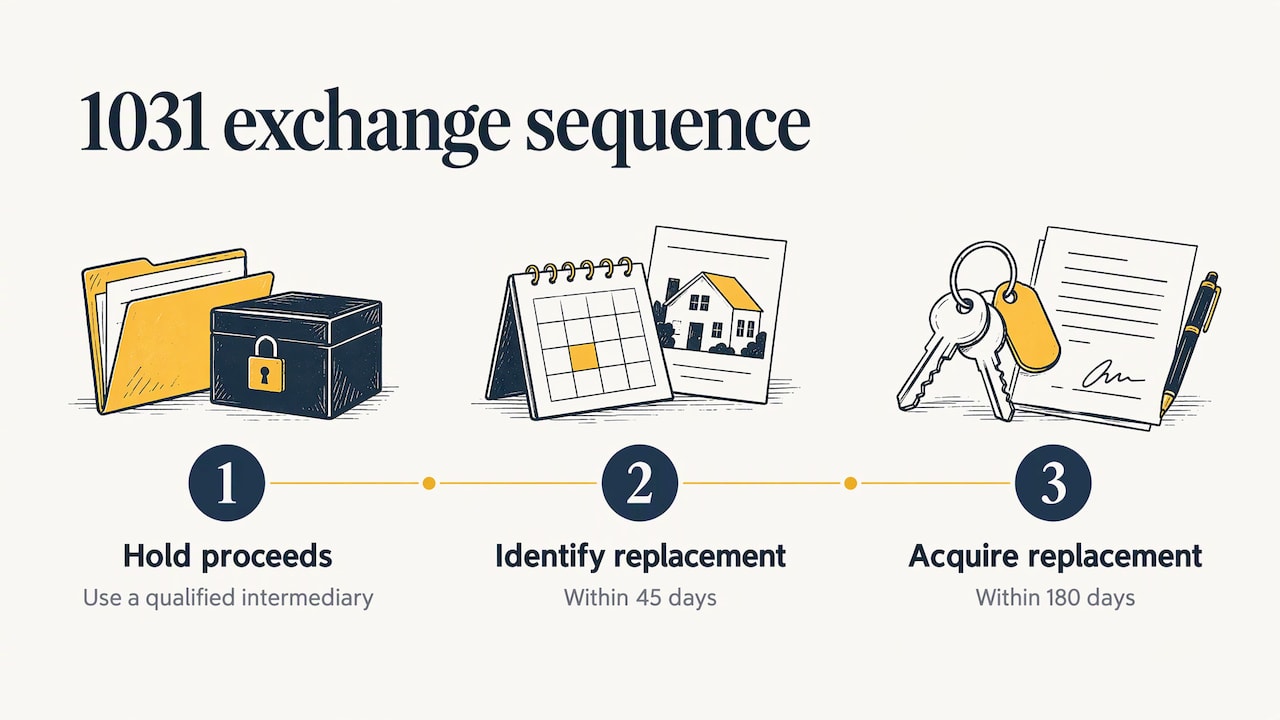
The 1031 exchange. A properly structured exchange can defer gain and depreciation recognition on qualifying investment property. The replacement property generally must be identified within 45 days and acquired within 180 days, with the proceeds held by a qualified intermediary rather than by you. If you plan an exchange, line up the intermediary before closing, because you cannot take the money first and arrange it later.
State tax. Rhode Island and Connecticut each have their own rules for taxing gains. Ask your tax professional what applies to your situation.
A faster sale does not change what you owe. It does change how much time you have to plan, which is why a closing date you can choose matters. Our page on choosing your closing date as a Rhode Island seller explains how that flexibility works.
Get your paperwork ready
Whatever route you pick, buyers and title companies will ask for the same documents. Redfin recommends gathering leases, maintenance history, utility bills and other property records before you market the rental.
A useful starter pile:
- Current leases, tenant ledgers and the security deposit amount
- Rent roll and the last two years of income and expense records
- Receipts for capital improvements, with dates
- Mortgage payoff information
- Depreciation schedules from your tax returns
- Notices you have sent to tenants
Having this ready shortens due diligence on any route. With a cash buyer, it is often the difference between a one-week close and a three-week close.
Step by step: selling a rental house
Here is the sequence most landlords follow, adapted from the steps in Redfin’s guide:
- Set your goal. Speed, price or tax deferral. You rarely get all three.
- Read the lease and know your market. Check termination rights and tenant notice rules.
- Run the tax numbers with a tax professional.
- Notify tenants and follow local law on notice and access.
- Assess repairs and gather property records.
- Choose the route: agent, cash buyer or exchange.
- Compare offers on net proceeds and certainty of closing.
- Coordinate inspections and title work.
- Close: pay off the mortgage, settle the deposit, hand over keys and transfer utilities.
- Report the sale and keep your records.
Foreclosure, financial hardship and inherited rentals
Some sellers are not choosing between good options. They are choosing between a fast sale and a worse outcome.
If you are behind on the mortgage, contact your lender or a HUD-approved housing counselor early and ask what options exist. A sale before a foreclosure process advances usually gives you more control over timing and terms. Every case differs, so a local real estate attorney can tell you where you stand and which deadlines apply.
If you inherited a rental, you may be handling an estate, a tenant and a property you never planned to own. Probate status, other heirs and the property’s tax basis all affect what you can do and when. Our guide on tax consequences when selling an inherited house covers the questions to ask, and an estate attorney or CPA should confirm the specifics.
If you live out of state, managing a sale from a distance adds friction. We wrote a step-by-step guide for absentee owners selling in Rhode Island that applies to landlords who are not nearby.
In each case the pattern is the same: gather your documents, learn your numbers, and compare a fast cash route with a listing before the calendar decides for you.
Our perspective
We buy homes across Rhode Island and Eastern Connecticut, and many of the landlords who call us are tired, not desperate. The repairs keep piling up, a tenant moved out, or the numbers stopped working.
Our view is simple: when speed and certainty matter, a direct sale is hard to beat. We buy as-is, so you do not paint, clean, replace carpet or hold open houses. We do not charge agent fees or commissions. Our offers are based on the After Repaired Value of the property, and we explain how we get to the number.
You choose the closing timeline that fits your situation, whether that is as quickly as possible or a little later to line up a 1031 exchange or a move. We believe a seller under pressure deserves clear answers, not a runaround.
Dave
Selling your Rhode Island rental to a direct buyer
If your rental is in Rhode Island or Eastern Connecticut and you want the simplest path, we can make you a cash offer on the property as it stands. No agent fees, no commissions, no repairs or cleaning, and you pick the closing date that works for you.

Start on our Rhode Island cash home buying page, read how the process works, or see how a cash closing timeline is put together. If you are ready to talk numbers, you can request your offer here.
Choosing the right route for you
A quick way to decide:
- Choose a cash sale if you need to close within weeks, the property needs work, a lender deadline is looming, or you want to skip showings and tenant disruption.
- Choose an agent listing if the property is in strong condition, you can wait three months and you want to test the open market.
- Choose a 1031 exchange if deferring tax is your main goal. You can pair it with either sale route as long as the intermediary and deadlines are in place.
Whatever you choose, compare offers on what lands in your account after payoff, taxes and closing costs, not on the sticker price.
FAQ
What is the fastest way to sell a rental property?
A direct cash sale to an investor is generally the fastest. Industry sources report investor cash closings in about 7 to 10 days, against 30 to 45 days in escrow for an MLS sale. Speed usually comes with a lower price, so compare the net amount you would keep.
Can I sell a rental house with tenants still living in it?
Yes. The lease generally transfers to the buyer, and tenants can usually stay until it ends. Follow your state’s notice rules for showings and address the security deposit in the sale documents. Cash investors often buy occupied rentals and keep the lease in place.
How do I avoid capital gains tax when selling a rental property?
You usually cannot avoid it entirely, but you can defer it. A Section 1031 exchange lets you roll proceeds into replacement investment property, with 45 days to identify and 180 days to close, and a qualified intermediary holding the funds. Ask a CPA before you list.
Can I sell a rental property as-is?
Yes. Many investors buy rentals in any condition. Expect a lower price than a repaired listing would bring, and weigh that gap against repair costs, carrying costs and the time repairs take.
Sources
- Redfin: How to Sell a Rental Property? 10 Steps to Success
- Brokerless: Selling to an Investor With a Cash Offer vs MLS Listing
- LawDepot: Selling a Property When Renters Are Living There
- Zillow: How Much Do You Lose Selling a House As-Is?
- EffectiveAgents: Is Selling Your House As-Is Worth It?
- LegalClarity: Landlord Capital Gains Tax
- The Real Estate CPA: Depreciation Recapture Tax Explained
- IRS: Topic No. 409, Capital gains and losses
- Quick Rental Yield Formula for Investors