
Yes, you can sell a house without cleaning it. No law requires a seller to deep clean, stage or even tidy a home before a sale. What you do owe is a clear contract, honest disclosure of what you know about the property, and a house emptied of whatever the contract says must go. How much cleaning you skip mostly decides who your buyer is and what they will pay. A traditional buyer with a mortgage expects a presentable home. A cash buyer who buys as-is does not.
This guide covers what you are required to do, what is only a courtesy, how a messy house changes your offer, and how to sell a cluttered, dirty or neglected Rhode Island home without spending a weekend with a mop.
TL;DR
- No rule says you must clean a house to sell it. Cleaning is a choice that affects price and buyer pool, not a legal duty.
- “Broom clean” at handover is a courtesy, but your contract controls what must be removed. Anything left behind can become the buyer’s problem or yours.
- Honest disclosure is not optional. In Rhode Island, homes built before 1978 carry specific lead disclosure and testing rules.
- A traditional sale of a dirty home usually means a lower price. A cash sale as-is trades some price for speed and no prep work.
- We buy Rhode Island homes as-is, with no cleaning, no repairs and no agent fees.
Table of Contents
- Do you have to clean your house before selling it?
- What you owe the buyer at closing
- Does a messy house hurt your sale?
- Three ways to sell without cleaning
- When selling without cleaning makes the most sense
- How to sell a messy house to a cash buyer
- Our perspective: leave the mop in the closet
- Want an offer on your house as it stands?
- Smart prep if you do want some curb appeal
- FAQ
- Sources
Do you have to clean your house before selling it?
No. The National Association of REALTORS says cosmetic updates are not required, and its 2025 consumer guide says staging, which means cleaning and temporarily furnishing or decorating, is not required either. The same NAR guidance does suggest cleaning windows, carpets, lighting fixtures and walls, and storing clutter before showings, because it helps a home look better in photos.
Read that carefully. The advice is about marketing, not obligation. Cleaning helps if you plan to list on the open market and compete with polished homes. If you are selling to someone who is buying the house for what it can become, a spotless kitchen matters much less.
There is one more piece of context. NAR’s research reports that 81% of buyers’ agents say staging makes it easier for clients to picture themselves living in a home. That is why cleaning is standard on a retail listing. It is also why a cash sale skips it: an investor is not picturing their own furniture in your living room.

What you owe the buyer at closing
There is a difference between cleaning to sell and leaving the house in acceptable condition at handover.
Broom clean and what belongs to whom
There is no real legal requirement for a seller to clean a property when moving out. Still, broom-clean condition is considered a courtesy: floors swept, no trash, nothing left behind except what the contract says stays. Buyers expect you to take your belongings. Some also ask for professional cleaning, and whether they get it depends on market conditions and who has leverage. If you want to see what the term typically covers, what broom clean means in practice is a straightforward walkthrough.
The contract is what counts. Items not removed by the closing date can become the buyer’s property or cost the seller removal fees if the contract does not clearly say otherwise. NAR notes that contract clauses describe each party’s rights and obligations, and that contingencies must be agreed and signed off before they become binding. So the question to ask before you sign is not “do I have to clean?” but “what does this contract say I leave, take or remove?”
Disclosure is the part you cannot skip
Selling dirty is fine. Hiding problems is not. NAR’s guidance says disclosure requirements vary by state, but sellers generally must disclose known physical defects and hazards, and federal law requires disclosure of known lead-based paint hazards for homes built before 1978 (see its contract contingencies guide).
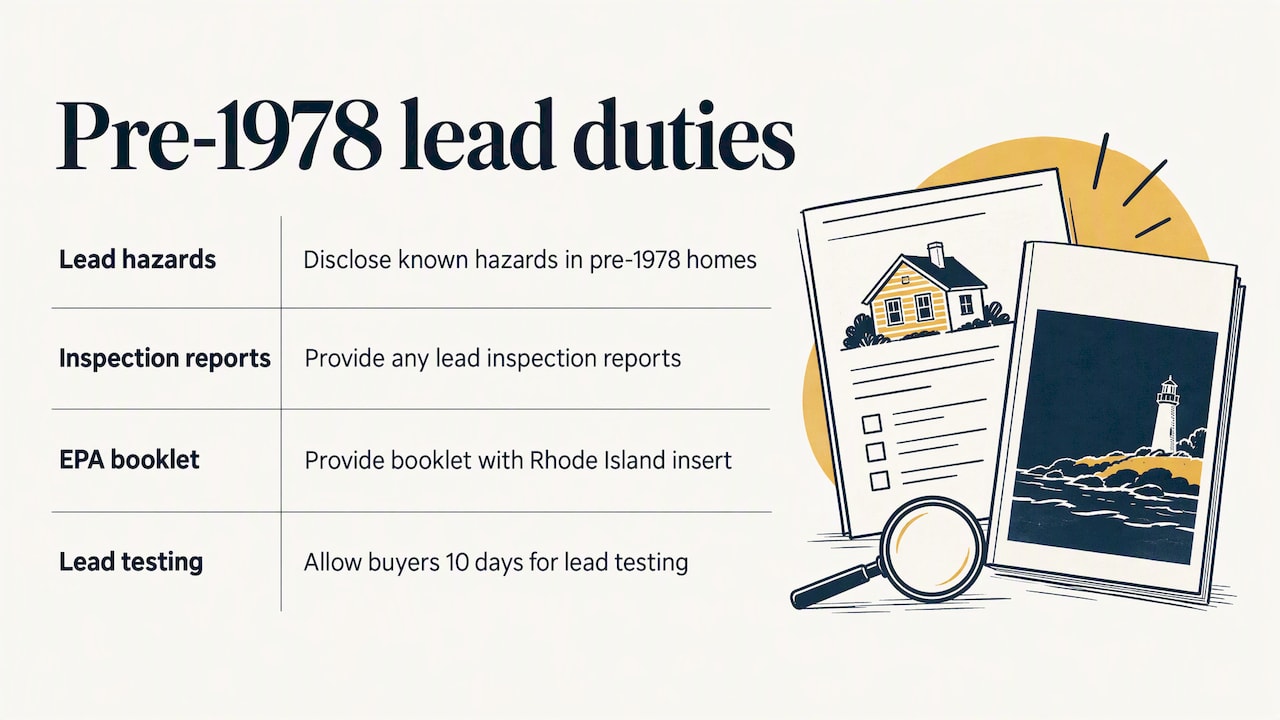
Rhode Island adds detail. For pre-1978 homes, the Rhode Island Department of Health says sellers must disclose known lead hazards, provide any lead inspection reports and an EPA booklet with a Rhode Island insert, and allow buyers a 10-day period for lead testing. A cluttered, dusty house does not change those duties. If your home is older, as many New England homes are, expect this paperwork in any sale, cash or not.
Does a messy house hurt your sale?
It can, and being honest about how is what makes the decision easier.
Appraisers and mess
A common worry is that a dirty house will tank an appraisal. Appraiser Donald Boucher told Realtor.com that a clean home may make a better impression, but that cleanliness should not change appraisal value. Condition is a different matter. Federal appraisal rules for higher-priced mortgage loans require covered appraisals to address the property’s condition and improvements and to indicate that an interior visit took place. So clutter itself is not penalized, but damage, mold, a failing roof or a kitchen that no longer works can be.
Inspections and financing
With a buyer who needs a mortgage, the house goes through an inspection and an appraisal. A pre-sale inspection is not required, but NAR says it can identify issues you might repair first. If a buyer’s inspection turns up significant problems, the buyer may walk away, and in many states those newly discovered issues must then be disclosed to the next buyer. Realtor.com also explains that if an appraisal comes in below the offer, the lender may demand repairs, and if you refuse, the buyer can walk away from the deal. A pre-listing inspection playbook explains how sellers use inspections to avoid surprises like that.
The price trade-off
Zillow’s guidance on selling as-is says a seller makes no repairs, buyers may still inspect, sellers should disclose issues, and as-is homes will likely sell for less than comparable homes with updates. That is the honest trade: you give up some price on the open market in exchange for skipping the work. How much depends on what is wrong with the house, not just how dirty it is.
Three ways to sell without cleaning
The right route depends on how much time you have, how much work the house needs and what you want to walk away with.
| Route | Cleaning needed | Repairs needed | Timeline | Best fit |
|---|---|---|---|---|
| List with an agent on the open market | Strongly recommended | Often negotiated after inspection | Weeks to months, depending on buyer financing | A move-in-ready home with time to prepare |
| Hire a cleanout service, then list | Handled for you, at your cost | Often still needed | Adds days to weeks before listing | Sellers with funds to invest up front |
| Sell as-is to a direct cash buyer | None | None | Set by you and the buyer | Cluttered, inherited, damaged or urgent situations |
None of these is wrong. The first two suit sellers who can afford the time and money to improve the house first. The third is built for sellers who cannot or do not want to.
When selling without cleaning makes the most sense
Some situations push sellers toward skipping the prep, and they are more common than most listing advice admits.
- Inherited homes. A relative’s home, still full of belongings, with heirs who live in another state or are still grieving. If the estate is in court, see how probate house sales work with a cash buyer.
- Heavy clutter or hoarding. Clearing years of belongings can cost thousands and months of effort. Selling the house as it stands removes that step.
- Pet damage or smoke odor. These are the problems cleaning rarely fully fixes. We cover them in pet damage and selling your Rhode Island house and selling a house with smoke odor.
- A failed inspection. If a buyer’s inspection derailed a deal, read about your options as a seller after a failed inspection.
- Financial pressure. When a foreclosure, back taxes or a looming bankruptcy sets the clock, weeks of cleaning is time you do not have. Our guide on selling before bankruptcy walks through the steps.
- Illness, divorce or relocation. Any situation where you simply cannot be at the house for days of sorting and scrubbing.
How to sell a messy house to a cash buyer
The steps are short, and that is the point.
- Take out what matters. Remove documents, valuables, family keepsakes, medications and anything with sentimental value. You do not have to clear the rest unless your contract says so.
- Gather what you know about the house. Note any leaks, roof problems, past repairs, pets, smoke, or pre-1978 construction. Honest notes make disclosure paperwork quick.
- Request an offer. A direct buyer looks at the house as it is and bases the offer on its condition and what it would be worth repaired.
- Compare net proceeds, not just the headline number. Subtract agent commissions, repair credits, cleanout costs, holding costs and months of mortgage payments from the open-market alternative. Our guides on deciding by net proceeds and cash offers versus financing show how to run that comparison.
- Read the contract for what stays and what goes. Ask in writing whether leftover furniture and belongings convey with the house, so no one is surprised at closing.
- Pick your closing date. Flexibility matters when you are still packing. See how to choose your closing date as a Rhode Island seller.
- Protect the money. Confirm wiring instructions by phone with the title company before sending or receiving anything. Our cash offer paperwork guide explains how sellers avoid wire fraud.
Our perspective: leave the mop in the closet
Most listing advice assumes you have time, money and energy to prepare. Many of the people who call us have none of the three. They are dealing with a parent’s estate, a divorce, a job move or a pile of bills, and they are told to rent a dumpster, repaint and schedule a deep clean before anyone will look at the house.
We think that advice is backwards for them. We buy Rhode Island homes as-is. That means no cleaning, no repairs, no staging and no agent fees or commissions. Our offers are based on the After Repaired Value, so the offer reflects what your home can be worth once it is fixed, with the work the house needs taken into account. We want sellers to understand how an offer is built, and we explain it before anyone signs.
What we care about is that you are not pressured. You choose the closing timeline that fits your life, whether that is fast or later, and you do not have to put on a show of a perfect home for strangers. If you want to understand the no-repair side more, we wrote about selling your house without repairs, and about why some sellers skip the realtor.
We are also straightforward about this: if you have the time and budget to prepare and list a home in good shape, the open market is a path some sellers take. Our job is to be the clear, low-stress option for those who need to sell without that preparation.
— Dave
Want an offer on your house as it stands?
If your house is cluttered, dated, damaged or simply not worth the hassle of preparing, we can look at it exactly as it is. We make fair cash offers on Rhode Island homes with no agent fees, no commissions and no cleaning or repair demands, and you decide the closing date that works for you. Our cash offer process page explains how a Rhode Island closing can move quickly when you want it to.

To get started, visit Rhody Home Buyer and tell us about the property.
Smart prep if you do want some curb appeal
Skipping cleaning does not mean you cannot do a little. If a few cheap touches would make you feel better about showing the house, keep them small and optional: bring in the mail, clear the walkway, open the blinds. Zillow notes that minor cosmetic work can improve marketability. For a cash sale, it is not needed, and we look at curb appeal for cash buyers separately if you are curious which touches matter and which do not.
The handoff matters too. NAR recommends giving new owners information on utilities, service providers and manuals for appliances that stay, as laid out in its seller handoff checklist. That is a note on a sheet of paper, not a cleaning job, and it makes the transfer smoother for everyone.
FAQ
Can I sell my house without cleaning it?
Yes. Neither NAR guidance nor general practice requires cleaning, staging or cosmetic updates. You still need to disclose known defects and hazards, remove what the contract says you must remove, and leave the home in the condition the contract describes. Selling to a direct cash buyer as-is avoids the prep work altogether.
Do appraisers care if your house is messy?
Usually not about the mess itself. One appraiser told Realtor.com that cleanliness should not affect appraised value, though a tidy home may leave a better impression. What does count is condition, such as damage, worn systems and needed repairs. A cash buyer does not need an appraisal to buy the house.
Do sellers clean the house before selling?
Most sellers who list on the open market do, because clean, uncluttered homes photograph and show better. It is a marketing step, not a legal one. Sellers who are dealing with an estate, heavy clutter, damage or a tight deadline often skip it and sell as-is.
How long are you liable for a house after you sell it?
There is no single deadline across the U.S. Liability depends on state law, the type of claim, your contract and what you knew or told the buyer about the property. The safest habit is to disclose everything you know in writing. For a Rhode Island sale, a real estate attorney can tell you how long claims can last for your situation.
Sources
- NAR Consumer Guide: Preparing to Sell Your Home
- NAR Consumer Guide: Preparing to Sell Your Home (PDF, January 2025)
- NAR: Study on staging
- NAR Consumer Guide: Real Estate Sales Contract Contingencies
- NAR Consumer Guide: Seller Handoff Checklist
- Realtor.com: Broom Clean Condition
- Realtor.com: What to Do When Sellers Leave Their Junk Behind
- Realtor.com: Will a Clean Home Impress a Home Appraiser?
- Realtor.com: How to Sell a Home As Is
- CFPB: Appendix N to Part 1026
- Rhode Island Department of Health: Lead Poisoning Information for Homeowners
- Zillow: How to Sell a House As-Is When It Needs Repairs
- What Broom Clean Really Means When You Move Out
- Pre-Listing Inspection Playbook