
Yes, you can sell a house with asbestos in Rhode Island. Nothing in state or federal law bans the sale, and you are not required to remove intact asbestos first. What the law does require is honesty: if you know about a deficient condition, including asbestos, you must put it in writing before the buyer signs a purchase and sale agreement. How you sell (listing, selling as-is to a buyer, or fixing first) then comes down to condition, timeline and money.
This guide covers the Rhode Island rules, what asbestos does to price and financing, and the realistic ways to sell.
TL;DR
- Selling a home with asbestos is legal in Rhode Island. Removal is not required when the material is intact and undisturbed.
- Under R.I. Gen. Laws § 5-20.8-2, sellers of one-to-four unit homes must disclose known deficient conditions in writing before a purchase and sale agreement is signed. Violations can carry civil penalties of up to $1,000 per occurrence.
- Damaged asbestos is what scares buyers and lenders. Intact material is a negotiating point, not always a deal-breaker.
- You can list, fix first, or sell as-is for cash. A cash sale skips lender repair demands, agent commissions and cleanup.
Table of Contents
- Why so many Rhode Island homes have it
- What Rhode Island law requires you to disclose
- Do you have to test or remove it before selling?
- What asbestos does to price and buyer interest
- Your options, compared
- If you find asbestos during a sale: a short checklist
- Handling asbestos waste if you do some work yourself
- Our perspective: why condition, not the word “asbestos”, is the problem
- Selling your asbestos house to us
- FAQ
- Sources
Why so many Rhode Island homes have it
The Rhode Island Department of Health says many homes built before 1970 contain, or contained, asbestos. It can turn up in steam pipe and boiler insulation, vermiculite attic insulation, resilient floor tiles and coverings, exterior siding, roofing shingles and textured paints. With the age of housing stock across Providence, Pawtucket, Woonsocket, Newport and the older mill villages, plenty of ordinary owners find out they have it only when a contractor or buyer’s inspector says so.
Two points matter for a seller:
- You cannot identify it by looking. The EPA says you generally can’t tell whether a material contains asbestos just by looking at it unless it is labeled, and advises treating doubtful material as if it contains asbestos and leaving it alone.
- Condition matters more than presence. Asbestos becomes a health concern when fibers get into the air, through crumbling, peeling or disturbance during renovation. Intact, undisturbed material such as floor tile or wrapped pipe insulation often poses little immediate risk.
What Rhode Island law requires you to disclose
Federal law does not require a home seller to tell a buyer that a house contains asbestos. The EPA states this directly. Rhode Island fills the gap through its general seller disclosure statute.
Here is how it works in practice:
- Who it covers: sellers of real property with one to four dwelling units, which includes most single-family homes, duplexes, triple-deckers and four-unit buildings.
- What you disclose: deficient conditions of which you have actual knowledge. The Department of Health notes that this explicitly includes hazardous waste such as asbestos.
- When: before the buyer signs an agreement to purchase. The statute’s form language says the seller provides the written disclosure before any agreement to transfer is signed.
- Penalty: civil penalties of up to $1,000 per occurrence for failing to provide the required disclosure, per the same Department of Health guidance.
The statute turns on what you know. If an inspector, contractor or earlier buyer told you a floor tile or pipe wrap tested positive, you know. If you have only a vague suspicion because the house is old, you have less to state, though you should not hide a known test result or a prior abatement. When in doubt, write it down. A short, accurate line on the form costs you nothing, and a hidden defect can cost you a lot.
The courts have also leaned on the specific statutes. In a Rhode Island Supreme Court case, Lynch v. Conley, the issue was whether a general consumer protection claim could substitute for the state’s asbestos framework. Legal commentators read cases like this as showing that the specific regulatory scheme, not generic deceptive-practice claims, is usually the main remedy. That is no reason to be casual about disclosure. It is a reason to follow the specific rules carefully.
If you have a lawyer handling the closing, ask them to review your disclosure wording. This is especially true for an inherited or estate property, where you may know very little. For a house you inherited, our page on taxes when selling an inherited house covers the money side.
Do you have to test or remove it before selling?
No to both, in most cases.
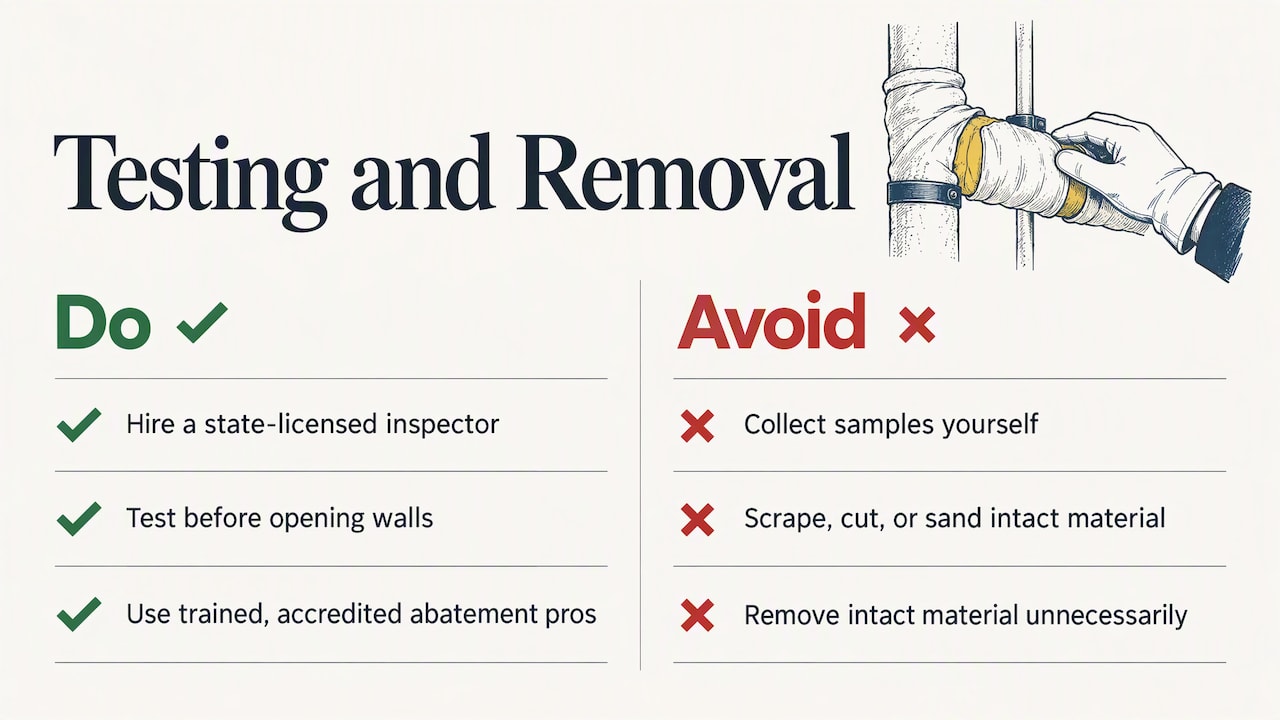
Testing. Testing is not mandated for a sale. The cost of knowing is modest compared with the cost of a surprise, though. Rhode Island licenses asbestos inspectors, and the state’s fee schedule lists a $200 license fee for an asbestos inspector, which tells you the profession is regulated. Hire a state-licensed inspector rather than collecting samples yourself. The EPA discourages DIY sampling because disturbing the material can release fibers.
Removal. Homeowners are not legally required to remove asbestos that is in good condition and left alone. The EPA says removal or major repair is typically needed only when material is significantly damaged or when renovations will disturb it. It also recommends trained, accredited professionals for abatement or major repair.
There is a practical reason to leave intact material alone before a sale: every scrape, cut or sanding job risks making the problem worse. If you plan to open walls, replace flooring or tear off siding, test first.
What asbestos does to price and buyer interest
Buyers rarely react to the word alone. They react to three questions: Is it damaged? What will it cost to deal with? Will my lender allow it?
Here is a plain way to think about the main scenarios:
| Situation | Typical buyer reaction | Your likely path |
|---|---|---|
| Intact floor tile or wrapped pipe insulation, disclosed | Often a negotiating point or request for a credit | Standard listing with disclosure |
| Vermiculite insulation or crumbling pipe wrap | Many buyers walk or demand a large price cut | Abatement quote, or sell as-is |
| Damaged material, FHA, VA or USDA buyer | Lender may require repairs before closing | Fix first or find a buyer not tied to those rules |
| Heavily deteriorated house with asbestos and other repairs | Retail buyers shrink, investors stay | Cash sale as-is |
On the lending point, real estate professionals note that asbestos-containing material that is damaged can become a financing issue for FHA, VA or USDA loans, since lenders often require repairs before closing to ensure the home is safe. A buyer who cannot get the loan cannot close, and a deal can fall apart late, after you have already paid for an inspection and moved your own plans around.
If you discount the price, do it from evidence. A written quote from a licensed abatement contractor gives you a real number to negotiate against. Without it, buyers will assume the worst and price accordingly.
Your options, compared
Option 1: List it with full disclosure
This can work well if the asbestos is limited, intact and in a house otherwise in good shape. Expect the buyer’s inspection to raise it, and expect a request for a credit or a repair. Disclose in writing early, attach any test results, and price with the likely negotiation in mind. You will pay agent commissions, and the timeline depends on finding a buyer whose financing is not held up by repair requirements.
Option 2: Abate first, then list
This makes sense when the material is damaged, or when you know a buyer’s lender will require it. Commercial and large-scale abatement in Rhode Island must be done by licensed professionals, with an abatement plan submitted to the state, according to the Department of Environmental Management. The cost is paid upfront, before you know the sale price, and the work takes time. That is hard to carry if you are facing a deadline, a foreclosure notice or a vacant inherited property.
Option 3: Sell as-is for cash
A direct cash buyer takes the property in its current condition. There is no inspection-driven repair negotiation, no lender requiring the material to be fixed, and no cleanup before closing. You still disclose what you know, because the Rhode Island statute applies to any sale of a one-to-four unit home. But the buyer prices the house knowing the issue and carries the abatement itself.
The tradeoff is honest: a cash offer will usually be below what a fully renovated, asbestos-free house would fetch on the open market. Whether it is the better deal depends on your net after commissions, repairs, carrying costs and time. Our guide on comparing cash offers with financed sales walks through how to compare net proceeds, and the page on what to expect when you skip repairs explains the discounts sellers commonly see.
If you find asbestos during a sale: a short checklist
- Stop any disturbance. Do not sand, drill, scrape or sweep suspect material. Leave it alone.
- Get it identified. Hire a state-licensed asbestos inspector to sample and have a lab analyze it.
- Write down what you know. Put the findings, dates and any prior work on the Rhode Island seller disclosure form before the purchase and sale agreement is signed.
- Get a quote if it’s damaged. Ask a licensed contractor what abatement would cost so you have a figure, not a guess.
- Decide how to sell. Compare listing, abating first and an as-is sale on your net proceeds and timeline.
- Keep records. Save lab reports, quotes and signed disclosures. They protect you after closing.
Homes of this age often have other hidden issues too. Lead paint is a common one in pre-1978 homes, and the Rhode Island Department of Health says most lead exposure in the state comes from those older houses. Radon is another test buyers ask about; this explainer on radon in old homes shows how it behaves in older foundations such as fieldstone and dirt floors. If you are selling an older home, expect questions on all three.
Handling asbestos waste if you do some work yourself
A Rhode Island homeowner can do limited work on their own home, but disposal is where people get stuck. According to the DEM asbestos page, the Rhode Island Resource Recovery Corporation does not accept asbestos waste for standard disposal. Homeowners can use the RIRRC Eco-Depot for free, by appointment, for limited quantities: up to four triple-bagged, damp contractor bags.
That covers small jobs, such as a few removed floor tiles, not a whole basement of pipe insulation or a vermiculite attic. Anything larger belongs to a licensed contractor. Because improper DIY removal can raise health risks, and a botched job is something you may then have to disclose, we would not take on more than a trivial job without professional advice.
Our perspective: why condition, not the word “asbestos”, is the problem
We buy houses for cash across Rhode Island, and we see how sellers react when the word comes up. Many assume the house is unsellable, or that they must spend thousands before anyone will talk to them. Neither is true.
Our view is simple. Asbestos is a condition to be priced, not a reason to hide a house. Sellers get into trouble in two ways: they spend money on repairs they did not need to make, or they stay quiet about something they knew. The first costs money and time. The second can cost far more.
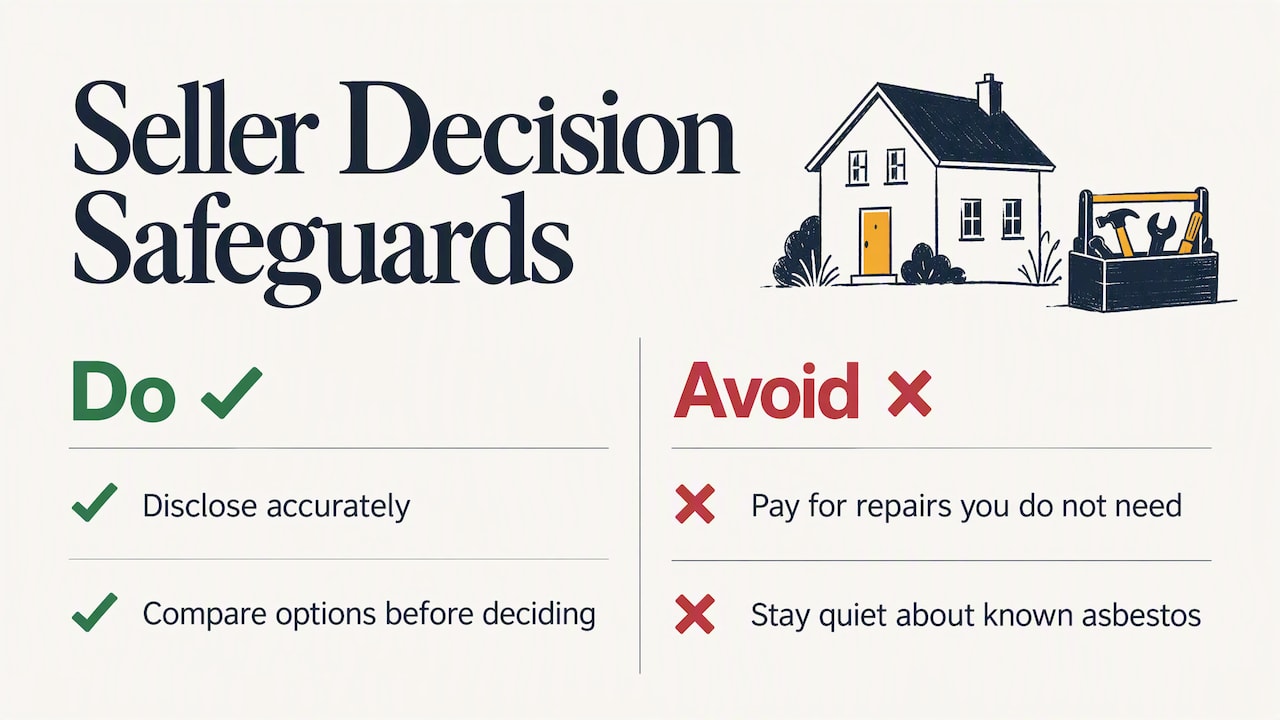
We buy homes as-is, and our offers are based on the After Repaired Value, meaning what the home would be worth once repaired, adjusted for the work it needs. You do not clean, repair or pay agent commissions, and you pick the closing timeline that fits your situation. We also want you to understand the comparison before you decide. If your house is in good shape with a few intact tiles, listing may net you more. If it is damaged, inherited, behind on payments or full of other repairs, a direct sale often removes the most stress.
Whatever you choose, disclose accurately. A good buyer will respect that.
— Dave
Selling your asbestos house to us
If you want to skip the abatement quotes, lender surprises and repair negotiations, Rhody Home Buyer offers cash for Rhode Island homes in any condition. There are no agent fees or commissions, and you do not need to clean or repair. You can see how the process works on our page about how cash home sales work, or read about selling as-is and how closing works. When you are ready, tell us about your house and we will explain what we can offer.
FAQ
Can you sell a house with asbestos in Rhode Island?
Yes. State and federal law do not prohibit it, and intact asbestos does not have to be removed first. You must disclose known deficient conditions, including asbestos, in writing before the buyer signs a purchase and sale agreement.
Do I have to disclose asbestos if I am not sure it is there?
The Rhode Island statute turns on conditions you actually know about. If you have a test result, a contractor’s report or prior abatement records, disclose them. Because you cannot identify asbestos by sight, an old house may simply have an unconfirmed suspicion, and a licensed inspector’s test is the way to find out.
Will asbestos stop a buyer from getting a mortgage?
It can, if the material is damaged. Lenders for FHA, VA and USDA loans often require repairs before closing when asbestos-containing material is in poor condition. Intact material is less likely to cause a problem, but each lender sets its own conditions.
Is it cheaper to remove asbestos or sell as-is?
That depends on the amount and condition of the material. Get a written quote from a licensed contractor and compare it with the discount buyers ask for. For large or damaged areas, or if you are short on time, selling as-is for cash often costs less overall.
Can I dispose of asbestos myself in Rhode Island?
Only in small amounts. The RIRRC Eco-Depot accepts limited quantities from homeowners, up to four triple-bagged, damp contractor bags, free by appointment. Larger projects require licensed professionals.
Sources
- Asbestos Information For Homeowners, Rhode Island Department of Health
- Asbestos, Rhode Island Department of Environmental Management
- Protect Your Family from Exposures to Asbestos, US EPA
- Does a home seller have to disclose asbestos? US EPA
- R.I. Gen. Laws § 5-20.8-2, Disclosure requirements, FindLaw
- Asbestos, Lead, and Radon Fees, 216-RICR-10-05-2.13
- Selling a House With Mold, Asbestos, or Lead Paint
- Lynch v. Conley, 853 A.2d 1212
- Lead Poisoning Information For Homeowners, Rhode Island Department of Health