
Most sellers do not need a full roof replacement before listing. The right call depends on one factor above all: whether the roof’s remaining life and visible condition will clear a buyer’s financing, especially FHA loans that require a minimum remaining roof life to qualify for financing. Start with a professional inspection and written estimate, then choose between a targeted repair, a full replacement, or listing as-is with a buyer credit.
TL;DR:
- Get a contractor inspection with a written remaining life estimate, dated photos, defect details, and itemized repair and replacement quotes before choosing a path.
- A buyer credit cannot resolve an FHA appraisal that finds less than two years of remaining roof life; repair or replacement may be required.
- Repair usually fits roofs under 10 years old with isolated defects, while widespread wear, repeated leaks, rot, or age beyond expected service life favors replacement.
- Choose a credit when the roof works and local buyers accept older roofs; replace it when nearby comparable homes have newer roofs.
Table of Contents
- Start with a professional roof inspection and written report
- Repair, replace, or offer a credit: comparing your three paths
- When replacement is the right call
- How financing rules and insurance requirements shape your decision
- Estimating cost, ROI, and whether a credit makes more sense
- Timeline, permits, and the paperwork buyers and lenders expect
- Rhode Island disclosure requirements for roof condition
- Weighing speed, certainty, or maximum proceeds
- A cash sale as an alternative to repairing or replacing
- FAQ
- Sources
Start with a professional roof inspection and written report
Before you decide anything, get the roof looked at by someone qualified, and get the findings in writing. Three types of inspection show up during a home sale, and they serve different purposes.
A contractor roof inspection focuses on the roofing system itself: shingles, flashing, decking, ventilation, and remaining service life. A general home inspection (ordered by the buyer after an offer) covers the roof as one item among dozens, often with less technical depth. A roof certification for sale, offered by some roofing companies and certification services, formally states the roof’s condition and expected remaining life, which can satisfy a lender or buyer without the cost of replacement. One such roof certification service notes that a certificate paired with an inspection report and a contractor warranty can sometimes clear a roof for sale without full replacement.
Whichever inspection you order, a useful written report should include:
- A remaining life estimate stated in years, not just a general condition rating
- A list of visible defects, including missing or curling shingles, flashing damage, and granule loss
- Attic observations with photos showing moisture stains, daylight through the decking, or insulation problems
- A defined scope of work for any recommended repairs, broken into line items
- A written, itemized estimate for both repair and full replacement, so you can compare costs side by side
This documentation does more than inform your decision. It gives your real estate agent language to use in listing disclosures, gives a buyer’s lender something concrete to review, and removes the guesswork that makes buyers nervous during their own inspection period. A seller who shows up with a dated inspection report and a contractor’s written scope looks far more credible than one who says “the roof seems fine.”
Pro Tip: Ask your contractor for photos timestamped during the inspection, not stock images of similar damage. Appraisers and underwriters trust dated, property-specific documentation.
Appraisers working on FHA-backed purchases are required to report roof and attic conditions in detail, including deterioration such as missing shingles or damaged flashing, and to note any areas they could not observe, according to HUD’s appraisal reporting guidance. If your own inspection already flags the same issues an appraiser would find, you have time to address them on your terms instead of scrambling after a buyer’s loan gets flagged mid-escrow.
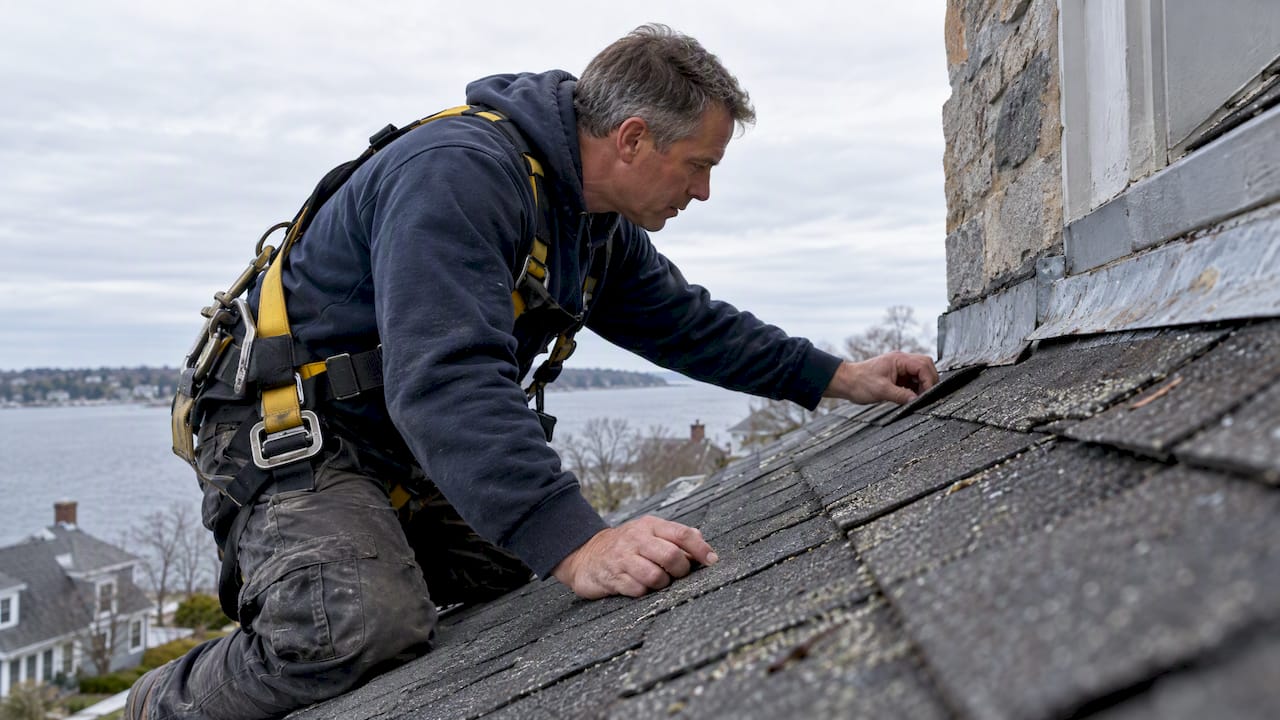
A written report also protects you if a buyer tries to renegotiate based on roof condition after their own inspection. If your report already disclosed the issue and priced the fix, there is little room for a surprise price cut. If it shows the roof is sound, you have a document to counter an inflated repair request. Either way, the report is the foundation every other decision in this process rests on.
Repair, replace, or offer a credit: comparing your three paths
Once you have an inspection in hand, you are choosing between three paths. Each one fits a different roof condition and seller priority.
- Targeted repair: fixing specific defects, such as a damaged section of flashing, a handful of cracked shingles, or a small area of soft decking, while leaving the rest of the roof in place.
- Full replacement before listing: tearing off the existing roof and installing a new one, typically with a transferable manufacturer warranty.
- List as-is with disclosure and a buyer credit: selling the home at a price that reflects the roof’s condition, with a credit or price reduction negotiated at closing instead of completed work.
Targeted repair makes sense when the inspection shows isolated problems rather than widespread wear. To satisfy a buyer’s inspector or a lender’s appraiser, the repair needs to be done by a licensed contractor, documented with a paid invoice, and, ideally, covered by a workmanship warranty. A patch job with no paperwork tends to raise more questions than it answers.
Full replacement earns its cost back most reliably when the existing roof is old enough, or damaged enough, that buyers would otherwise walk away or demand a steep price cut. A new roof also comes with a transferable warranty, which buyers value, and it removes a line item that would otherwise dominate every buyer’s first impression and every inspection report.
Buyer credits work well when you want to avoid managing a renovation project before listing. You disclose the roof’s condition, price the home accordingly, and let the buyer choose their own contractor and timeline. The trade-off is negotiation risk: some buyers will ask for more than a fair repair would cost, and if the roof is bad enough to threaten financing, a credit does not solve that problem the way a completed repair does.
A rough decision heuristic:
- A roof under 10 years old with isolated defects usually calls for repair
- A roof near or past the end of its expected service life, or with damage across multiple slopes, usually calls for replacement
- A roof in fair condition where comparable homes in your market typically sell with older roofs can often support a credit instead of either project
Your contractor’s written estimates and your agent’s read on local buyer expectations should drive the final call, not a generic rule.
When replacement is the right call
Some conditions point clearly toward a full replacement rather than a patch or a price adjustment. If your inspection turns up any of the following, replacement is usually the more reliable path:
- Active leaks, or a history of repeated leaks in different spots, rather than one isolated failure
- Structural decking rot or soft spots found during the attic inspection, not just surface wear
- Large-scale flashing failures around chimneys, vents, or valleys that affect multiple areas of the roof
- Heavy wear across most slopes, including widespread granule loss, curling shingles, or visible cracking
- Roof age at or beyond the expected service life for its material, which varies by product but is a key factor appraisers and buyers both weigh
A few situations push the decision even further toward replacement regardless of the roof’s exact condition. An HOA or neighborhood association with specific roofing standards can effectively require a newer roof before a sale closes. Buyer expectations in some markets run the same way: if every comparable listing nearby has a roof under 10 years old, an older roof becomes a negotiating liability even if it technically still functions.
The clearest trigger, though, is a signal from the financing side. If an appraiser notes the roof has less than two years of remaining life, or a lender’s underwriter flags the roof during review, a sale can stall or fall through entirely unless the roof is fixed. That single data point often matters more than curb appeal or buyer preference, because it determines whether the deal can close at all.
Pro Tip: If your roof is borderline, ask your contractor whether a documented partial repair plus a written remaining-life estimate could satisfy a lender’s two-year threshold. It is often cheaper than full replacement and faster to complete before listing.
How financing rules and insurance requirements shape your decision
Roof condition is not just a buyer preference. It is a financing checkpoint, and that changes how much weight it deserves in your decision.
For FHA-backed purchases, appraisal guidance from HUD’s archived HOC reference material sets a baseline: the roof must have at least two years of remaining physical life for the property to qualify for FHA-insured financing. If the appraiser determines the roof has less than two years left, that deficiency has to be reported, and it can block the loan unless the roof is repaired or replaced. The same guidance addresses a practical complication: when snow or other conditions prevent the appraiser from getting a clear look at the roof, HUD allows the sale to proceed with either a follow-up clear inspection before the loan is insured, or an escrow holdback equal to 1.5 times the cost of a new roof.
That two-year threshold is the single clearest line in this entire decision. A roof that clears it keeps your buyer pool, including FHA buyers, intact. A roof that does not clear it narrows your pool to cash buyers and conventional buyers willing to accept the risk, or forces a renegotiation once their lender’s appraisal comes back.
Appraisers do not just estimate remaining life informally. Under HUD’s appraisal reporting requirements, they are required to document the roof’s surface material and condition, note visible deterioration like missing shingles or damaged flashing, and flag any parts of the roof or attic they could not observe. That level of detail means a roof problem rarely slips through an FHA appraisal unnoticed.
Insurance adds another layer. Homeowners insurance can factor roof age and condition into both availability and payout structure, specifically whether a policy pays Actual Cash Value (ACV), which accounts for depreciation, or Replacement Cost Value (RCV), which does not. FHFA announced that Fannie Mae and Freddie Mac will now accept ACV roof coverage in some cases, a change meant to reduce insurance cost barriers for buyers and condo buildings. That shift means an older roof does not automatically disqualify a buyer’s insurance the way it once might have, which gives sellers a bit more flexibility than a strict “must replace” rule would suggest.
Practical steps that keep a sale financeable without a full replacement:
- Get a roof certification or detailed written inspection ahead of listing, so issues surface before a buyer’s appraisal does
- Offer an escrow holdback tied to a contractor’s written estimate if the roof is borderline
- Share your inspection report directly with a buyer’s lender early in escrow to avoid delays if questions come up
Estimating cost, ROI, and whether a credit makes more sense
Before committing to a project, run the numbers the way a contractor and an agent would.
Replacement costs break down into a few predictable line items: materials, labor for tear-off and installation, decking repair if rot is found underneath, permit fees, and disposal of the old roofing material. Material choice drives much of the variance. Asphalt shingles sit at the lower end of the cost range, metal and tile roofing cost more upfront but often carry longer service lives and stronger buyer appeal in certain markets, and regional labor rates and permit requirements shift the total further. Because costs vary significantly by region and material, get at least two itemized, written estimates rather than relying on a single ballpark figure.
One roofing contractor’s resource on typical replacement recoupment notes that sellers often see a meaningful share of a new roof’s cost reflected back in sale price, though actual results depend heavily on local market conditions and the roof’s starting condition.
A simple worksheet approach works better than guessing:
- Line up the contractor’s itemized repair estimate next to the itemized replacement estimate
- Ask your agent for a written estimate of how much the roof condition affects price and days on market in your area
- Compare total project cost and timeline against the price difference your agent expects a credit or disclosure would produce
- Weigh how much lead time you have before your target listing date, since rushed roofing work rarely saves money
Pro Tip: If your agent believes comparable homes sell well with disclosed roof age, a credit often nets you more than a rushed replacement once you account for contractor scheduling and financing costs.
Lean toward a credit when the roof is functional but aging, your market tolerates older roofs, and you want to avoid managing a project. Lean toward paying for the work when the roof actively threatens financing, when comparable listings nearby all have newer roofs, or when your timeline allows for the project without delaying your listing date.
Timeline, permits, and the paperwork buyers and lenders expect
A roof project has to work around your listing schedule, not the other way around. Here is the order that keeps both on track:
- Confirm scheduling before you commit to a listing date. Material lead times, contractor availability, and permit processing can add weeks, so get a firm start and completion date before you tell your agent when photos will happen.
- Pull permits and check HOA requirements early. Most jurisdictions require a roofing permit, and an HOA may have its own approval process or material restrictions. Confirm both before work starts to avoid a stop-work order mid-project.
- Verify which warranties transfer to a new owner. Manufacturer warranties on materials often transfer with proof of registration, while workmanship warranties from the contractor vary, so ask directly and get it in writing.
- Organize every document into one file. Before-and-after photos, paid invoices, the permit record, the product specification sheet, and the warranty documents should all be ready to hand to a buyer or their lender without delay.
This file does double duty. It answers buyer questions before they are asked, and it gives an appraiser or underwriter the paper trail they need if the roof comes up during review.
Rhode Island disclosure requirements for roof condition
Rhode Island requires sellers of residential property to complete a written property disclosure form covering known material defects, which includes roof condition. If you are aware of past leaks, prior repairs, or an inspection report flagging issues, that information generally needs to be disclosed to a buyer in writing as part of the standard disclosure process.
This is distinct from financing rules like FHA’s two-year remaining life guideline. Disclosure is about honesty regarding what you know; financing eligibility is about whether the roof’s condition meets a lender’s standard. You can have a roof that clears FHA’s threshold but still needs to be disclosed if it has a documented history of repairs. Conversely, a roof that technically has no known defects can still fail an appraisal if its remaining life is too short.
Because disclosure rules and real estate contract language can vary by transaction and have legal consequences if handled incorrectly, treat this section as a starting point, not a substitute for guidance from a Rhode Island real estate attorney or your listing agent. If your inspection report or roofing contractor’s estimate flags any defect, the safest move is to put it in writing on your disclosure form rather than leave it to interpretation.
Weighing speed, certainty, or maximum proceeds
The right roof decision depends less on the roof and more on what you actually need from the sale.
If speed and certainty matter most, waiting weeks for a replacement to finish before you can even list rarely makes sense. A buyer credit, or selling to a cash buyer who takes the property as-is, gets you to closing faster and removes the risk of a contractor delay pushing your listing date out further.
If you are in a competitive market where buyers have options, a completed replacement can remove a negotiating point entirely and keep your listing competitive against newer-roofed comparables. That works against you if your timeline or budget cannot absorb the project without stress.
There is no universally correct answer here. A seller with time, cash reserves, and a competitive local market benefits from replacement. A seller facing a tight timeline, limited budget, or a roof that needs significant work benefits more from disclosure, a credit, or an as-is sale.
— Dave
A cash sale as an alternative to repairing or replacing
If the math above points toward a credit or you simply do not want to manage a roofing project before you sell. We buy homes as-is, roof condition included. There is no repair list to complete, no contractor to schedule, and no agent commission to factor into your net proceeds. Offers are based on the home’s after-repaired value, so a roof needing work does not disqualify sellers from a fair cash offer.

Sellers come to us in a range of situations: an inherited property with a roof nobody has maintained, a home where repair costs would eat into any profit from a traditional sale, or simply a timeline too tight for permits and contractor schedules. In each case, selling without making repairs means skipping the inspection negotiations and financing contingencies that roof issues tend to trigger.
If you want a straightforward next step, reach out through our Rhode Island cash home buying service with your address and a short description of the property. We will walk you through how the process works and get you a cash offer, with closing on your own timeline rather than one dictated by a buyer’s lender.
FAQ
Will a new roof help sell a house?
A new roof can make a home more attractive to buyers and remove a common point of negotiation during inspection, particularly for buyers relying on financing. Whether it is worth the cost depends on the existing roof’s condition and how comparable listings in your area are priced, so weigh the project cost against your agent’s estimate of its effect on price and time-to-sell.
What is the actual cash value of a 20 year old roof?
Actual cash value (ACV) reflects a roof’s replacement cost minus depreciation for age and wear, so an older roof typically has a significantly lower ACV than a new one, with the exact figure depending on the policy and material. FHFA’s recent guidance notes that ACV coverage is now accepted in some cases for mortgages backed by Fannie Mae and Freddie Mac, which can affect how insurable an older roof is for a buyer.
What is the 25% rule for roofing?
Local building codes vary, so confirm the specific threshold and requirement with your contractor or local permitting office before planning a repair.
Is $30,000 too much for a roof?
Whether a given price is reasonable depends heavily on roof size, material choice, decking repairs, and regional labor costs, so there is no fixed figure that applies to every home. Get at least two itemized, written estimates from licensed contractors before judging any single quote, since material and complexity differences can account for a wide cost range.
Sources
- HUD Archives: HOC Reference Guide – Roofs & Attics (Page 1-24)
- Appraisal Report and Data Delivery Guide
- Fannie Mae and Freddie Mac remove certain homeowners insurance requirements that will reduce costs | FHFA