
Yes, you can sell a home without showings, open houses or staging. The cleanest way is to sell directly to a cash buyer who evaluates the house in one visit and makes an offer on the property as it stands. The other routes, such as private appointment-only sales, give up some of that privacy or some of the price. Below we lay out each route, what it costs you in time and money, and what Rhode Island sellers must still do by law.
TL;DR
- A direct sale to a cash buyer is the one route with no open houses, no staging and no stream of strangers walking through. The buyer usually needs a single walkthrough.
- A traditional listing can still skip open houses. Many buyers find homes online, and appointment-only showings are common.
- Staging is not required. Basic cleaning, clutter removal and honest pricing do most of the work if you list.
- Limiting exposure can shrink your pool of buyers, so compare a listing against a direct offer on net proceeds and timing.
- Disclosure rules apply however you sell. Rhode Island sellers of one- to four-unit homes must deliver a written disclosure form before signing a purchase contract.
Table of Contents
- What “selling without showings” really means
- Do you need open houses to sell?
- Can you sell without staging?
- The four ways to sell with little or no foot traffic
- When a direct sale makes the most sense
- What you give up and what you keep
- What you must still disclose, however you sell
- How a direct sale works with us
- Ready for a no-showing sale?
- FAQ
- Sources
What “selling without showings” really means
People use the phrase for three different things, and the right answer depends on which one you mean.
- No open houses. Your home is listed, but buyers only see it by private appointment.
- No staging. You list, but you do not rent furniture, repaint or redecorate first.
- No showings at all. Nobody tours the house on a schedule you have to keep. One buyer looks once, then makes an offer.
The first two are easy to do with a regular agent or a flat-fee listing. The third is only realistic with a direct buyer. Everything else involves some form of public marketing, and public marketing means visitors.
Do you need open houses to sell?
No. Open houses are mostly a tool for evaluation, not discovery. In the National Association of Realtors’ 2025 buyer and seller profile, 52 percent of buyers found the home they bought online, and only 4 percent found it through a yard sign or open house sign. The same report says 48 percent of buyers used open houses somewhere in their search, so they are not useless. They just rarely bring in the buyer who ends up purchasing.
Agents say much the same thing. Online marketing and MLS exposure now do most of the work of getting a home in front of buyers, which is why many sellers close without ever holding an open house.
If you want to list but keep control, these habits help:
- Allow showings by appointment only, with notice of a few hours.
- Ask buyers’ agents for pre-approval or proof of funds before booking.
- Group showings into set windows, such as two evenings a week, so you are not leaving the house constantly.
- Put strong photos and a floor plan online so only serious buyers ask to visit.
Some high-end sellers go further and keep full details behind a request system that screens buyers before releasing floor plans and complete photography. That level of control suits unusual properties. It is rarely needed for an ordinary Rhode Island house.
Can you sell without staging?
Yes. The Realtors’ own consumer guidance says staging is not required. It describes staging as cleaning a home and temporarily furnishing it so buyers can picture living there. It suggests that sellers who skip it may still want to clean windows, carpets, light fixtures and walls, store clutter, and tidy the front entrance and landscaping.
Florida Realtors adds a useful point: sellers can often leave dated appliances, finishes and flooring in place as long as they are clean and working. Their July 2026 report says thorough cleaning, basic upkeep and realistic pricing can serve a seller better than a costly round of cosmetic work. Redfin makes a similar case: staging matters less for fixer-uppers, homes likely to be renovated, or sellers on a tight budget.
A low-effort prep list if you list the home
- Remove the clutter from counters, closets and the garage.
- Clean floors, windows and bathrooms. If you would rather not do this yourself, a professional crew offering move-out and deep cleaning services can turn the house around before a short run of scheduled showings.
- Fix anything that affects safety or a buyer’s loan, such as a broken handrail or a leaking roof.
- Gather paperwork. Contractor invoices, permits, warranties and maintenance records for the furnace and water heater reassure buyers and speed up negotiations.
If the home needs more work than you can handle, our guide on selling a house without cleaning it covers what you can safely skip, and our page on selling without repairs explains how an as-is sale works.
The four ways to sell with little or no foot traffic
| Route | Showings | Staging or prep | Agent commission | Main trade-off |
|---|---|---|---|---|
| Traditional listing, appointment-only | Private, scheduled | Cleaning and light prep advised | Yes | You still host buyers and wait for offers |
| For sale by owner (FSBO) | You run them | Your call | No listing agent | You handle marketing, negotiation and closing yourself |
| Private or phased marketing | Limited, gated | Usually polished | Usually yes | Smaller audience |
| Direct cash sale | One walkthrough | None needed | None | Offer reflects the buyer’s repair and resale costs |
Traditional listing with private showings
This is the familiar path with the open house removed. You get full MLS exposure and a pool of financed buyers. You also get scheduling, cleaning before every visit and the wait for an offer that survives inspection and the buyer’s loan approval. Ninety-one percent of sellers in the NAR profile worked with a real estate agent, so most sellers accept that trade.
For sale by owner
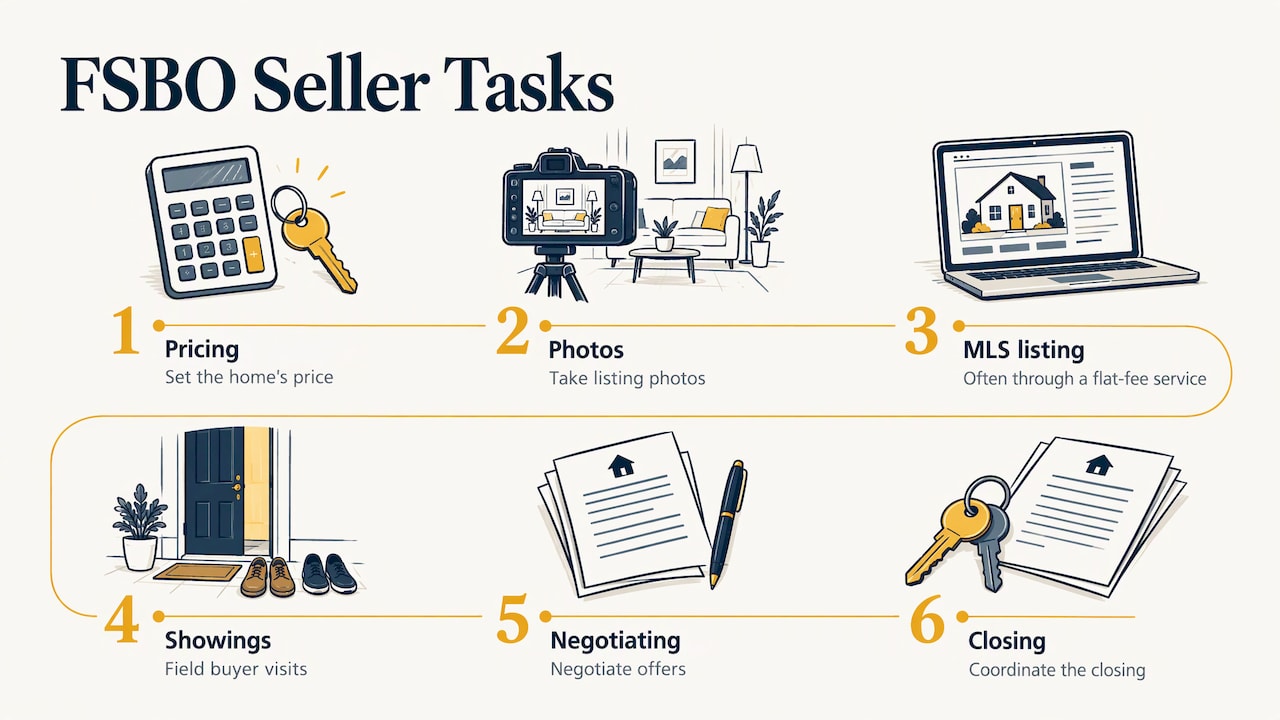
Selling yourself means doing the agent’s work: pricing, photos, an MLS listing (often through a flat-fee service), fielding showings, negotiating and coordinating the closing. You save the listing commission, but you do not avoid showings. They simply become your job. If your goal is to avoid strangers in your home, FSBO is the wrong fit. Our piece on why skip the realtor goes through that decision.
Private or phased marketing
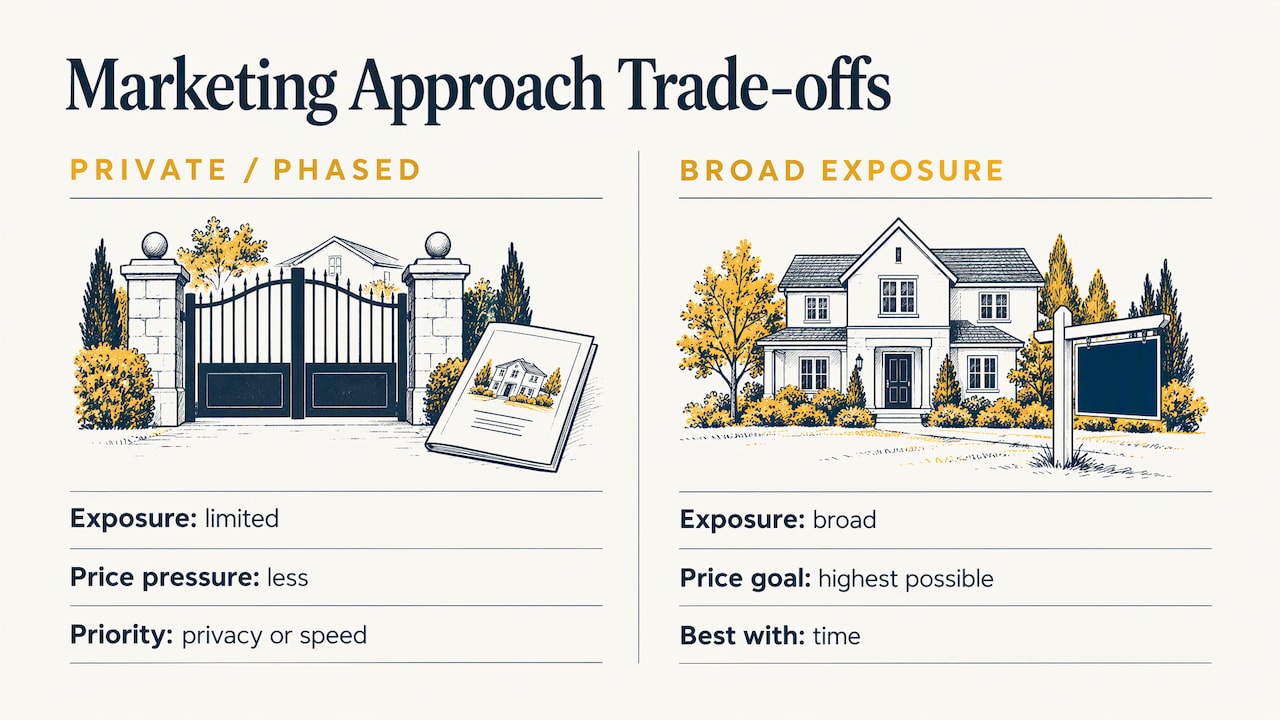
Some sellers market quietly first, then go public later. It gives a feeling of exclusivity, but one commentator argues that limiting exposure usually means a smaller audience and less competitive pressure on price. If your priority is the highest possible price and you have time, broad exposure is the stronger tool. If your priority is privacy or speed, that matters less.
Direct sale to a cash buyer
A direct buyer purchases the home itself, so there is no listing, no buyer’s loan to approve and no need to present the house at its best. You typically have one walkthrough, then an offer. This is the route we offer, and it is the only one of the four where the answer to “how many showings?” is genuinely “one.”
When a direct sale makes the most sense
The seller’s situation usually decides this more than the market does. A direct sale tends to fit when:
- The house needs repairs. Listing a home with a failing roof, old systems or damage means either paying for fixes first or fielding showings that end in low offers and inspection renegotiations.
- You are behind on the mortgage. Time is the scarce resource. In Rhode Island, a lender must typically mail notice of a foreclosure sale at least 30 days before the first newspaper publication, with the notice then published weekly for three weeks. A regular listing with showings, an inspection and a buyer’s financing can take longer than that window allows. For owner-occupied homes of up to four units, the same source says the lender must offer a mediation conference before starting foreclosure. If you have received a notice, talk to a housing counselor or a Rhode Island attorney about your options as well.
- You inherited the house. Heirs often live elsewhere and do not want to clean out a home or host strangers in it. Our guide for absentee owners selling in Rhode Island walks through selling from a distance.
- You simply want privacy. Divorce, illness, tenants in place or a family that needs calm are all valid reasons to avoid a parade of visitors.
What you give up and what you keep
Being straightforward about the trade-offs makes for a better decision. A cash buyer prices the home based on what it will be worth after repairs, less the cost of getting it there. Our offers are based on the After Repaired Value of the property. In exchange, you skip agent commissions and the cost and time of repairs, cleaning and staging, and you choose your closing date.
To compare fairly, do not look at the headline price alone. Add up what a listing would cost you:
- Agent commission, if you use an agent.
- Repairs and cleaning before listing.
- Carrying costs while the house sits: mortgage, taxes, insurance and utilities.
- The risk of a buyer’s financing or inspection falling through.
- Your time, and the disruption of showings.
Then set that total against a direct offer. For some homes a listing nets more. For homes that need work or sellers on a deadline, the direct offer often wins on certainty and speed.
Our perspective
We buy houses in Rhode Island and Eastern Connecticut, and the same thing comes up in almost every first call: the owner is tired. Tired of keeping a house spotless for strangers, tired of repair estimates, tired of waiting to find out whether a buyer’s loan will come through.
Our view is that a sale should fit the seller’s life, not the other way around. That is why we buy homes as-is, with no agent fees, no commissions and no repairs or cleaning. We base our offer on the After Repaired Value, we explain how we reached it, and you choose a closing timeline that works for you.
If you have a house that needs work, an inherited property, or a mortgage that is getting away from you, you should not have to stage anything to get a fair, direct answer. We keep the process clear and pressure-free so that you can decide with a calm head.
Dave
What you must still disclose, however you sell
Skipping showings does not skip the law. Three points matter:
- Rhode Island disclosure form. State law requires sellers of properties with up to four dwelling units to deliver a written disclosure form to prospective buyers before signing a purchase contract.
- Concealing defects. In every state it is illegal to actively and fraudulently conceal major physical defects. Disclosing a known problem and pricing it in carries less legal risk than hiding it.
- Lead paint. Sellers of homes built before 1978 must follow the federal lead-based paint rules, which include disclosing known hazards, providing the EPA pamphlet and keeping signed acknowledgements for three years. The same Nolo page covers the details.
Inspections are not required by law. The Realtors’ guidance says a buyer may add an inspection as a contingency, and buyers typically pay for it. Some municipalities also require smoke detector, carbon monoxide or occupancy checks before transfer, so confirm with your local building department which apply in your city or town.
How a direct sale works with us
The process is short, and you control the pace.
- Tell us about the house. Share the address and condition. Nothing needs to be cleaned or fixed first.
- One walkthrough. We look at the property once so our offer reflects its real condition.
- Receive a cash offer. It is based on the After Repaired Value, with no agent fees or commissions.
- Pick your closing date. Close when it suits you, whether that is quickly or later.
You can read the full steps on our how it works page.
Ready for a no-showing sale?
If you want to sell your Rhode Island home without open houses, staging or repairs, we would like to hear about it. We buy as-is, in any condition, and you set the closing timeline. Request your cash offer from Rhody Home Buyer and get a straight answer without a single open house.

Want to read more first? Our blog covers preparation, curb appeal and selling as-is.
FAQ
Can I sell my house without an agent and without showings?
Yes, if you sell directly to a cash buyer. A buyer who purchases the house itself usually needs just one walkthrough, so there are no open houses and no scheduled tours. A for-sale-by-owner sale does not remove showings, because you would host them yourself.
Do I have to stage my house to sell it?
No. The Realtors’ consumer guidance says staging is not required. If you list, cleaning, decluttering and fair pricing usually matter more. If you sell as-is to a direct buyer, you do not need to stage or even clean.
Can I sell a house in Rhode Island without open houses?
Yes. Most buyers find homes online, and many listings run on private appointments only. You can also skip the listing and sell directly. Either way, Rhode Island sellers of up to four-unit properties still deliver a written disclosure form before signing a contract.
What if I am facing foreclosure and cannot host showings?
Time is the main concern. A listing needs showings, an offer, an inspection and buyer financing, and it may not fit your foreclosure timeline. A direct cash sale with a closing date you pick can be faster. Speak with a housing counselor or Rhode Island attorney about your notice as well.
Sources
- 2025 Profile of Home Buyers and Sellers, NAR
- When to Skip the Open House and Still Close Quickly, Realtor.com
- Preparing Your Winnetka Estate For A Quiet, High-Impact Sale
- Consumer Guide: Preparing to Sell Your Home, NAR
- Sellers may not need renovations before listing, Florida Realtors
- Does Staging Really Help Sell Your House? Redfin
- Seller’s Document Checklist, DwellRecord
- The Phased Marketing Approach, Steve Keefe
- Foreclosure Process and Laws in Rhode Island
- Selling a Rhode Island Home: What Are My Disclosure Obligations? Nolo
- Selling a Home? What You Must Tell Buyers About Its Defects, Nolo
- Consumer Guide: Home Inspections, NAR
- What Do I Need to Sell My House: Required Documents, LegalClarity