
The fastest way to sell a house in Rhode Island is to sell it as-is to a cash buyer, who can close on your schedule with no showings, no repairs and no agent commission. The fastest traditional route is to price sharply, make the house easy to show and list with a local agent, but even then you are working against a market where the typical home takes about 38 days just to find a buyer, before the closing period starts.
This guide walks through both paths, what each costs you in time and money, the Rhode Island rules that can slow a sale down, and how to spot the offers that are not what they seem.
TL;DR
- A typical Rhode Island listing spends a median of 38 days on the market before it is under contract, and closing comes after that.
- Selling as-is to a cash buyer removes repairs, staging, showings and agent commissions, and lets you pick the closing date.
- A deed in Rhode Island must be prepared or reviewed by a licensed attorney, so line one up early whichever route you choose.
- Never pay an upfront fee, and never sign over your title on a promise that you can stay, to anyone offering to rescue a distressed sale.
- If you owe more than the house is worth, talk to a HUD-approved housing counselor before you sign anything.
Table of Contents
- What fast really means in Rhode Island
- What the Rhode Island market tells you
- Your three real options
- Path one: speeding up a traditional listing
- Path two: selling as-is for cash
- The Rhode Island rules that can slow you down
- If you are behind on the mortgage
- How to avoid the scams
- Our perspective: speed should not cost you clarity
- Selling to Rhody Home Buyer
- A two-week action plan
- FAQ
- Sources
What fast really means in Rhode Island
People use the word fast for very different things. Some need money in two weeks because of a job transfer. Others have an inherited house they cannot afford to carry. Some are behind on the mortgage and watching a calendar. Before you pick a route, decide which of these you are:
- Fast to an offer: you want a buyer committed quickly, and a few weeks is fine.
- Fast to the closing table: you need cash in hand by a specific date.
- Fast and certain: you cannot risk a buyer falling through on financing or inspection.
A traditional listing can deliver the first. It struggles with the second and third, because a buyer who needs a mortgage also needs an appraisal, an underwriter and often a repair negotiation after the inspection.
What the Rhode Island market tells you
Realtor.com’s September 2026 data puts the median listing price in Rhode Island at $569,900 and the median sold price at $525,000, with a median of 38 days on market, up 2.70% from a year earlier. Two things follow from that.
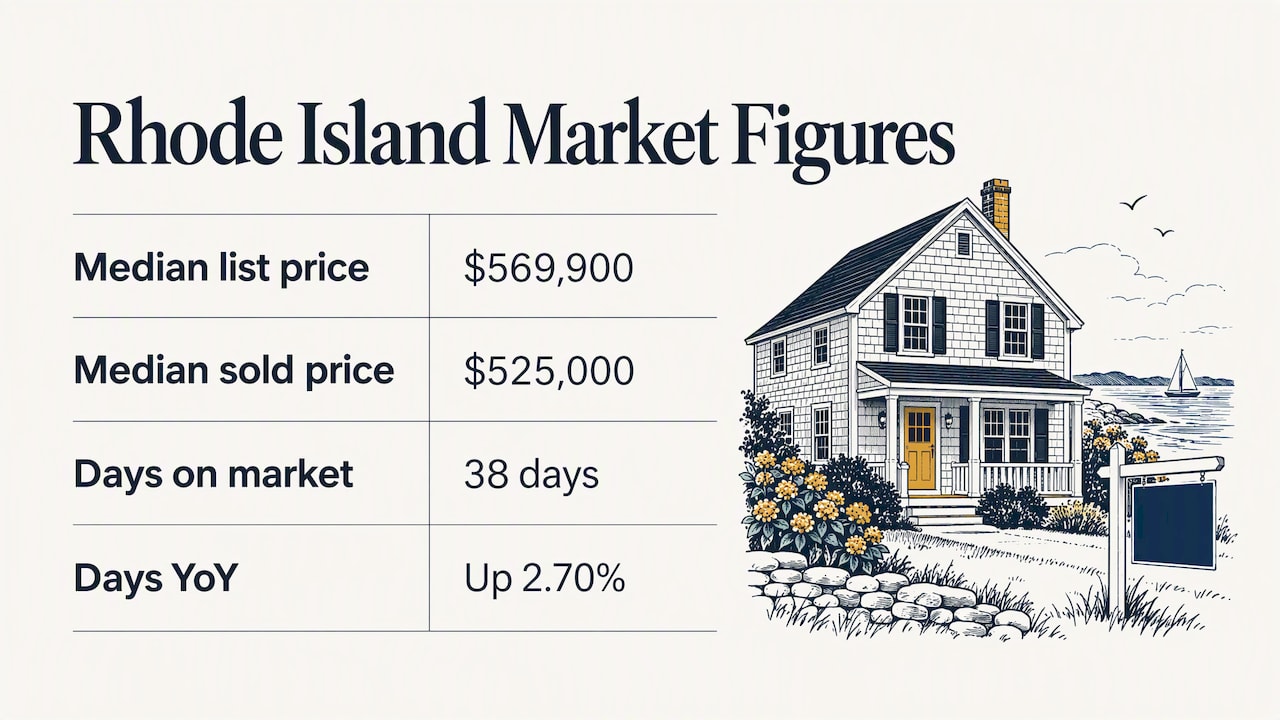
First, homes are selling for less than they are listed for. A seller who needs speed should expect to price at or below comparable sales rather than test the market with an ambitious number. Second, 38 days is the middle of the range. Half of listings take longer, and that clock starts only after you have cleaned, repaired, photographed and listed. If you want a longer view, the St. Louis Fed tracks median days on market for Rhode Island month by month, which helps you see whether your season is slow or busy.
Your three real options
| List with an agent | Sell as-is to a cash buyer | For sale by owner | |
|---|---|---|---|
| Typical time to a buyer | Weeks to months | Days to a couple of weeks | Varies widely |
| Repairs and cleaning | Usually expected | None | Usually expected |
| Showings | Many | Few, often one walkthrough | Many, run by you |
| Commission | Paid by seller | None | None, but you do the agent’s work |
| Financing risk | Yes | Low, cash | Yes |
| Price relative to market | Highest potential | Below top retail | Highest potential |
The honest trade-off is this: listing can bring a higher price, and a cash sale brings speed and certainty. Which one wins depends on how much each week costs you. If the house needs $40,000 of work and you are paying a mortgage, taxes and insurance every month, the retail premium shrinks quickly. Our page on expecting less when you skip repairs goes through that math in more detail.
Path one: speeding up a traditional listing
If the house is in good shape and you have a month or two, you can shorten a listing with a few moves.
- Price to the last few comparable sales, not to the asking prices around you. In a market where sold prices trail list prices, an overpriced listing goes stale and then sells for less anyway.
- Fix only what a buyer will see in the first ten seconds. Photos and curb appeal decide whether anyone books a showing. Pressure washing the siding, walkway and driveway is one of the cheaper ways to change the first photo, and this exterior-first cleaning checklist shows the order that works. We cover the same idea for cash sales in our post on curb appeal.
- Declutter and clear the house for showings. The fewer obstacles to a same-day visit, the sooner an offer arrives.
- Get your paperwork ready before you list. That means the seller disclosure form, your mortgage payoff figure and the name of your closing attorney.
- Accept the offer that closes, not only the offer that is highest. A slightly lower cash or well-qualified offer often beats a higher one that depends on a buyer selling their own home.
Done well, this route can still take two to three months from the day you start preparing to the day you get paid.
Path two: selling as-is for cash
In a cash sale a buyer purchases the home directly, in its current condition, without a mortgage. There is no appraisal gate, no lender timeline, and usually no repair list. You get an offer, you decide, and you close on a date that suits you. The steps are simple:
- You share the address, condition and your timeline.
- The buyer reviews the property and makes an offer.
- You accept, counter or walk away at no cost.
- A closing attorney prepares the deed and settlement paperwork.
- You sign and receive your proceeds.
We lay out the process on our how cash home sales work page and in the step-by-step overview. If you want to see what the contract stage looks like, our guide on selling as-is for cash in weeks covers the four steps and the buyer risks to watch.
Cash sales fit best when the house needs work, when you are dealing with an inherited or vacant property, when you are relocating, or when carrying costs are mounting. They fit less well when the house is in showroom condition and you have no deadline, because then the open market is likely to pay more.
The Rhode Island rules that can slow you down
Speed is mostly about avoiding surprises. These are the local ones.
Deeds need an attorney
In Rhode Island, preparing a deed counts as the practice of law. The state’s Department of Business Regulation explains, in a bulletin about the Supreme Court’s 2020 ruling, that certain closing functions require a licensed attorney. Non-attorney title agents can handle some residential closing tasks, but they must give a written notice before closing that says they are not attorneys and do not represent either side. If a closing agent skips that notice or starts giving you legal advice, treat it as a warning sign. The Supreme Court’s own opinion in the Paplauskas matter is the underlying source if you want to read it.
Practical step: contact a real estate attorney in the first week. A delay in the title search or deed is one of the most common reasons a fast sale is not fast.
The conveyance tax is yours unless you agree otherwise
Rhode Island charges a real estate conveyance tax on deeds, and by default the seller pays it. It is tiered, with a second tier for residential property above a statutory threshold, and it is paid when the deed is recorded. Ask your closing attorney for the exact figure on your price before you accept an offer, because it comes straight out of your net proceeds. Compare offers on what you walk away with, not on the headline number.
Nonresident sellers face withholding
If you live out of state, for example because you inherited a Rhode Island house, the buyer must withhold 6% of net proceeds for individual sellers, or 7% for corporate sellers, unless you obtain a Certificate of Withholding Due. The election forms must be filed with the Division of Taxation at least 20 days before closing. If you plan to close in two weeks, that deadline needs attention on day one, and a tax professional can tell you which election fits your situation.
Disclosure and the as-is label
Selling as-is changes who pays for repairs, not what you must tell the buyer. Rhode Island sellers of residential property complete a state disclosure form, and your attorney can confirm what applies to your house. Leaving out a known problem is the quickest way to turn a finished sale into a dispute.
If you are behind on the mortgage
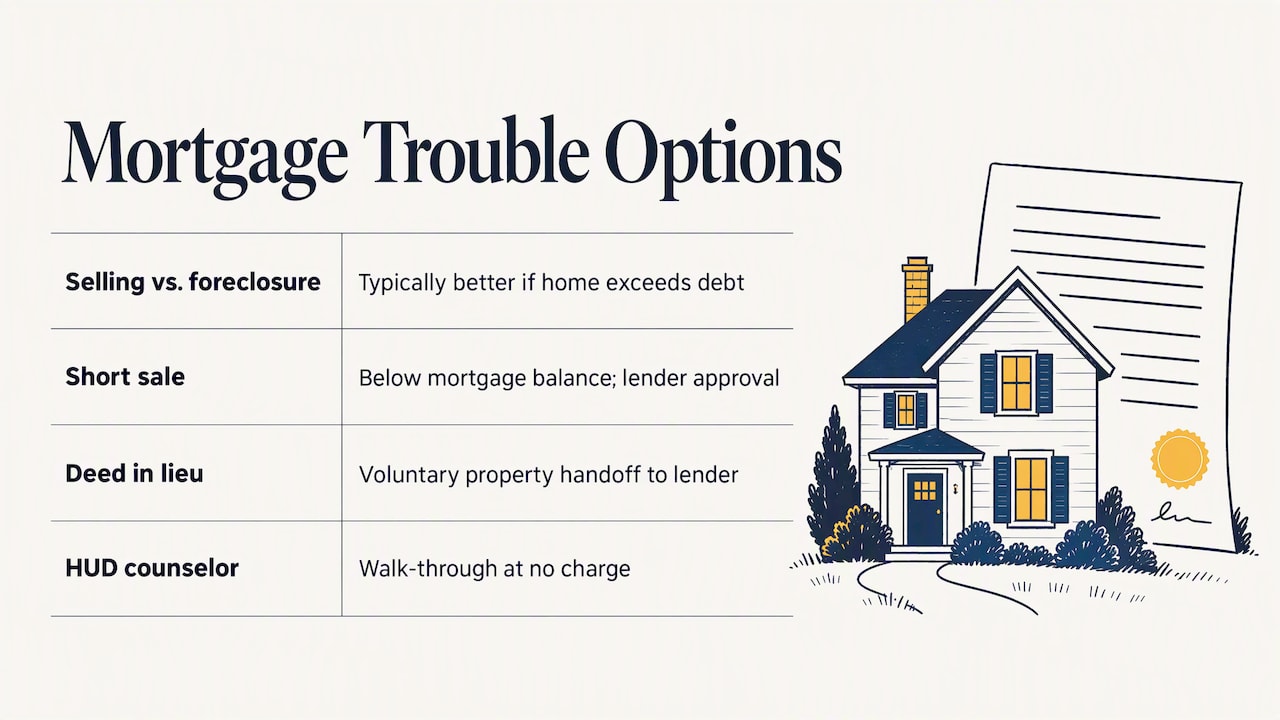
When payments are slipping, timing matters more than price. The Consumer Financial Protection Bureau says that selling is typically better for your money and your credit than going through foreclosure, provided the house is worth more than you owe.
If you owe more than it will sell for, a short sale may be possible. That means selling for less than the mortgage balance with your lender’s approval. You are responsible for finding the buyer and negotiating, and a HUD-approved housing counselor can walk you through it at no charge. A deed in lieu of foreclosure, where you hand the property to the lender voluntarily, is another option your counselor can explain. If bankruptcy is on the table, see our overview of selling before bankruptcy and speak with a bankruptcy attorney before you commit to a date.
How to avoid the scams
Distressed sellers are targeted. The CFPB lists the patterns in its guide to spotting foreclosure relief scams. The ones that matter most for a quick sale:
- Any upfront fee. Legitimate foreclosure counseling is free.
- A request to sign over your title while promising you can stay and buy it back later, often framed as rent-to-buy. This can cost you the house.
- Pressure to stop paying your mortgage so the buyer can get a better deal.
- A contract nobody else is allowed to read. Have a housing counselor or attorney review it before you sign.
The same logic applies to clearing out a property after a death. This guide on what executors should check before signing a cleanout agreement is written about New Jersey, but the checks (written scope, proof of insurance, no pressure) apply anywhere.
A short test for any buyer: can they explain, in writing, how they arrived at the number, what you will pay at closing, and who your attorney is? If the answers are vague, walk away.
Our perspective: speed should not cost you clarity
We buy houses directly from Rhode Island homeowners, so we are not neutral, but we try to be honest about when we are the right call and when we are not. Most of the sellers who call us are not looking for the highest possible price. They are looking for an end to a problem: a house that needs a new roof, an estate nobody wants to manage, a mortgage that has become too heavy.
Our offers are based on the After Repaired Value of the home, meaning what it would be worth fixed up, less the work we take on. That is why you do not need to clean, repair or stage anything, and why we do not charge agent fees or commissions. It is also why a cash offer will usually sit below what a perfect, fully renovated house might fetch on the open market. We would rather say that plainly up front than let you find out later.
Our advice to anyone comparing options: get the net number from every route, in writing, after taxes, closing costs, carrying costs and repairs. Choose the one that fits your deadline. If a listing will genuinely leave you better off and you have the time, do that. If it will not, we are here.
— Dave
Selling to Rhody Home Buyer
If speed and certainty matter more than a retail price, we buy Rhode Island homes as-is, in any condition, for cash. There are no agent fees or commissions, no repairs or cleaning, and you choose the closing timeline. Tell us about your house and we will give you a straightforward offer with no pressure to accept. You can also read why some owners skip the realtor or see how selling as-is and closing quickly compares with listing.
A two-week action plan
Whichever route you choose, this sequence keeps a fast sale on track.
- Day 1: Get your mortgage payoff statement and find the deed. Contact a Rhode Island real estate attorney.
- Days 1 to 3: Decide on your deadline and your minimum net number. Write both down.
- Days 2 to 5: Collect at least two options, such as a listing price opinion from an agent and a cash offer, and ask each to show the figure after costs.
- Days 5 to 7: If you live out of state, ask a tax professional about the nonresident withholding election, which must be filed 20 days before closing.
- Week 2: Have your attorney review the contract. Confirm who pays the conveyance tax and what the final settlement statement will show.
- Closing: Bring identification, keys and any warranties or permits for work done on the house.
FAQ
How long does it take to sell a house in Rhode Island?
The median Rhode Island listing spends 38 days on the market before getting a buyer, and closing follows that. Altogether, a traditional sale often takes two to three months from preparation to payout. Cash sales can close faster because there is no mortgage approval to wait for.
Do I need an attorney to sell my house in Rhode Island?
A deed must be prepared or reviewed by a licensed attorney, because drafting one is the practice of law. Non-attorney title agents can handle some closing tasks but must disclose that they are not attorneys. Hiring an attorney early is the safest way to keep the closing date.
Can I sell a house in Rhode Island without making repairs?
Yes. You can sell as-is on the open market or to a cash buyer, though you still need to complete the required disclosures honestly. Buyers on the open market will usually negotiate the price down for visible problems, while a cash buyer prices the repairs into the offer. See our no-repairs guide for more.
What if I owe more than my house is worth?
You may be able to arrange a short sale, which needs your lender’s approval. Talk to a HUD-approved housing counselor first, since the CFPB notes that you must manage the process yourself or with the counselor’s help. Do not pay anyone upfront to handle it.
Who pays the conveyance tax when selling in Rhode Island?
The seller pays it unless the contract says otherwise, and it is collected when the deed is recorded. Ask your closing attorney for the exact amount before you accept an offer, since it reduces your net proceeds.
Sources
- Rhode Island Housing & Rental Market Trends, Realtor.com
- Median Days on Market in Rhode Island, FRED, St. Louis Fed
- Insurance Bulletin 2020-8, Rhode Island Department of Business Regulation
- In re Paplauskas opinion, Rhode Island Supreme Court
- Real Estate Conveyance Tax, RI Division of Taxation
- Withholding Tax on the Sale of Real Property by Nonresidents, RI Department of State
- Avoid foreclosure, CFPB
- What is a short sale?, CFPB
- What is a deed-in-lieu of foreclosure?, CFPB
- How to spot and avoid foreclosure relief scams, CFPB