
A home appraisal is a licensed professional’s opinion of what your house is worth, and in a financed sale the buyer’s lender orders it. The appraiser visits the property, compares it with similar recent sales, and sends a report to the lender. The visit is short. The report usually follows within about one to two weeks. Below is each step in order, what appraisers look at, how to prepare, and what to do if the number comes in lower than you hoped.
TL;DR
- The lender orders the appraisal, not the seller. The appraiser is an independent third party whose job is a fair, evidence-based value.
- The on-site visit is often 20 to 45 minutes. Many appraisers also complete the report later at the office, so the number is not set while they walk through.
- Appraisers weigh location, size, condition, features and recent comparable sales. Ordinary tidiness is not what drives value, but a clear, accessible house and a list of your upgrades help.
- If the value looks wrong, contact the lender quickly. Factual errors and missed comparable sales can be raised through a reconsideration of value.
- A sale to a cash buyer has no lender, so it has no lender-ordered appraisal step.
Table of Contents
- Who orders the appraisal and why
- The home appraisal process, step by step
- What happens during the appraisal visit
- What appraisers look for in a house
- How appraisers arrive at a value
- How long the process takes
- Do appraisers care about cleanliness?
- How to prepare without overspending
- Appraisal versus inspection
- What if the appraisal comes in low?
- When a cash sale fits better
- Need to sell your Rhode Island house on your timeline?
- FAQ
- Sources
Who orders the appraisal and why
When a buyer borrows money, the lender generally requires an appraisal, according to the Consumer Financial Protection Bureau. The lender wants to know the house is worth enough to back the loan. Freddie Mac describes an appraisal as an opinion of market value from a third-party professional with state-issued credentials, and says its main purpose is to help the lender evaluate the collateral.
The National Association of Realtors consumer guide adds two points sellers often miss. The appraiser is an independent third party engaged by the lender. Appraisers do not represent the buyer or the seller, and their sole duty is a fair and accurate valuation.
That explains why you cannot negotiate with an appraiser the way you negotiate with a buyer. You can supply facts. You cannot ask for a number.
The home appraisal process, step by step
The details vary by lender and loan type, but the sequence is consistent.
- The lender orders the appraisal. Once a buyer’s loan is moving, the lender engages a licensed or certified residential appraiser, often through a management company that assigns one.
- The visit is scheduled. The appraiser or the lender’s contact reaches out to you or your agent to set a time. Be flexible. A delayed access date delays the whole closing timeline.
- The appraiser inspects the property. They measure, photograph, note features and condition, and look at the lot.
- The appraiser researches the market. Back at the office, they pull recent sales of similar homes and look at neighborhood influences.
- The value is reasoned and written up. Adjustments are made for differences between your home and each comparable sale.
- The report goes to the lender. Freddie Mac says the appraiser typically provides the report to the lender about one to two weeks after the inspection.
- The lender decides. The loan moves forward, is adjusted, or the parties renegotiate if the value differs from the price.
The Housing Policy Task Force consumer guide notes that the Equal Credit Opportunity Act requires lenders to send a copy of the appraisal report to the homebuyer or homeowner regardless of the loan decision. As the seller, you do not automatically receive it, but you can ask for it.
What happens during the appraisal visit
The Massachusetts consumer fact sheet says the physical inspection of a typical property usually takes about 20 to 45 minutes. It also makes a point worth remembering: the inspection is the shortest step in the process, and the appraiser does not know the value yet when they leave.
Expect the appraiser to:
- Measure the house from the outside to confirm square footage.
- Walk through the rooms, noting bedrooms, bathrooms, layout and finishes.
- Look at the general condition, appeal and functional layout of the home.
- Photograph the front, back, street view and any notable features or problems.
- Check the garage, driveway, basement or attic access, and mechanical systems.
The same fact sheet says the appraiser then analyzes similar sales and neighborhood influences and finishes the report at the office. The Housing Policy Task Force says an on-site appointment can run anywhere from 15 minutes to several hours, which fits larger or more unusual homes taking longer.
You do not have to follow the appraiser around, but being reachable for questions is sensible. If you have a finished basement, a new roof or a rebuilt bathroom, a short, factual mention can save the appraiser from missing it.
What appraisers look for in a house
According to Freddie Mac, appraisers consider a home’s location, lot size, comparable properties and market conditions. They also record the living area, the number of rooms, bedrooms and bathrooms, the garage and driveway, any accessory dwelling unit, overall condition, heating and cooling, appliances and energy-efficient features.
It helps to sort these into groups:
| What they assess | Examples | Why it matters |
|---|---|---|
| Location | Street, school area, nearby commercial uses, traffic | Two identical houses can value very differently by block |
| Size and layout | Finished square footage, bedroom and bath count, flow | Usually the first thing the comparison is built on |
| Condition | Roof, kitchen, baths, floors, signs of water damage | Drives adjustments up or down against comparables |
| Systems and features | Heating, cooling, appliances, garage, energy features | Updates and age affect the adjustment |
| Lot | Size, grading, outbuildings, drainage | Contributes to value and sometimes to loan eligibility |
For government-backed loans, the appraiser may also look at items tied to the loan program, such as safety and structural soundness. If a failed inspection or repair request is part of your sale, our page on your options after a failed inspection explains how those items can affect a deal.
How appraisers arrive at a value
The Housing Policy Task Force guide describes three approaches an appraiser can use:
- Sales comparison approach: the most common for houses. The appraiser selects comparable homes and adjusts for differences.
- Cost approach: what it would cost to build or replace the home.
- Income approach: used for income-generating property.
For the sales comparison, the guide says comparables are usually three recently sold homes with similar characteristics in the same or a nearby neighborhood, sold within the last three months. The appraiser then adjusts for differences, such as an extra bathroom, a larger lot or a dated kitchen.
The NAR guide stresses that different appraisers may take different approaches, and that whatever the method, it must be independent, unbiased and backed by evidence. That is why two honest appraisers can land on slightly different numbers, and why good documentation matters.
In Rhode Island, where neighborhoods can change from one street to the next, comparable selection often decides the outcome. A sale two streets away in a different school area may not be a fair comparison, and pointing that out calmly to the lender is a legitimate step if the report relies on it.
How long the process takes
The visit may take under an hour, but the whole process takes longer. The report typically reaches the lender about one to two weeks after the inspection, per Freddie Mac. Allow for scheduling time before the visit, and extra time if the property is large, unusual or hard to compare.
This timeline is one reason sellers who face a deadline feel pressure in a financed sale. A foreclosure date, an estate that needs settling or a move you cannot delay does not wait for a report. If timing is tight, that is worth weighing when you decide how to sell.
Do appraisers care about cleanliness?
Not in the way many sellers fear. Progressive’s homeownership guidance says appraisers do not evaluate tidiness when forming an opinion of value. It still recommends a quick cleanup, because it lets the appraiser move through and see the property more easily.
That distinction is useful. A messy house does not lower the number by itself. What hurts is anything that hides condition or features: blocked closets, a locked room, a cluttered basement the appraiser cannot assess. They may then note a limitation or assume less.
We cover this from the seller’s side in our guide to what you can skip when selling a house without cleaning it.
How to prepare without overspending
Preparation should help the appraiser see and verify, not stage the house.
- Make every area accessible. Basement, attic, garage, utility room and any outbuilding.
- Clear the obvious clutter. Not for beauty, but so rooms and floors can be assessed.
- Gather a list of improvements. New roof, replaced windows, updated heating, remodeled baths, with dates and receipts where you have them.
- Fix small, cheap, visible problems. A missing handrail or a dead light bulb should not distract from the home’s real features.
- Be honest about areas that need work. Pointing them out builds credibility and keeps the report accurate.
- Note comparable sales you know of. If a similar house nearby sold recently, give the address to your agent or lender in writing.
Before you spend money on cosmetic projects, run the numbers. Our net proceeds comparison of repairing versus selling as-is shows why large pre-sale repairs do not always pay back. If you want a rough sense of value before anyone visits, an online instant property appraisal tool can give you a starting point, and the lender’s licensed appraiser will still produce the figure that counts for the loan.
Appraisal versus inspection
The two are often confused. The CFPB explains that an appraisal is different from an inspection, which assesses the home’s physical condition. An appraiser estimates value for the lender. An inspector, usually hired by the buyer, looks for defects in the structure and systems and reports to the buyer.
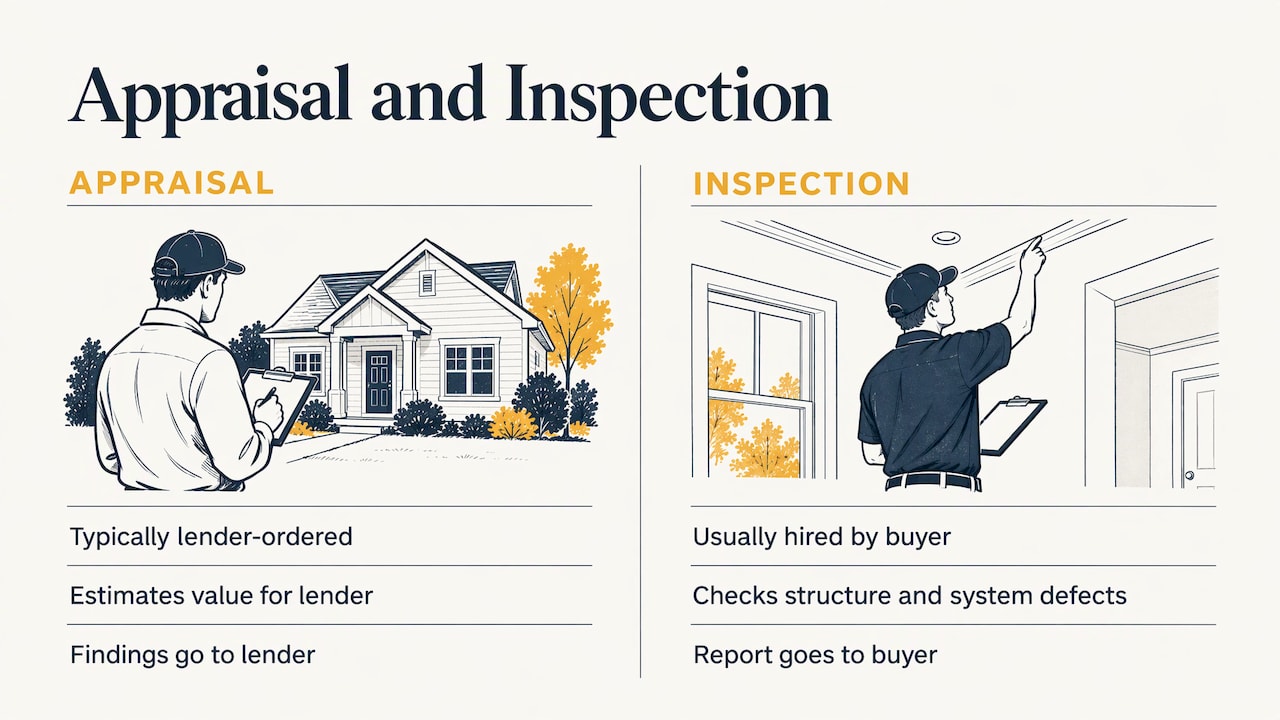
Both can affect a financed sale. A low appraisal changes what the lender will lend. A bad inspection changes what the buyer is willing to pay or fix. A cash sale removes the lender-ordered appraisal, though a cash buyer may still look at the condition of the home themselves.
What if the appraisal comes in low?
This is the situation sellers dread. A low value can mean the buyer cannot borrow enough for the agreed price, so the price, the down payment or the deal itself has to change.
The Office of the Comptroller of the Currency’s HelpWithMyBank guidance says to contact the lender as soon as possible. The lender may ask the appraiser to consider appropriate comparables, explain the valuation, correct factual errors such as square footage or bedroom count, or obtain another appraisal or evaluation.
The Federal Reserve’s July 2024 interagency guidance says a consumer may provide specific, verifiable information about omitted property characteristics, comparable sales or reporting errors through the lender’s reconsideration-of-value process. It also says institutions may resolve deficiencies by working with the original preparer, getting an independent review by a qualified appraiser, or ordering a second appraisal or evaluation.
In practice, here is what works:
- Read the report and list any factual errors.
- Collect evidence: permits, receipts, floor plans, photos, and addresses of better comparable sales.
- Send it through your agent or the buyer to the lender, in writing, and ask for a reconsideration of value.
- Decide on a fallback: lower the price, split the gap with the buyer, or wait for the result.
Requests need specifics. A complaint that the number feels low will not move anything. A documented wrong measurement or a closer sale the appraiser overlooked might.
Pricing is part of avoiding this problem. Our house pricing strategy guide explains how to set a price the market can support from the start.
Our perspective on appraisals
We buy houses in Rhode Island and Eastern Connecticut, and we talk with sellers every week who are waiting on someone else’s number. The appraisal process is fair and well-run, but it is built for a lender’s decision, not for a seller’s deadline. A report that arrives in one to two weeks, a value that could come in short, and a buyer whose loan depends on it add up to uncertainty at exactly the time a family may need certainty.
Sellers facing foreclosure, an inherited property, repairs they cannot afford or a move that cannot wait often tell us the same thing: they want to know what they will get and when. That is why we buy homes as-is and base our offers on the After Repaired Value, so you do not need to clean, repair or stage to qualify.
We also think you should understand the appraisal process either way. If you list with an agent, you now know what to expect. If you choose a direct cash sale, you know what you are skipping and why. Both are legitimate choices. We just want you to make yours with clear information and no pressure.
Dave
When a cash sale fits better
A lender-ordered appraisal exists because a lender is lending. Where there is no mortgage, that step does not apply. For some Rhode Island homeowners, that is a real advantage: an inherited house that needs work, a home in preforeclosure, or a property with deferred repairs that would make a financed buyer’s appraisal and inspection uncertain.
We buy houses as-is, with no agent fees or commissions, and you do not repair or clean first. Our offers are based on the After Repaired Value, and you choose a closing date that suits your situation. If you want to see the sequence from first call to closing, our page on how our cash home buying works walks through it. For a sense of what skipping repairs means for your numbers, read about selling as-is, skipping repairs or taking a cash offer.
Need to sell your Rhode Island house on your timeline?
If waiting on an appraisal, a buyer’s loan and a list of repairs does not fit your situation, we can make you a cash offer for your house as it is. There is no cleaning, no repair list and no agent commission. Tell us about your property at Rhody Home Buyer and we will explain your options without pressure.

FAQ
What should I not say to a home appraiser?
Stick to facts. Do not guess at what the house is worth or lobby for a number, because the appraiser’s duty is an independent, evidence-based valuation. Do mention verifiable improvements, such as a replaced roof or a remodeled bathroom, and answer questions honestly. If you know of a problem, say so rather than hoping it goes unnoticed.
Can a seller get a copy of the appraisal?
Not automatically. Federal law requires lenders to send a copy to the borrower, according to the Housing Policy Task Force guide, and the seller can ask for one. Your agent or the buyer’s agent is usually the easiest route to request it.
How long does the appraisal visit take?
The Massachusetts consumer fact sheet says a typical inspection takes about 20 to 45 minutes. Larger or unusual homes can take longer. The appraiser completes the research and writing afterward, and the report typically reaches the lender about one to two weeks after the visit.
Is an appraisal the same as a home inspection?
No. An appraisal estimates market value for the lender. An inspection assesses the home’s physical condition for the buyer. A financed sale may involve both, and each can change the deal in different ways.
Do I need an appraisal if I sell for cash?
A lender requires an appraisal to protect a loan, so a sale with no lender has no lender-ordered appraisal. With Rhody Home Buyer, our offer is based on the After Repaired Value of your home, and we buy it as-is.
Sources
- What Homeowners Need to Know About Home Appraisals (Freddie Mac My Home)
- Consumer Guide: The Appraisal Process (National Association of Realtors)
- Real estate appraisers consumer fact sheet (Mass.gov)
- Navigating the Appraisal Process Consumer Guide (Housing Policy Task Force)
- Schedule a home inspection (Consumer Financial Protection Bureau)
- I do not agree with the value in the appraisal (HelpWithMyBank, OCC)
- Interagency Guidance on Reconsiderations of Value (Federal Reserve)
- How to prepare for a home appraisal inspection (Progressive)