
If your house needs more work than your budget can cover, you have two real paths: find money to fix it, or sell it as it is and let someone else carry the repair bill. For Rhode Island owners who are behind on payments, short on time or dealing with an inherited house, selling as-is for cash is often the faster way out, because nothing has to be repaired, cleaned or listed first. At Rhody Home Buyer we buy houses in Rhode Island as-is, with no agent fees or commissions, and our offers are based on the After Repaired Value, so the house does not need to be fixed before you get a number.
TL;DR
- Repairs rarely get cheaper by waiting. A small leak or a failing system tends to turn into a bigger bill, so decide early which path you are taking.
- Repair money exists (loans, deferred loans, grants, utility programs), but most of it depends on income, location and paperwork, and it is often first-come, first-served.
- Borrowing against the house adds closing costs and a new payment. If the payment is the problem, more debt can make it heavier.
- Selling as-is for cash means no repairs, no cleaning, no agent commission and a closing date you choose.
- If you are already behind on the mortgage, talk to your servicer and a HUD-approved housing counselor now, and keep a cash sale on the table as a way to settle things on your terms.
Table of Contents
- Why so many owners end up here
- Step 1: Work out what the repairs really are
- Step 2: Understand the repair-funding options
- Step 3: Compare the true cost of fixing and then listing
- Step 4: Decide which path fits your situation
- If repairs and money problems have you falling behind
- What selling to us looks like
- Sell your house as-is for cash
- Our view on repairs you cannot afford
- FAQ
- Sources
Why so many owners end up here
You are not the only one. A 2024 survey reported by local news found that more than 80% of homeowners have at least one issue that needs attention, and about 60% say they cannot afford the fix. Roofs, boilers, sewer lines, foundations and electrical panels are the usual culprits, and they tend to arrive together, usually after a mortgage payment, a job change, a medical bill or an inheritance has already stretched the budget.
In Rhode Island the problem has an extra edge. Much of the housing stock is old, and an older house can hide several expensive systems at once. When a contractor gives you a quote for one problem and an inspector finds three more, the total can exceed what the house would gain in value.
That is the question to settle before you spend anything: will the repairs pay for themselves, or will they only put you deeper in debt?
Step 1: Work out what the repairs really are
Start by sorting the list into three groups. This takes an afternoon and changes every decision after it.
- Safety and habitability. Active roof leaks, no heat, a broken water or sewer line, a gas smell, electrical hazards. These cannot wait, and they are also what most assistance programs are designed for.
- Things that will get worse. Rotting trim, a sagging gutter, a failing water heater, old windows. They are not emergencies today, but they cost more each season you wait.
- Cosmetic or optional. Paint, flooring, dated kitchens. Skip these entirely if you plan to sell to a cash buyer, since they do not need to be done first.
Get one or two written quotes for group 1 and a rough number for group 2. Then compare the total with what you could borrow or save. If the total is more than a few months of savings, you are in the situation this article is about.
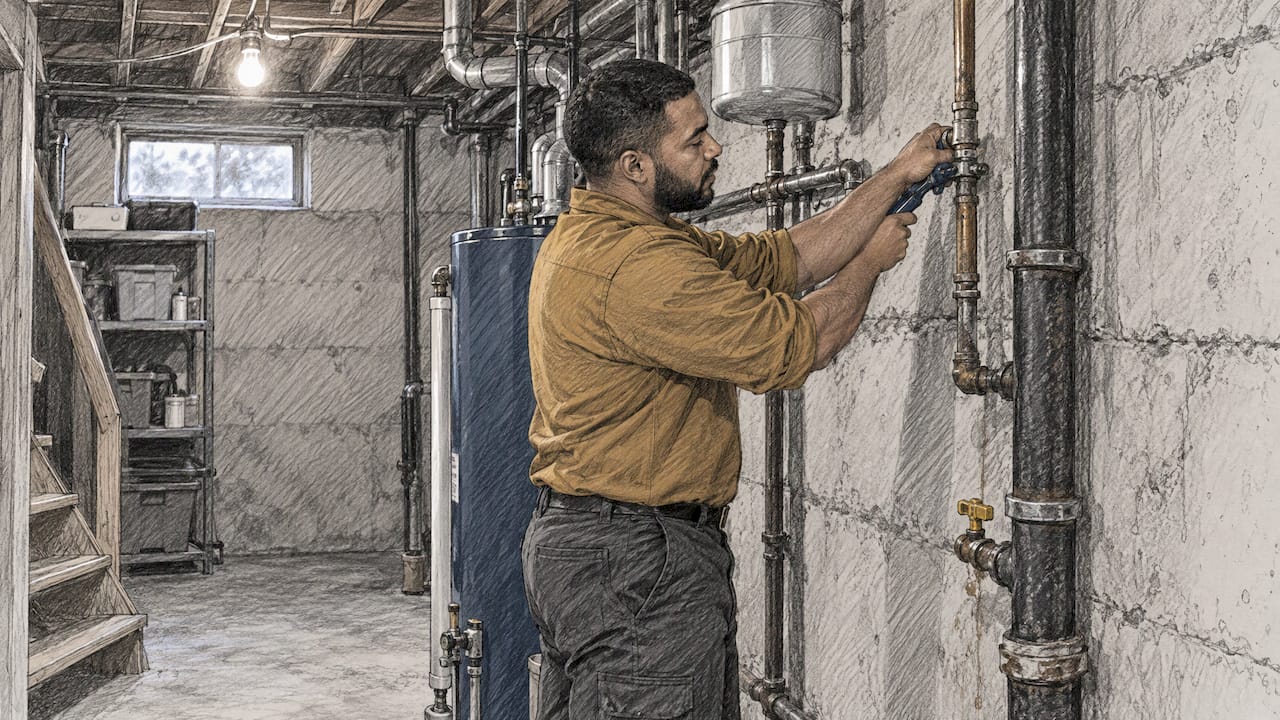
A practical point on emergency work: when you have a burst pipe or a dead boiler, a licensed local contractor can stop the damage first. A guide on how emergency plumbing response works for homeowners explains what to expect when you call and what to ask. Stopping the damage is separate from deciding what to do with the whole house.
Step 2: Understand the repair-funding options
Every option below is real, and each comes with strings. Knowing them lets you compare honestly.
Government and nonprofit programs
USAGov is clear that the federal government does not hand out “free money” to individuals to fix up a home, and that ads promising it are often scams. What exists instead are loans and assistance programs that depend on income, age, property type and location.
Some examples of how these work:
- USDA Section 504. It serves very-low-income rural homeowners. The maximum is $27,500 combined: a grant of up to $7,500 (for owners 62 or older who cannot repay a loan) and a loan of up to $20,000 at a fixed 1% interest over 20 years. The grant is repayable if you sell within three years, and grant money can only go to health and safety hazards.
- HUD Title I and 203(k). USAGov lists these as ways to finance repairs, including up to $35,000 rolled into a mortgage under 203(k).
- Rhode Island’s Statewide Home Repair Program. Governor McKee’s office announced that it would begin accepting applications on November 15, 2025, supported by $6 million from the state’s housing bond and aimed at low- and moderate-income homeowners and at landlords who commit to renting to tenants at or below 80% of area median income. Funding is limited, so check the program’s official page for what is open now.
- Utility programs. Rhode Island Energy runs income-eligible efficiency programs delivered with local Community Action Programs, including no-cost weatherization and no-cost HVAC and hot water upgrades for qualifying customers.
The pattern is the same everywhere: income limits, paperwork, waiting lists, and a scope narrow enough that one program rarely covers a house with several problems. They are worth an application if your problem is a single, specific hazard and you are not in a hurry. They are a poor fit when the need is urgent or the list is long.
Borrowing against the house
If you have equity and steady income, lenders will offer home equity loans, HELOCs, cash-out refinances and rehab loans. Modernize’s 2026 financing guide puts typical closing costs at 2% to 5% for home equity loans and cash-out refinances, 0% to 2% of the credit limit for HELOCs, and 2% to 6% for FHA 203(k) loans, plus draw-inspection fees because the money is released in stages. It also notes that a home equity loan puts the house at risk if you default and that a HELOC carries variable-rate risk.
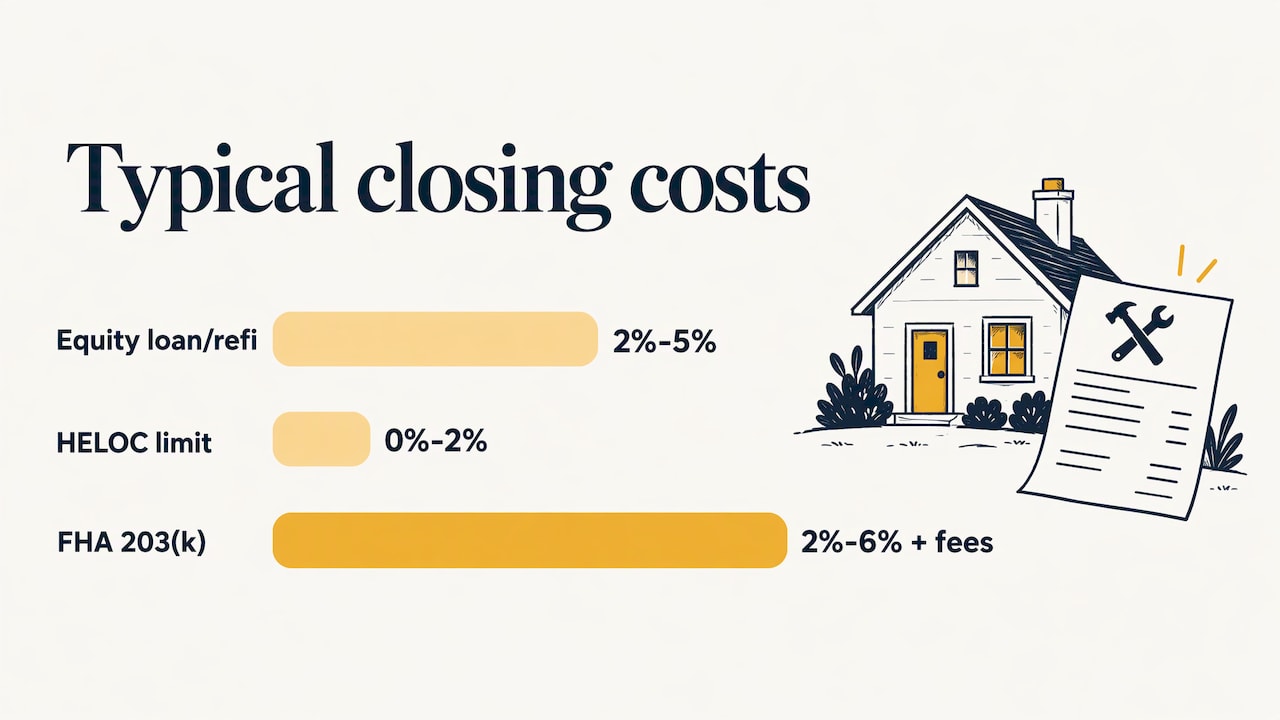
Here is what that looks like with round numbers. If you borrow $30,000 on a home equity loan at 4% closing costs, you pay $1,200 just to get the money, then take on a new monthly payment. For a household that is already stretched, that payment is the thing to worry about. If you want to look at what lenders offer in this category, this overview of home improvement mortgage and loan options walks through the main choices.
Borrowing makes sense when the repairs will raise the value of the house by more than they cost, your income is steady, and the new payment fits comfortably. It makes less sense when you are already behind, because a new loan is another payment due each month.
Paying over time, or doing less
Some owners patch what they can, pay a contractor in installments, or fix only the safety items. That can buy time. It does not lower the total, and a house that fails an inspection later will still have those problems in front of a buyer. If that is where you are headed, our page on what to do after a failed inspection covers the choices.
Step 3: Compare the true cost of fixing and then listing
Many owners assume the plan is: fix the house, list it with an agent, get a higher price. The math often does not hold when money is tight. Walk through what that path includes:
| Cost or delay | Fix and list | Sell as-is for cash to Rhody Home Buyer |
|---|---|---|
| Repairs before sale | You pay for them up front | None required |
| Cleaning and clearing out | Expected before showings | None required |
| Agent commission | Paid at closing | None |
| Showings and open houses | Weeks or months of them | No showings to schedule around |
| Buyer financing and inspection risk | Deals can fall through | Cash purchase, direct from us |
| Closing date | Set by the buyer’s lender and repairs | Closed on your timeline |
Our offers are based on the After Repaired Value. That is a plain-English way of saying we start from what the house would be worth once repaired, so the condition of the house is part of how we work, not a reason to turn it away. We buy homes in any condition, as-is.
We also know a cash sale is not the same thing as a full-price retail listing, and we do not pretend otherwise. What you give up is the time, the repair bill and the commission. For many owners that trade is exactly what they were looking for, and our page on selling a house without repairs goes through it in detail.
Step 4: Decide which path fits your situation
Use your circumstances to point you toward one of these.
You have one urgent hazard and steady income. Stop the damage, apply for any program you qualify for, and consider whether a small loan is manageable. If the rest of the house is in good shape, repairing may be right.
The list is long, or you have not been able to pay for even the first item. Piling on debt rarely fixes this. A direct as-is sale ends the repair question in one move, and you keep the decision about timing.
You inherited the house. An inherited property often comes with deferred maintenance, taxes and utilities, and heirs who live elsewhere. Paying for repairs on a house you do not plan to live in is hard to justify. Selling as-is spares you from managing contractors from a distance.
You are behind on the mortgage or facing foreclosure. Time matters most here, and the next section explains why.
You are thinking of selling to pay off other debt. Our guide on whether to sell your house to pay off debt walks through how to decide.
If repairs and money problems have you falling behind
When the repair bill competes with the mortgage payment, the mortgage is the one to protect. The Consumer Financial Protection Bureau’s homeowner’s guide says to contact your mortgage servicer early, because it may be able to explore a repayment plan, loan modification, short sale or deed-in-lieu of foreclosure. It also says a HUD-approved housing counselor can give free advice, and the HOPE Hotline offers telephone counseling 24 hours a day at 888-995-HOPE (4673).
If you have an FHA loan, the rules recently changed. HUD announced updated loss mitigation options in Mortgagee Letter 2025-06, effective February 2, 2026, with a goal of cutting the principal-and-interest payment by 25% through a modification, with a three-month trial payment plan as a guardrail. Your servicer or a HUD-approved counselor can tell you which options apply to your loan.
Two things are worth knowing about a short sale or deed in lieu. They can hurt your credit more than options that let you keep the house, and a short sale can take a long time: the lender’s broker price review alone can take 30 to 90 days. A short sale also only fits when you owe more than the house is worth.
A cash sale is a different route. If you have equity, selling directly before an auction date lets you pay off the loan from the proceeds instead of letting the process run its course. Our pages on pre-foreclosure options in Rhode Island, how to avoid foreclosure and how to stop a foreclosure auction explain how the timeline works and where a sale fits. This is general information, not legal advice. If a lawsuit or auction notice has arrived, speak with a Rhode Island attorney as well as your counselor.
What selling to us looks like
The process is meant to be short and clear:
- Tell us about the house. Address, condition, what is wrong with it, and your timing. No staging, cleaning or fixing first.
- Get a cash offer. It is based on the After Repaired Value, and we buy as-is.
- Pick your closing date. You choose the timeline, whether you need to move quickly or need a few weeks.
- Close and get paid. There are no agent fees or commissions.
You do not have to clear out clutter or scrub the place first, and our guide to selling a house without cleaning it lists what you can leave. If you want to see the mechanics in more depth, read how cash home sales work or our four-step as-is contract overview.
Sell your house as-is for cash
If you are tired of the repair list, you can skip it. We buy houses in Rhode Island and Eastern Connecticut in any condition, with no agent fees, no commissions, no repairs and no cleaning. Our offers are based on the After Repaired Value, and you close when it suits you.

To see where your house stands, start at Rhody Home Buyer or read how our process works before you decide. If your situation also involves a looming bankruptcy filing, see our five-step page on selling before bankruptcy.
Our view on repairs you cannot afford
Most people who call us are not looking to flip a house in their head. They are tired. A roof, a furnace and a notice from the bank all landed in the same year, and every option they have researched adds another bill or another form.
Here is how we think about it. A repair is only worth doing if you will get the value of it back, and if you can carry the cost while you wait. When neither is true, the repair is not a plan, it is a delay. We built our business around buying homes directly from owners, as they are, because we do not need the house to be fixed to make an offer. We base it on the After Repaired Value and handle the rest.
That also means no agent commission and no showings. You do not have to clean, paint or rent a dumpster. You choose the closing date, and we aim to keep every step clear so you are not guessing about what comes next.
If you have heard of a repair program that fits your single, specific problem, apply for it. If the list is longer than the budget, or you are behind and the clock is ticking, a direct as-is sale is a clean way to put the house behind you. Call us early. The sooner we talk, the more choices you have.
Dave
FAQ
What can I do if I can’t afford a major home repair right now?
Stop any active damage first, then sort the repairs into safety items, things that will worsen and cosmetic work. From there you can apply for repair assistance if you qualify, borrow against your equity, or sell the house as-is for cash so the repairs are no longer yours. Which fits best depends on how long the list is and how much room your budget has.
Is there free government money to fix my house?
Not in the way ads suggest. USAGov says the federal government does not give individuals free money for home repairs, and it warns that such offers are often scams. Real programs are usually loans or targeted grants with income, age and location limits, and many serve applicants first-come, first-served as funding allows.
Do I have to fix my house before selling it?
Not if you sell to us. We buy houses as-is in Rhode Island and Eastern Connecticut, with no repairs and no cleaning required, and our offers are based on the After Repaired Value. If you list with an agent instead, buyers and their inspectors will expect the repairs to be addressed or priced in.
What if I’m behind on my mortgage because of repair costs?
Contact your mortgage servicer and a HUD-approved housing counselor right away. The HOPE Hotline at 888-995-HOPE (4673) offers free telephone counseling around the clock. If foreclosure is a real possibility, you can also talk with us about selling before it goes further, and consult a Rhode Island attorney about your rights.
Will a house with a lot of damage still sell?
Yes. Houses with heavy repair needs, failed inspections or years of deferred maintenance sell all the time to direct buyers who purchase as-is. The price reflects the work needed, but you avoid paying for the work yourself, plus commissions and the wait.
Sources
- Government home repair assistance programs, USAGov
- Single Family Housing: Housing Repair Loans and Grants, USDA via DisasterAssistance.gov
- Governor McKee and Secretary Goddard announce Statewide Home Repair Program, State of Rhode Island
- Energy Efficiency Programs for Income-Eligible Customers, Rhode Island Legislature commission presentation
- Home Improvement Financing Guide, Modernize
- Homeowner’s Guide to Success, Consumer Financial Protection Bureau
- FHA Updated Loss Mitigation Options, HUD
- Short Sale Process, National Property Authority