
Winter can be an excellent time to buy for negotiators and an acceptable time to sell if you need speed. Buyers gain leverage from thinner competition and motivated sellers, but face slimmer inventory and cold-weather logistics. Sellers face a smaller buyer pool, but the buyers who show up are usually serious. The tactics below show how to work either side of that trade.
TL;DR:
- Buyers in winter face lower prices, fewer offers, and more negotiating room, but must deal with thinner inventory and hidden weather-related home issues.
- Sellers often list in winter due to necessity, which attracts more serious buyers and can lead to faster closings, but typically at lower offers than spring sales.
- Winter inspections require extra caution because snow cover can hide roof, drainage, and foundation problems that become apparent only in spring.
- Negotiating winter deals benefits from understanding seasonal patterns, such as active listings with price drops or expired listings from fall.
- Fast cash sales are ideal for urgent situations like probate, vacant properties, or homes needing repairs, avoiding winter market delays entirely.
Table of Contents
- Is a Winter Home Sale Good for Buyers?
- Should You List Your Home in Winter?
- How Do You Negotiate a Winter Real Estate Deal?
- How Do You Prepare a Home for a Winter Showing?
- What Should You Watch for in Winter Inspections and Closings?
- Do Lenders and Taxes Work Differently in Winter?
- When Does a Fast Cash Sale Make More Sense Than Waiting?
- The Winter Home Sale Playbook: What Actually Matters
- Sell Your House Fast This Winter Without the Showings
- Sources
- FAQ
Is a Winter Home Sale Good for Buyers?
Buyers who move in December and January generally face less competition and more room to negotiate than in spring. Fall and winter tend to bring lower prices, fewer competing offers, and faster deals compared with the spring and summer rush, according to AHS. Fewer buyers touring open houses in the cold means sellers who do list are often dealing with a real deadline, a job relocation, or a probate timeline rather than just testing the market.
That leverage comes with a catch: winter listings shrink. Fewer sellers want to move furniture through snow, so the homes on the market skew toward people who genuinely need to sell. Housing construction and listing activity follow seasonal patterns tracked by the Census Bureau, and that seasonality is a big part of why winter shelves look thinner than spring ones.
A few tactics separate buyers who close a good deal from those who just wait around for spring:
- Target listings that have sat active since fall. Sellers who have watched a listing go stale through three or four price cuts are far more likely to accept a lower offer or throw in concessions, a pattern brokers have flagged repeatedly in winter buying analyses.
- Set up automatic price-drop alerts on your search portal instead of manually refreshing listings.
- Get underwritten pre-approval, not just a pre-qualification letter, so you can move fast when a motivated seller says yes.
- Ask your agent to pull expired and withdrawn listings from the fall. Some of those owners still want out.
Inspections need extra care in winter. Snow can hide roof damage, poor grading, or drainage problems that would be obvious in April. Book an inspector comfortable working in cold weather, and if snow cover blocks a full roof or exterior check, negotiate a spring follow-up inspection into the contract rather than skipping it.
If you’re buying as an investment, budget for winter vacancy. A property that sits empty an extra month while you find a tenant changes your DSCR and cash-on-cash math, even at a discounted purchase price.
Pro Tip: Ask the listing agent directly how long the seller has been carrying two mortgages or paying for storage. A seller juggling double housing costs in January will often take a lower number just to stop the bleeding.
Should You List Your Home in Winter?
Selling in winter usually comes down to necessity, not preference. People list in December and January because of a job transfer that can’t wait, a divorce settlement with a deadline, an inherited property tied up in probate, or a tax reason connected to the calendar year. Realtor points out that late-year listings often signal exactly this kind of motivation, and buyers read that signal too.
The trade-offs, spelled out:
- Fewer buyers, but better ones. Winter shoppers aren’t killing time on a Sunday afternoon; they’re usually pre-approved and ready to act.
- Lower offers are common. Expect to net somewhat less than a comparable spring sale, especially if your home has curb-appeal weaknesses that bare trees and snow expose.
- Faster closings are possible. With fewer transactions competing for lender and title attention, timelines can move quicker than the spring bottleneck.
- Staging costs more effort. Dormant landscaping and short daylight hours mean you’ll lean harder on interior staging and photography to make up the difference.
Pricing in winter rewards realism over optimism. List at a price backed by recent comps, not last spring’s numbers, because winter buyers cross-check hard. Concessions move faster too: offering to cover a chunk of closing costs or leaving a home warranty on the table often closes a deal quicker than holding firm on price.
Decision checklist: if you have a hard deadline, a vacant property costing you money every month, or a buyer already circling, list now. If your only motivation is “the market might be better,” waiting for spring usually nets a stronger price with less friction.
Pro Tip: If your closing must happen before year-end for tax reasons, build in an extra week of buffer. Holiday scheduling backs up title companies and lenders more than most sellers expect.
How Do You Negotiate a Winter Real Estate Deal?
Winter negotiation follows a different rhythm than spring, and the buyers and sellers who understand that rhythm come out ahead.
Working stale listings: Pull the listing history before you write an offer. A home that dropped price twice since October is a home whose seller is losing patience. Structure your offer with a slightly below-list number but a fast, clean closing timeline, and consider proposing a short rent-back period if the seller needs extra weeks to move. That flexibility often matters more to a stressed seller than an extra few thousand dollars.
Who pays for what: Winter deals tend to include a specific set of concessions that spring deals skip:
- Remaining heating fuel in the tank (oil or propane), typically credited to the buyer at closing
- Snow removal or plowing costs if the closing date slips past a storm
- Small repair credits for anything an inspector flags but weather prevents fixing on-site immediately
The appraisal edge: Because appraisers often pull comps from warmer months when more sales happened, a buyer who purchases in January at a winter discount can sometimes see that home appraise above the purchase price once spring comps roll in. Commercial real estate strategists have flagged this appraisal timing gap as one of the quieter advantages of buying off-season.
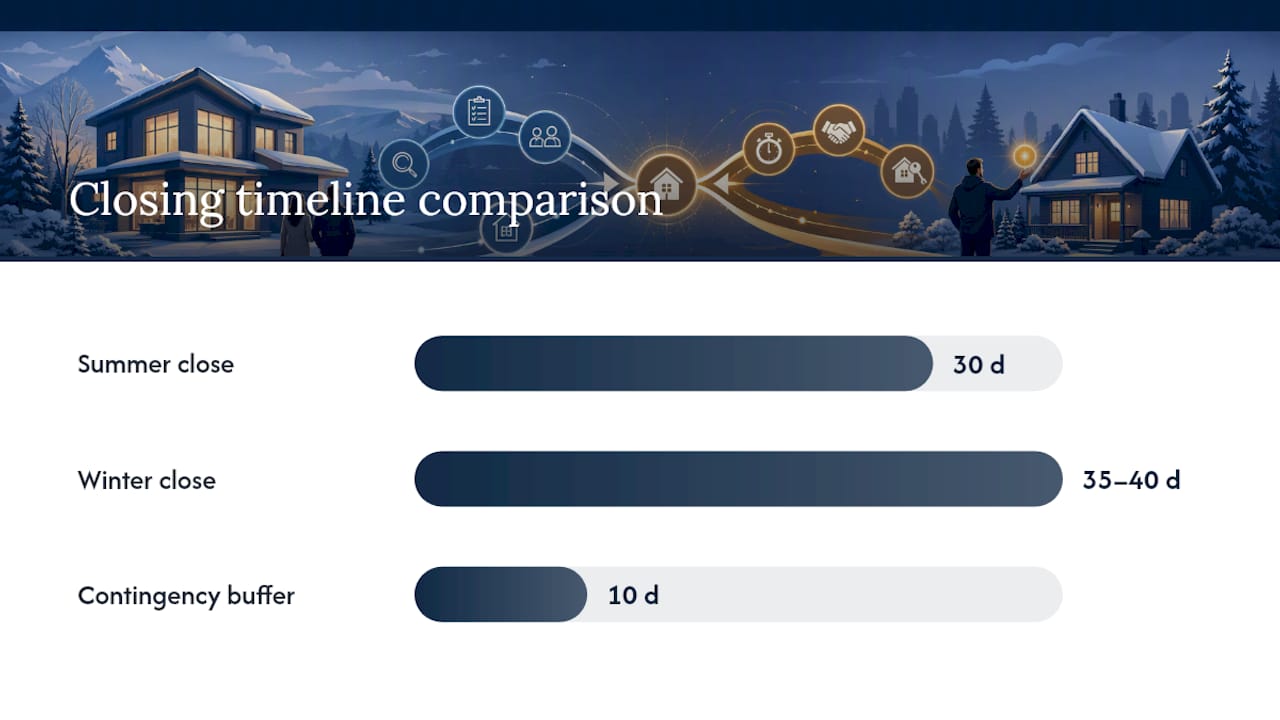
Timeline planning: Build extra days into every contract deadline between mid-December and early January. Title companies, lenders, and inspectors all run short-staffed around the holidays, and a single snowstorm can push a closing date by a week. A contract that assumes a smooth 30-day close in July needs 35 to 40 days of breathing room in the same month of winter.
How Do You Prepare a Home for a Winter Showing?
Winter listings live or die on lighting and warmth, not landscaping, since nobody expects your yard to look good in January.
- Clear every walkway and driveway before each showing. A buyer who slips on ice at your front door forms an opinion about your home before they open it.
- Turn on every light, including closets. Short winter days mean afternoon showings happen in near dark, and a dim house photographs and shows worse than it is.
- Keep the heat running, even when the house is empty. A cold house feels neglected within thirty seconds of walking in, and buyers notice a furnace that struggles to keep up.
- De-clutter and depersonalize. This matters in every season, but winter’s shorter days and grayer light make cluttered rooms look smaller and darker than they are.
- Skip strong air fresheners. A house closed up all winter can trap odors, and heavy scent covering it up reads as a red flag to buyers checking for mold or pet damage.
For photography, shoot during the one or two hours around midday when natural light is strongest, and turn on interior lights even in daytime shots to add warmth. Staged, well-lit winter listings consistently outperform dim, cluttered ones in buyer feedback, even when the yard outside is bare dirt and snow.
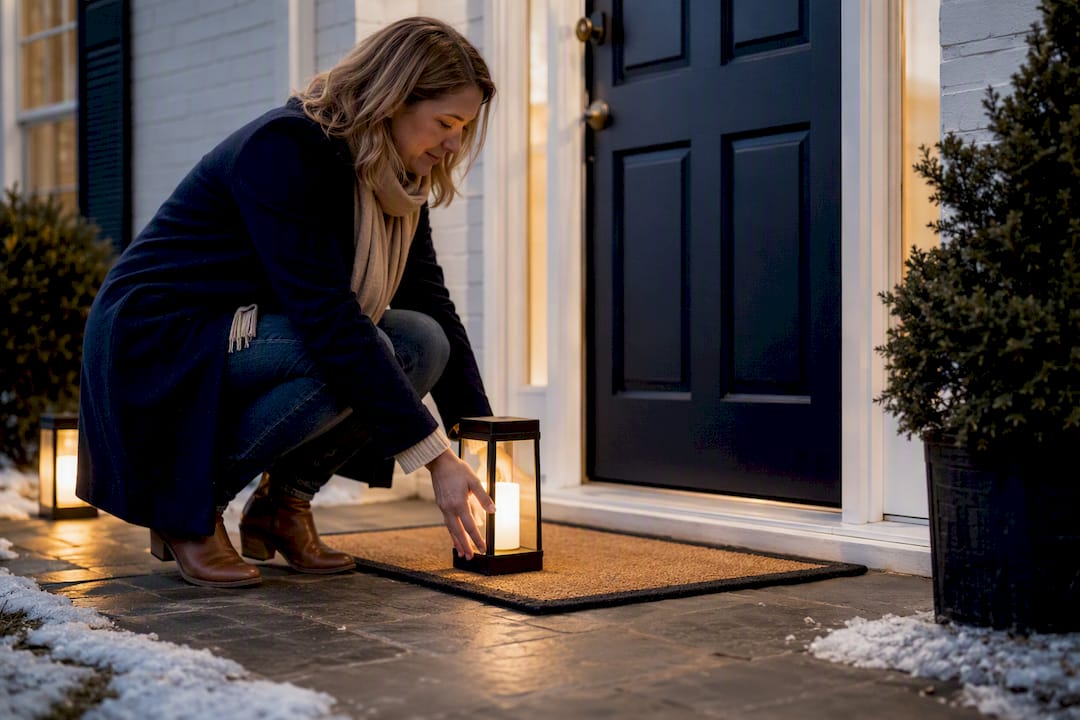
Low-cost fixes that punch above their cost in winter: a fresh coat of paint on the front door, a new welcome mat, battery-powered lanterns lining a dark walkway, and a space heater in any chronically cold room during showings.
Pro Tip: Bake nothing. The “cookies in the oven” trick is a cliché buyers recognize immediately. A simmering pot of cinnamon and cloves on the stove reads as warm and lived-in without feeling staged.
What Should You Watch for in Winter Inspections and Closings?
Snow and ice hide problems that a spring inspection would catch immediately. Roof damage, gutter separation, and grading issues that direct water away from the foundation can all be invisible under a foot of snow, which means a “clean” winter inspection sometimes is not as clean as it looks.
- Ask the inspector directly whether snow or ice blocked full access to the roof, siding, or grading, and get that noted in writing.
- Negotiate a spring reinspection clause into the contract when access was limited, with a defined remedy period if new issues surface.
- Confirm heating systems get a full functional test, not a visual check, since a failing furnace is the single most expensive winter surprise a buyer can inherit.
- Check moisture in basements and crawl spaces carefully. Melting snow near the foundation can mimic or mask an active leak.
Appraisers working in winter often pull comps from the prior three to six months, which can skew toward warmer-season sale prices. That works in a winter buyer’s favor when the appraisal comes in above the purchase price.
Build weather-delay language into every contract. A simple clause that extends the closing date automatically if a inspector, appraiser, or mover cannot access the property due to weather protects both sides from a blown deadline nobody could control. Add ten extra days of contingency buffer around any closing scheduled between mid-December and the first week of January.
Do Lenders and Taxes Work Differently in Winter?
Loan underwriting sometimes moves faster in the final weeks of the year, since loan officers are working through fewer files and lenders occasionally push to hit year-end volume targets. Broker commentary on winter transactions has noted this year-end responsiveness as one more small edge for a buyer trying to close before December 31.
- Closing before year-end can matter for tax purposes, particularly for sellers managing capital gains timing or buyers hoping to claim a full year of mortgage interest. Talk to a tax advisor before you push a closing date for tax reasons alone.
- Investors buying at a winter discount should still budget for one or two months of vacancy while finding a tenant. That vacancy period affects DSCR and cash-on-cash return calculations even when the purchase price looks like a bargain.
- A lower acquisition price from a motivated winter seller can improve your debt service coverage ratio on paper, but only if your vacancy and turnover assumptions are realistic, not optimistic.
- If you’re closing on a second home or investment property in winter, confirm your insurance policy covers vacant periods, since some standard policies limit coverage after a property sits unoccupied for 30 to 60 days.
When Does a Fast Cash Sale Make More Sense Than Waiting?
Winter’s tactics above work well when you have time to negotiate. Not every seller does. Some homebuyers offer a process focused on homeowners who need to sell quickly, buying homes as-is without repairs, cleaning, or agent commissions, and valuing offers based on After Repaired Value rather than seasonal appearance.
A cash sale fits winter scenarios that traditional listing tactics don’t solve well: a probate deadline, a vacant property bleeding heating and utility costs every month, a home with damage that would scare off buyers touring in the cold, or a relocation timeline that can’t wait for a spring market. In these cases, the seller isn’t trying to maximize price. They’re trying to stop a monthly loss and move on.
Expect a straightforward path: a request for details, a cash offer within days, and a closing date on your schedule rather than a buyer’s mortgage timeline. Rhody Home Buyer’s step-by-step process walks through what that timeline typically looks like.
The Winter Home Sale Playbook: What Actually Matters
Most winter real estate advice treats the season like a minor inconvenience to work around. That’s backwards. Winter is a filter. It filters out casual lookers and casual sellers, leaving a smaller pool of people who actually mean it. The buyer willing to tour a house in twenty-degree weather is closer to signing than the crowd wandering an open house in May. The seller willing to list between Thanksgiving and New Year’s almost always has a real reason to move.
The overrated piece of conventional wisdom is that winter automatically means a worse deal for sellers. It means a smaller buyer pool, which is a different thing entirely. A well-staged, well-lit, correctly priced winter listing regularly closes faster than the same house would in a crowded spring market, just with a shorter list of offers to choose from.
What I’d prioritize first, whether buying or selling: get your financing and paperwork ready before the market moves, because winter transactions reward the party who can act fast. And if speed matters more than maximizing price, know that a cash sale is a legitimate answer, not a last resort.
— Dave
Sell Your House Fast This Winter Without the Showings
One alternative to listing and waiting through a slow winter market is a cash offer for homes based on After Repaired Value, requiring no showings, no agent commissions, and no repairs before closing.

If you’re facing a probate deadline, a vacant property racking up heating bills, or a house that needs work you can’t afford before spring, a traditional winter listing might not be the right fit. This kind of process often starts with a simple request, moves to a cash offer within days, and closes on a timeline set by the seller rather than a buyer’s mortgage schedule. Homeowners handling an inherited house often find this route solves both the tax-timing pressure and the physical burden of maintaining a property through winter. Visit Rhody Home Buyer to request a cash offer and see what a fast, as-is winter sale looks like for your situation.
Sources
Seasonal pricing and competition data came from AHS. Seller motivation and negotiation patterns came from Realtor.com. Inventory seasonality referenced Census Bureau construction data. Buyer tactics and lender timing came from DeFalco Realty. Inspection and appraisal insight came from Suburban City Group. Closing-speed context for cash sales came from Blue Key Home Buyers.
- 5 Reasons Why Winter Is the Best Time to Buy a Home | AHS
- Realtor
- Census Bureau: New Residential Construction
- Winter Home Buying in NY: Complete Guide to Buying a Home in Winter 2025-2026 | DeFalco Realty
FAQ
Will January 2026 Be a Good Time to Buy a House?
January tends to bring less competition and more motivated sellers, which usually favors buyers who are pre-approved and ready to move fast, though inventory stays limited compared with spring.
What Is the Hardest Month to Sell a House?
January and February typically see the smallest buyer pools of the year, making them the toughest months to sell, though the buyers who do show up are often serious and ready to close.
Is This the Worst Time to Buy a House Right Now?
Winter usually isn’t the worst time to buy. Thinner inventory means fewer choices, but lower prices, less competition, and motivated sellers often make it one of the better windows for a patient, prepared buyer.
Is 2026 Going to Be a Good Year to Sell a House?
That depends on local inventory and rate trends more than the calendar year itself, but sellers with a genuine reason to move, priced realistically and staged well for winter showings, tend to do fine regardless of season. If speed matters more than top dollar, a cash sale through a buyer like Rhody Home Buyer remains a faster alternative to a traditional listing.