
Yes, you can sell a home with unpermitted work in most places, but if you know about it, you have to disclose it. From there, you have three real paths: fix the paperwork through retroactive permits, disclose the issue and adjust your price, or sell as-is to a cash buyer. The right choice depends on your timeline, the cost of fixing the problem versus what it adds to your home’s value, and how much risk you’re willing to carry through closing.
TL;DR:
- Retroactive permits can resolve unpermitted work but are often costly and time-consuming, especially for major structural or system modifications.
- Disclosing the unpermitted work and adjusting the price or offering credits works best when the repairs are minor, and market demand is high.
- Unpermitted square footage may be excluded from appraisals, reducing the home’s value by 10% to 20%, and lenders may limit financing or refuse loans altogether.
- Finding past permits and hiring specialists before listing helps sellers understand liabilities, estimate repair costs, and negotiate from a fact-based position.
- A cash sale offers a quick, as-is closing option, especially for properties with expensive violations, inherited issues, or tight deadlines, avoiding permit and financing hurdles.
Table of Contents
- Your Three Options for an Unpermitted Work Sale
- How Unpermitted Work Affects Appraisal, Financing, and Insurance
- Finding and Documenting Unpermitted Work Before You List
- What Retroactive Permitting Really Costs and How Long It Takes
- Disclosure Rules, Legal Risk, and a Real Case Worth Knowing
- Negotiating Price When You Disclose Unpermitted Work
- Picking the Path That Matches Your Timeline and Risk Tolerance
- Why a Cash Sale Makes Sense When You Have Unpermitted Work
- Sources
Your Three Options for an Unpermitted Work Sale
Once you know unpermitted work exists on your property, you’re choosing between three practical routes. Each one trades speed for money, or money for speed, depending on your situation.
- Retroactive permitting. Contact your local building department first, since permit rules and fees vary by jurisdiction and by the type of work involved. You’ll likely need to submit plans (sometimes stamped by an architect or engineer), schedule inspections, and in some cases open up finished walls so an inspector can verify wiring or plumbing behind them. This route can bring the work fully into compliance, but it’s slow and occasionally invasive.
- Disclose and price accordingly. This works best when the unpermitted work is minor, the craftsmanship looks solid, and you’re in a market with enough buyer demand to absorb some risk. You disclose what you know, get a rough repair or permitting estimate, and build that number into your asking price or offer it as a credit.
- Sell as-is to a cash buyer. This is the practical answer when you’re facing a tight deadline, handling probate or a looming foreclosure, or when the cost of retroactive permitting would eat up more value than the improvement ever added. Cash sales skip the lender and appraisal entirely, which removes the biggest obstacle unpermitted work creates.
Most sellers end up mixing approaches. You might permit the small deck addition yourself while pricing around a bigger issue, like an unpermitted basement conversion, that isn’t worth chasing through the building department.
How Unpermitted Work Affects Appraisal, Financing, and Insurance
Unpermitted square footage often gets excluded from an appraiser’s valuation altogether. That finished basement or converted garage you’re counting as living space may not count toward the home’s appraised value at all, because appraisers generally can’t verify code compliance on work that was never inspected.
Lenders respond to this risk in one of three ways:
- They exclude the unpermitted area from the loan-to-value calculation, effectively lowering how much the buyer can borrow.
- They condition the loan on corrections, meaning the buyer’s financing won’t close until the work is permitted or removed.
- They deny the loan outright, particularly with conventional or government-backed products where underwriters follow strict guidelines. Federal buyer guidance, including the VA Buyers Guide, spells out how inspection findings can affect a buyer’s ability to close.
Any of these outcomes shrinks your buyer pool to cash buyers and a smaller slice of investors willing to take on the risk.
Insurance and title issues compound the problem. A carrier can deny a claim tied to unpermitted work after the fact, and title companies sometimes flag known code violations during underwriting. Buyers who understand this will negotiate harder, and their lenders will ask more questions.
Unpermitted work commonly cuts a home’s sale price by 10% to 20% of what that improvement would have added if it had been permitted. In a hot market, buyers may tolerate more risk to win a bidding war. In a slow one, that discount tends to widen, because buyers have more leverage and less urgency.
Finding and Documenting Unpermitted Work Before You List
Most sellers don’t discover unpermitted work by accident. They find it by looking, and you should look before a buyer’s inspector does it for you.
- Pull your permit history. Many building departments now offer online portals, but smaller municipalities still require an in-person or phone request. Local permitting offices can confirm whether a given renovation, addition, or system upgrade was ever permitted and inspected.
- Bring in a licensed contractor or inspector. A general home inspection often misses code details that a specialist catches, especially with electrical panels, structural modifications, or converted spaces. Ask specifically for a condition assessment and a rough remediation estimate.
- Build a paper trail. Gather old receipts, any permits you do have, before-and-after photos if you did the work yourself, and written estimates from contractors. This becomes the backbone of your disclosure statement and your negotiating position later.
Doing this work upfront turns a vague liability into a known, priceable quantity. That distinction is what lets you negotiate from facts instead of guesswork.
What Retroactive Permitting Really Costs and How Long It Takes
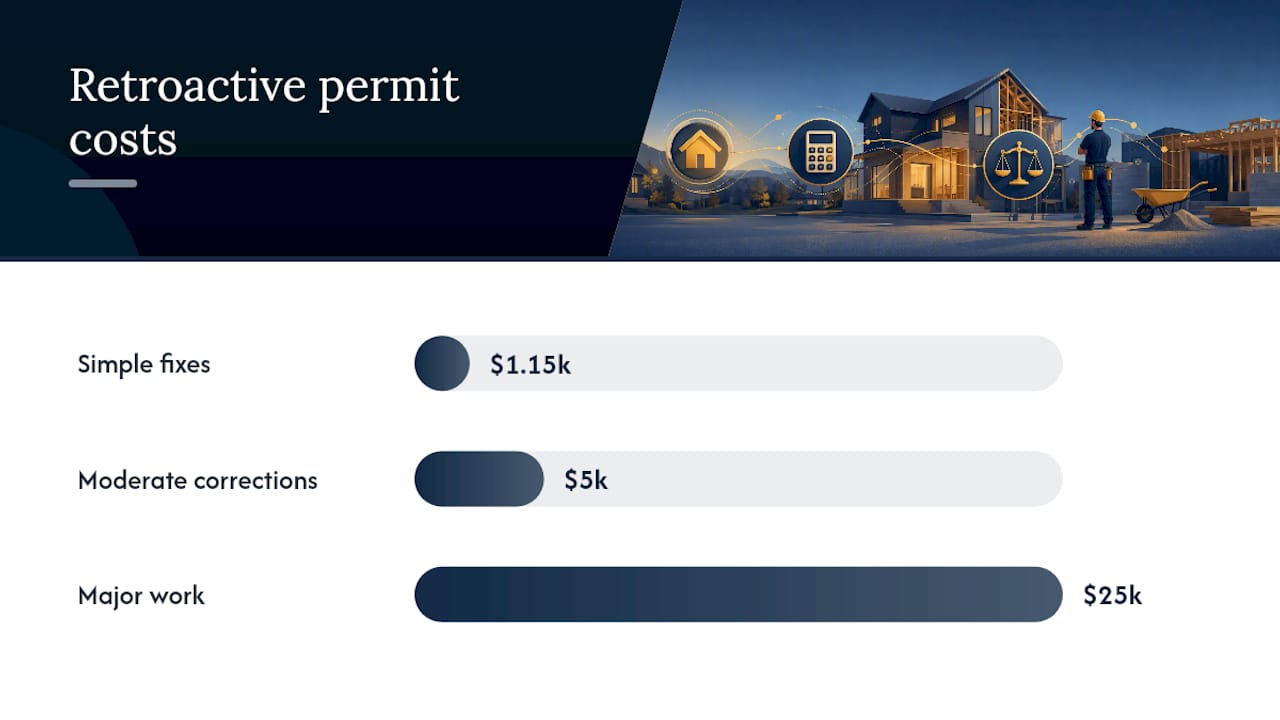
Costs vary widely because the scope of “unpermitted work” ranges from a swapped water heater to an entire finished attic with new electrical runs. Retroactive permitting can require opening finished walls, drafting new plans, paying permit fees, and scheduling multiple inspections, and total remediation costs can run from a few hundred dollars for simple sign-offs to tens of thousands for structural or systems work that has to be redone to current code.
- Simple permit corrections (a water heater, a small electrical fix): often a few hundred to a couple thousand dollars.
- Moderate corrections (converted rooms, added bathrooms): commonly several thousand dollars once inspection and plan costs are included.
- Major structural or systems work: can climb into the tens of thousands, particularly if inspectors require walls opened or work redone entirely.
Public permit review can take anywhere from a few weeks to several months, depending on your jurisdiction’s backlog and whether your case requires plan review by an architect or engineer. Compare that to a cash sale, which commonly closes in 7 to 14 days with no appraisal contingency to worry about.
The decision rule is straightforward: if permitting costs less than the value the improvement adds, and you have the time, it’s usually worth doing. If the fix costs more than the upside, or your timeline can’t absorb months of waiting, pricing the issue or selling as-is makes more financial sense.
Disclosure Rules, Legal Risk, and a Real Case Worth Knowing
Most state disclosure forms ask directly whether you’re aware of unpermitted work, code violations, or unpermitted improvements on the property. “Known” generally means anything you were aware of or reasonably should have discovered, not just what you personally built. If you inherited the house with an unpermitted addition already in place and you found out about it, that knowledge still triggers disclosure duties in most states.
Skipping disclosure carries real consequences:
- Buyers can sue for damages after closing if they discover concealed unpermitted work.
- Courts can order rescission, unwinding the entire sale and forcing a refund.
- Sellers can face both legal fees and reputational damage well beyond the cost of fixing the original problem.
A federal court case out of New Jersey shows exactly how far this can go.
Sellers who fraudulently concealed extensive unpermitted renovations had their multimillion-dollar sale voided by a federal court, which ordered a $1.5 million refund after the concealment came to light.
That’s an extreme example, but it illustrates the ceiling of what nondisclosure can cost. Practically speaking, protect yourself by documenting what you knew and when, using specific language in your disclosure rather than vague reassurances, and talking to a real estate attorney whenever the unpermitted work involves significant dollar amounts or structural changes.
Negotiating Price When You Disclose Unpermitted Work
Contractor estimates are your best negotiating tool once you’ve disclosed a problem. Get two or three written estimates for bringing the work up to code or completing retroactive permitting, and use the middle figure as your anchor point in negotiations.
- Frame the estimate as a starting point for a credit, not a final number, since buyers often want their own contractor to weigh in.
- Use the 10% to 20% discount range as a sanity check, then adjust up or down based on how hot your local market is and how serious the issue actually is.
- Offer an escrow credit instead of doing the repair yourself. This lets the buyer control the remediation and removes you from liability for future workmanship.
- Attach specific contingencies to the purchase agreement rather than leaving remediation open ended, so both sides know exactly what’s expected and by when.
Pro Tip: Put together a short remediation packet before you list, with contractor estimates, photos, and any permit history you found. Handing this to a buyer’s agent upfront speeds up negotiations and makes you look transparent instead of evasive.
Picking the Path That Matches Your Timeline and Risk Tolerance
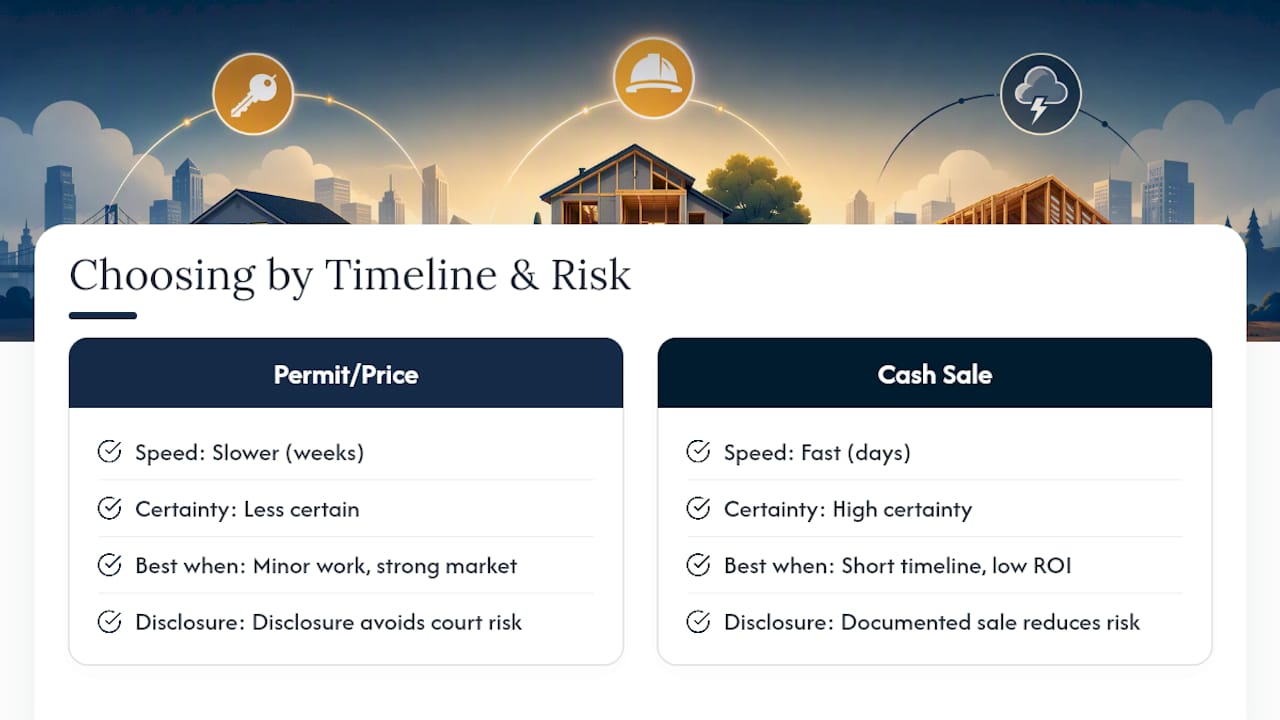
Speed and certainty beat a maximum list price more often than sellers expect, especially in probate, foreclosure, or vacant-property situations where holding costs pile up every extra week. Honest disclosure isn’t just a legal obligation. It’s what keeps you out of court after closing, which is worth more than whatever premium you might have squeezed out by staying quiet.
If your unpermitted work is minor and your market is strong, permitting or pricing it usually makes sense. If you’re short on time or the numbers don’t pencil out, a direct cash sale is a legitimate, well-documented option for sellers who value certainty over chasing top dollar.
— Dave
Why a Cash Sale Makes Sense When You Have Unpermitted Work
A direct route past appraisal denials and financing delays is available for homeowners carrying unpermitted work. Instead of watching a buyer’s lender flag your addition and walk away, sellers may receive cash offers without agent commissions and without a requirement to fix, permit, or clean anything before closing.

This route fits sellers dealing with an inherited property that has old, undocumented renovations, an expensive structural issue that would cost more to permit than it adds in value, or simply a deadline that a traditional buyer’s mortgage timeline can’t accommodate. If cosmetic touch-ups could help your listing in the meantime, resources like practical home makeover tips are worth a look. For the underlying permit problem, a cash sale sidesteps it entirely.
If a fast, as-is sale sounds like the right fit for your situation, request a cash offer and see what your home is worth without the appraisal risk hanging over the deal.
Sources
- How to Sell a House With Unpermitted Additions or Renovations | EffectiveAgents®
- Selling a House with Unpermitted Work: Your 2026 Guide | Property Nation
- Jersey Shore home sale voided after unpermitted renovations lead to $1.5 million refund
- Baltimore city permits and licensing (example of local building department resources)