
A shared driveway almost never blocks a sale on its own, but unclear or unrecorded access rights routinely cause delays, appraisal problems, or lender holds. The three moves that protect your timeline are simple: disclose the shared driveway fully, order a title search and boundary survey, and either record a formal agreement or document the arrangement clearly for buyers and lenders before you list.
TL;DR:
- Fully disclosing shared driveway arrangements, ordering a boundary survey, and recording a formal agreement can prevent delays and appraisal issues during sale.
- Recorded easements or covenants are essential for lender approval, while unrecorded agreements pose a higher risk of sale disruptions.
- A boundary survey typically takes two to six weeks, with legal recording extending that timeline by up to four weeks, while disputes can last months or years.
- Fixing driveway issues through recorded easements or maintenance agreements is most durable, but in difficult cases, selling the property as-is for cash may be faster and more cost-effective.
- Lenders usually require a recorded permanent easement for funding, and legal advice becomes necessary only if boundary disputes or neighbor disagreements arise.
Table of Contents
- What counts as a shared driveway and why the label matters
- Why shared driveway ambiguity creates real deal risk
- Step-by-step prep before you list
- Fixing or documenting shared-driveway rights before you sell
- Red flags, disputes, and interim fixes
- Timelines and costs for common driveway fixes
- When an as-is cash sale makes more sense than fixing it
- A fast, as-is option if the driveway issue outweighs the fix
- FAQ
- Sources
What counts as a shared driveway and why the label matters
Not every shared driveway is legally the same, and the label on your deed determines what happens when you sell. An appurtenant easement attaches to the land itself and transfers automatically to future owners. An easement in gross benefits a specific person rather than the property, so it may not pass along at sale. A license is a personal, revocable permission that typically ends when either party sells or dies. A covenant that runs with the land is a recorded promise, like a maintenance split, that binds successors the same way an easement does, according to Cornell’s Legal Information Institute.
The distinction matters because lenders and buyers want certainty that access survives a change in ownership.
Look for these clues in your paperwork:
- A recorded easement or covenant listed as an exception on the title report
- Language naming “heirs and assigns” rather than a specific individual
- A deed description that references a shared driveway by metes and bounds
- Any mention of a separate, unrecorded handshake agreement with a neighbor
Why shared driveway ambiguity creates real deal risk
Buyers, lenders, and appraisers all treat an undocumented shared driveway as a red flag, and that reaction shapes how a sale unfolds. Sellers have a legal duty to disclose shared access arrangements, and skipping that disclosure to smooth over a sale can expose you to a misrepresentation claim later, according to Realtor.com’s seller guidance.
A recorded easement or maintenance agreement is often required before a lender will fund the purchase, according to Fannie Mae’s shared-use property guidance, which notes that lenders may request title endorsements when a recorded access easement is missing or incomplete. Without that paperwork, underwriting can stall while the title company tracks down signatures or clarifies boundaries.
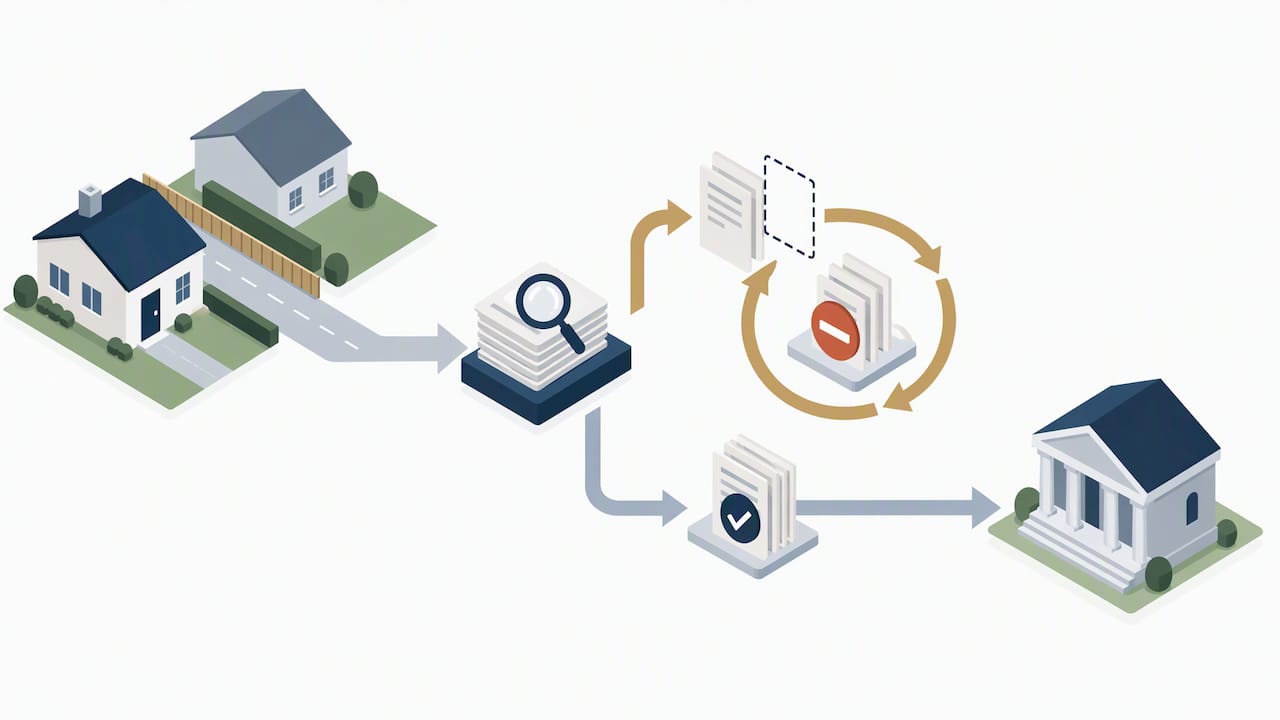
The stakes are not hypothetical. An Ohio court decision involving a disputed driveway boundary shows how a mismatch between what a listing represents and what the recorded boundary actually shows can lead to post-closing litigation and damages.
Step-by-step prep before you list
Getting ahead of a shared driveway issue before buyers start touring the home saves weeks later in escrow. Work through these steps in order:
- Order a boundary survey, not just a mortgage location survey. A mortgage survey confirms the home sits within the lot; it does not resolve where a shared driveway’s legal boundary actually falls, a distinction the Ohio court opinion highlights directly.
- Pull the full title report and flag every easement, encumbrance, or exception tied to the driveway.
- Gather any recorded deed language, easements, or prior maintenance agreements that reference the shared access.
- Draft precise disclosure wording for the seller property disclosure form and the MLS listing, naming the driveway as shared and summarizing the legal arrangement in plain terms.
- Consider a short, signed cooperation letter or temporary agreement with your neighbor if nothing is recorded, giving buyers and lenders something concrete to review.
Pro Tip: Keep copies of snow removal, repaving, or repair receipts shared with your neighbor. They serve as informal proof of a working arrangement even before anything gets recorded.
Fixing or documenting shared-driveway rights before you sell
Once you know what you are working with, you have a few paths to firm it up, ranked roughly by permanence and cost.
- Record an appurtenant easement. This is the most durable fix and the one lenders prefer, since it attaches to the land and transfers with every future sale, as LegalClarity’s guidance on shared-use agreements explains.
- Draft and record a maintenance agreement or covenant. It should spell out cost splitting, a dispute-resolution process, and a recording clause binding future owners, not just the current neighbors.
- Divide the driveway through a survey and deed amendment. This works when the lot lines allow a clean physical split, but it is rarely quick or cheap.
- Bring in a real estate attorney, title company, or mediator whenever a neighbor disagrees on boundaries or responsibilities, since an unresolved dispute can follow the property past closing.
Red flags, disputes, and interim fixes
Some signs point to deeper trouble that is worth catching before a buyer’s inspector finds it first.
- Fences, pavement, or landscaping that do not match the surveyed boundary
- Neighbors who describe the driveway’s use differently than you do
- No recorded instrument at all, just a long-standing informal understanding
- Any history of blocked access, parking disputes, or plowing disagreements
When a dispute is active, remedies range from a negotiated recorded compromise to a formal quiet title action or injunction, and a long-term unchallenged use can sometimes support a prescriptive easement claim. While a fix is pending, sellers can use an escrow holdback, a disclosure addendum, or a buyer concession to keep a deal moving.
Pro Tip: A one-page recorded compromise agreement, even an imperfect one, usually resolves buyer and lender hesitation faster than waiting on a court date.
Timelines and costs for common driveway fixes
A boundary survey generally takes two to six weeks, drafting and recording an agreement adds another one to four weeks, and lender review time varies by file, while a contested case can stretch into months or years if it reaches litigation.
- Boundary survey: moderate cost, two to six weeks
- Attorney drafting and recording fees: moderate cost, one to four weeks
- Mediation or negotiated settlement: variable cost and timeline depending on cooperation
- Minor repairs or repaving tied to a settlement: added cost on top of legal fees
Full disclosure and a documentation package, including survey results and maintenance history, are what most reliably keep buyers from walking away, according to the seller checklist from The Cameron Team. When the combined cost and timeline of fixing the title issue outweigh the home’s upside, a cash, as-is sale becomes the more pragmatic route.
When an as-is cash sale makes more sense than fixing it
Some situations are not worth fighting through: a neighbor who refuses to sign anything, litigation risk that could drag on for years, or legal and survey costs that exceed what the fix would add to your sale price. In those cases, we offer a cash purchase of homes as-is, including those with driveway issues, requiring only existing paperwork such as your deed and any agreements you have.
— Dave
A fast, as-is option if the driveway issue outweighs the fix
If the math on fixing a shared driveway doesn’t pencil out, we offer a more straightforward path: we buy your house as-is, without agent fees, repair requests, or delays related to neighbor agreements. 
Our process works for sellers dealing with:
- An easement dispute that has stalled or a neighbor unwilling to cooperate
- A tight timeline that doesn’t leave room for surveys, drafting, and recording
- Legal or repair costs that would eat into the home’s value anyway
We base our offer on the home’s value after repairs, and we can close on your schedule. Before reaching out, have your deed, any existing driveway agreements, and your most recent title report handy, and review our step-by-step guide for inherited house sales to streamline your documentation and quick-sale options. Start with our Sell Your House page or visit Rhody Home Buyer to request a cash offer.
This article is general information, not a substitute for advice from a qualified lawyer. Consult a qualified legal professional about your own circumstances before acting on anything here.
FAQ
Is it hard to sell a house with a shared driveway?
A shared driveway alone rarely stops a sale. Delays usually come from missing disclosures, an unrecorded easement, or a lender holding the file while title issues get clarified, as noted in Fannie Mae’s shared-use guidance.
Who has ownership of a shared driveway?
Ownership depends on how the deed and title describe it: some shared driveways sit entirely on one owner’s lot with an easement granting the neighbor access, while others are split down the middle with each owner holding their half. The title report and recorded deed language settle the question for your specific property.
What is it called when multiple houses share a driveway?
The legal term is usually a shared driveway easement, sometimes called a joint driveway easement or shared access easement, and it can take the form of an appurtenant easement, a license, or a covenant depending on how it was created, per Cornell LII.
What are the legal requirements for shared driveways for lenders?
Lenders generally require a recorded permanent easement or right-of-way granting legal access to a public road before funding a purchase. Requirements for ongoing maintenance agreements vary by loan program, and VA guidance has moved away from treating joint maintenance agreements as a universal requirement, according to the VA Lenders Handbook circular.
Do I need a lawyer to fix a shared driveway issue before selling?
Not always. A straightforward recorded maintenance agreement can sometimes be handled through a title company, but an attorney becomes necessary once a neighbor disputes boundaries, refuses to sign, or the property has a history of access disputes.
Sources
These references cover the legal and lender side of shared-driveway sales in more depth, and are worth forwarding to whoever is handling your title work or closing.
- Selling a House with a Shared Driveway: What to Know
- Garcia case (Ohio court opinion) — boundary/easement dispute and post-closing relief
- Shared Parking Agreement: Key Terms and Requirements – LegalClarity
- Fannie Mae Guide — Shared use properties and lender requirements