Yes, you can sell with tenants in place, but whether they stay after closing depends entirely on the lease and your state’s notice rules. Before listing, do three things: pull the lease and confirm its type and end date, check your state’s notice requirements for month-to-month tenants, and decide whether you want to sell occupied or push for vacant possession first.
TL;DR:
- Selling with tenants in place generally attracts investor buyers who value immediate cash flow over vacancy, but lease terms and local notice laws heavily influence the process.
- If the lease is fixed-term, you cannot remove tenants early unless an early-termination clause exists; month-to-month tenants require 30 to 60 days’ notice depending on jurisdiction.
- Market the property clearly as tenant-occupied, prepare early paperwork, and consider cash-for-keys offers to expedite vacant possession when needed.
- Rent control laws and rent-stabilization ordinances in certain cities limit a new owner’s ability to raise rent or evict tenants after purchase, affecting sale value and timing.
- In cases of delinquent tenants or problematic rental units, a cash sale to an investor often simplifies closing, bypassing tenant-related legal hurdles and reducing overall hassle.
Table of Contents
- What Legal Rules Govern Selling With Tenants?
- Should You Sell Occupied or Push for a Vacant Sale?
- How Do You Market and Show an Occupied Rental?
- What’s the Best Way to Negotiate an Early Move-Out?
- What Happens at Closing When Tenants Are Involved?
- How Does an Occupied Property Affect Price and Buyer Pool?
- Do Buyers Screen Tenants Before Purchasing an Occupied Rental?
- Does Selling Change Rent Payments or Trigger Rent Control Rules?
- What If the Tenant Isn’t Paying or Is Causing Problems?
- Publisher Viewpoint: When a Cash Sale Beats the Hassle
- Rhody Home Buyer: A Faster Path When Tenants Complicate the Sale
- Trusted Resources for Confirming Local Landlord-Tenant Rules
- Sources
- FAQ
What Legal Rules Govern Selling With Tenants?
The lease dictates almost everything about your timeline. A sale doesn’t cancel it: the buyer takes over as landlord and inherits every obligation you signed up for, including rent terms and remaining lease length. You can’t force a fixed-term tenant out early just because you found a buyer, unless the lease itself has an early-termination clause tied to a sale.
Month-to-month arrangements give you more flexibility, but not unlimited flexibility. Most states require 30 to 60 days of written notice to end the tenancy, and the exact number shifts by jurisdiction and sometimes by how long the tenant has lived there.
A few things to keep on your radar as you plan:
- Showings require advance notice under your state’s entry statute; you can’t just walk buyers through whenever it’s convenient.
- Quiet enjoyment rules mean you can’t pressure tenants into vacating through excessive showings or utility shutoffs.
- Some cities enforce just-cause eviction or relocation-payment rules that limit a buyer’s ability to remove tenants even after the sale closes.
- Rent-controlled units may cap what a new owner can charge, regardless of what the market supports.
Check your specific city ordinance before you promise a buyer anything about post-closing vacancy.
Should You Sell Occupied or Push for a Vacant Sale?
Your choice comes down to timeline, tenant cooperation, and who you expect to buy the place.
- Sell occupied and target investors. Buyers who plan to hold the property as a rental often prefer tenants already in place because it means day-one cash flow, no lease-up gap, and no marketing costs.
- Negotiate an early move-out and aim for owner-occupiers. Vacant homes typically pull a wider buyer pool since owner-occupiers almost always want to move in quickly rather than inherit someone else’s lease.
- Wait out the lease term. If the lease ends in a few months and the tenant pays reliably, riding it out is often the lowest-risk option. You avoid buyout costs and legal missteps entirely.
Run the math before choosing option two: a buyout might cost you a month or two of rent, but if vacant possession adds more than that to your sale price, it’s worth it. If it doesn’t, stick with the tenant in place.
How Do You Market and Show an Occupied Rental?
Your listing copy needs to say “tenant-occupied” clearly and early. Hiding it invites canceled showings and wasted buyer time. Decide upfront whether you’re chasing investors (lead with rent roll and lease terms) or hoping for a quick vacancy (lead with move-out timeline).
Practical steps that keep the process moving without friction, including proper HVAC maintenance to ensure tenant comfort: extend HVAC lifespan in rental properties.
- Notify the tenant in writing as soon as you decide to list, and explain what showings will look like.
- Batch showings into one or two windows per week instead of scattering them across the calendar.
- Offer a small gas or grocery gift card, or cover a cleaning service, in exchange for keeping the unit tidy for scheduled walkthroughs.
- Gather your paperwork early: current lease, rent roll, maintenance history, and anything an estoppel certificate will eventually need to confirm.
Pro Tip: Photograph the unit’s condition before you start showings. If a tenant disputes damage claims later, dated photos protect you from disagreements at closing.
What’s the Best Way to Negotiate an Early Move-Out?
Cash-for-keys works best when a buyer specifically wants vacant possession or when a problem tenant is dragging down your sale price. Typical offers run one to three months’ rent, scaled to how much time is left on the lease and how badly you need the unit empty.
- Open with a written proposal, not a verbal conversation. Spell out the move-out date, payment amount, and payment timing.
- Tie payment to vacancy, not to signing. Pay half on agreement and half after you’ve confirmed the unit is empty and undamaged.
- Document condition at move-out with photos or a walkthrough checklist signed by both parties.
- Include release language stating the tenant won’t pursue further claims once payment is made.
Pro Tip: Never hand over the full amount before getting keys back. Structuring payment around vacancy protects you if a tenant takes the money and stalls.
If the tenant refuses reasonable terms, don’t escalate to threats. Read up on how cash sales handle these situations before you lock into an informal handshake deal that has no legal teeth.
What Happens at Closing When Tenants Are Involved?
Buyers and their lenders will almost always request an estoppel certificate. It’s a signed document confirming the rent amount, lease term, and any claims the tenant might have against you as landlord. Get this ready early so it doesn’t stall closing.
The security deposit needs a clear paper trail. You’ll either transfer it to the buyer at closing with documentation showing the exact amount, or return it to the tenant according to your state’s procedure. Skipping this step is one of the easiest ways to create liability that follows you after the sale.
Before closing day, make sure the buyer has:
- A copy of the current lease and any addenda.
- A rent roll showing payment history and any arrears.
- A list of outstanding repairs or maintenance requests.
- Confirmation of security deposit handling in the closing statement.
Tenants also need formal notice of the ownership change, including where to send future rent payments. Skipping this step, even briefly, can create confusion that delays rent collection for the new owner.
How Does an Occupied Property Affect Price and Buyer Pool?
Investors value an occupied rental using cap rates and gross rent multipliers, essentially treating the lease as an income stream rather than a liability. If your rent is at or above market, that works in your favor. If it’s below market, expect lower offers, since the buyer is stuck honoring that rate until the lease ends.
A few factors that tend to shrink your offers:
- A long lease tail that keeps a buyer from raising rent or moving in themselves for a year or more.
- Rent that’s noticeably under market value for the area.
- A tenant with a spotty payment history or unresolved disputes.
Dual messaging can help: market to investors with income figures front and center, while noting to owner-occupier-focused agents that vacancy is negotiable if the buyer wants it. Occupied listings generally draw investors while vacant listings draw the broader buyer pool, so know which audience you’re actually selling to before you set your number.
Do Buyers Screen Tenants Before Purchasing an Occupied Rental?
Serious investors almost always want to see the tenant’s payment history and background before closing, even though they’re not the ones who originally approved the lease. This isn’t tenant screening in the traditional sense since the buyer can’t reject someone who’s already living there, but they will scrutinize the file to price their risk.
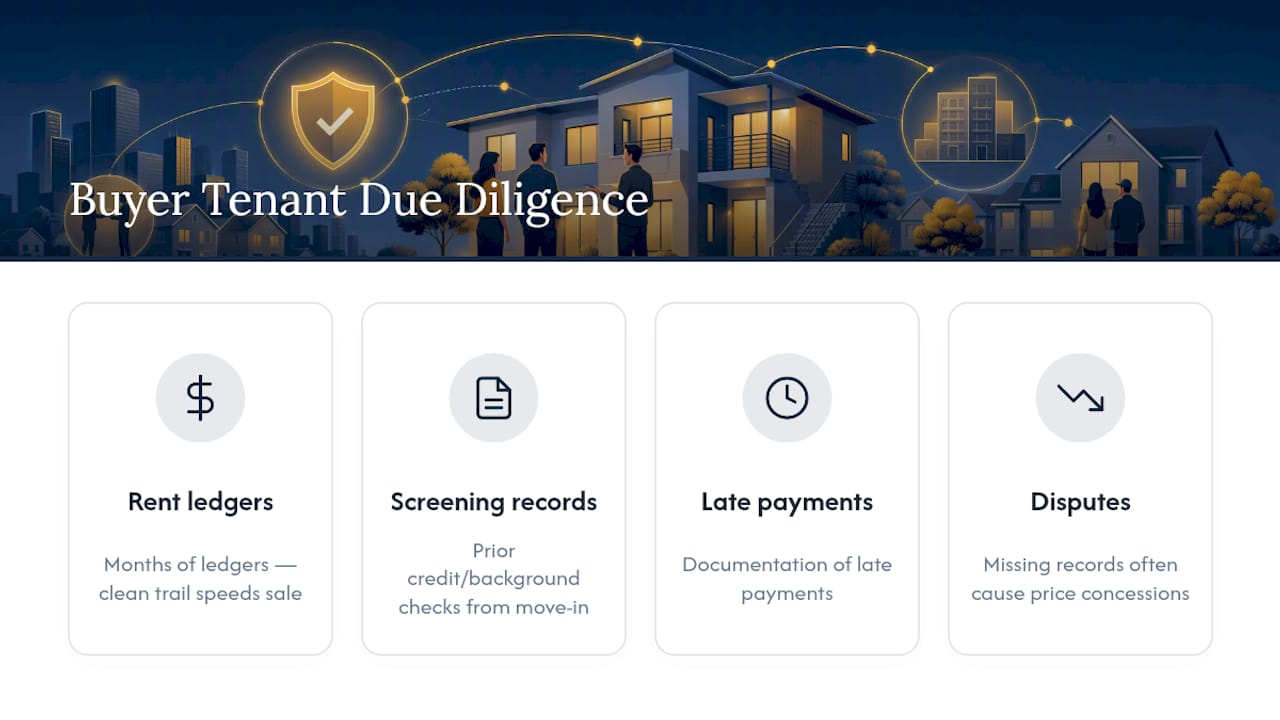
Expect requests for months of rent ledgers, any prior credit or background check results you ran at move-in, and documentation of late payments or disputes. A clean paper trail here does more to speed up your sale than almost anything else you can offer. Buyers who see gaps in the record, missing screening documents, or inconsistent rent collection tend to lower their offers or ask for price concessions to cover perceived risk.
If you never ran a formal screening when the tenant moved in, don’t fabricate one now. Instead, provide bank statements or ledger records showing consistent payment. That’s usually enough to satisfy a buyer’s due diligence. Investors are less concerned with how the tenant was originally vetted and more concerned with whether the income stream is reliable going forward.
Does Selling Change Rent Payments or Trigger Rent Control Rules?
A sale by itself doesn’t change what a tenant owes or when they owe it. Rent continues under the existing lease terms until it expires or both parties agree to change it. The new owner simply steps into your shoes as the party collecting payment.
Where things get complicated is in cities with rent control or rent stabilization ordinances. These rules can cap how much a new owner raises rent after taking over, and in some jurisdictions, they restrict the reasons a landlord can use to end a tenancy even for a legitimate sale. If your property sits in a rent-controlled market, the buyer’s ability to raise rents to “market rate” after purchase may be far more limited than they expect, which can affect what they’re willing to offer you.
Make sure tenants get official notice of where to send rent payments after closing. A missed or late payment because a tenant didn’t know who to pay isn’t automatically their fault, and disputes here can create early friction between tenant and buyer that reflects back on you if the sale agreement included any post-closing warranties.
What If the Tenant Isn’t Paying or Is Causing Problems?
Overdue rent or a problematic tenant doesn’t block a sale, but it does change your options and your numbers. Buyers will discount their offer to account for the cost and time of dealing with an eviction or collections process after closing, since the lease and its baggage transfer with the property.
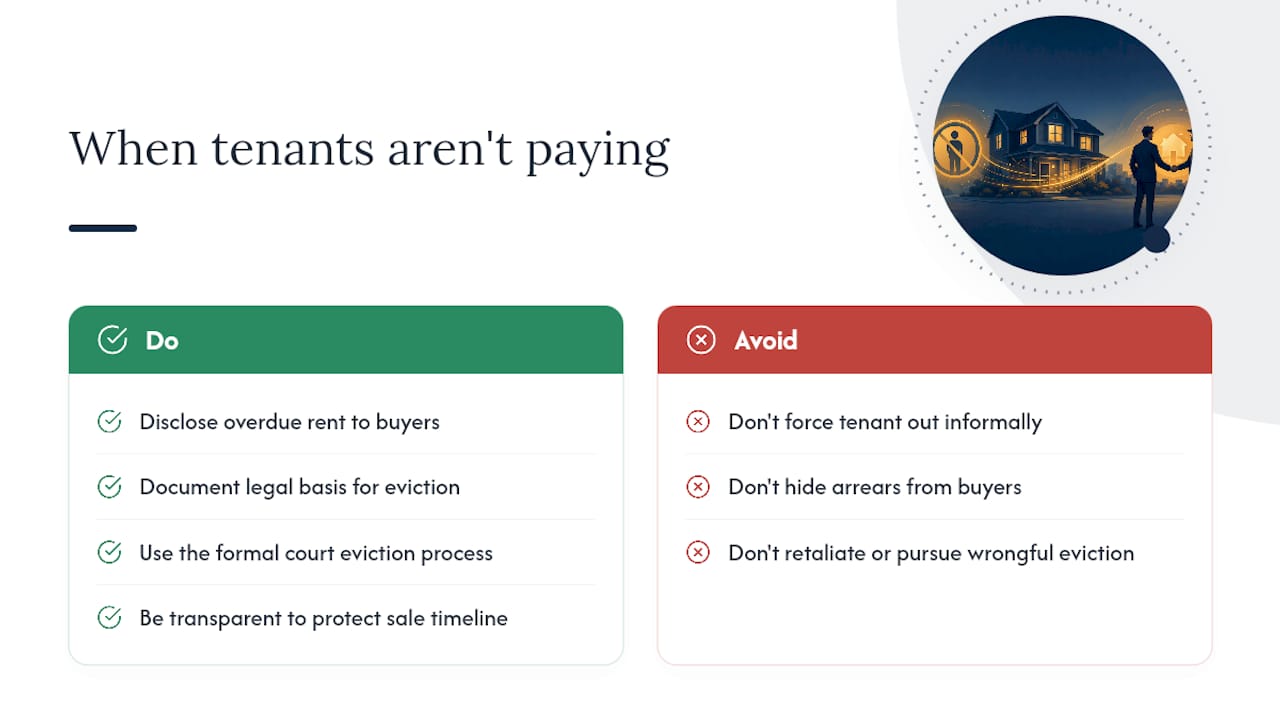
You generally cannot evict a tenant simply because you want to sell. Eviction requires a legal basis, such as nonpayment, lease violation, or the lease’s natural expiration, handled through your state’s formal court process. Trying to force someone out informally to make the property more marketable can expose you to legal claims that follow you past closing, including retaliation or wrongful eviction suits in some states.
If rent is significantly overdue, disclose it to potential buyers rather than hiding it. Investors who buy distressed rentals price that risk in routinely, and hiding arrears usually surfaces during the estoppel certificate process anyway, which can blow up a deal at the worst possible time. Transparency here protects your sale timeline more than it hurts your price.
Publisher Viewpoint: When a Cash Sale Beats the Hassle
Delinquent tenants, tight timelines, or a property that needs work before it will show well are exactly the situations where a direct cash sale simplifies things fastest. Cash buyers typically skip financing contingencies and inspection demands, which shortens closing and sidesteps most tenant-related friction altogether.
— Dave
Rhody Home Buyer: A Faster Path When Tenants Complicate the Sale
Rhodyhomebuyer is the alternative to listing on the open market when tenant issues, overdue rent, or repair needs make a traditional sale slower and more expensive than it should be. Instead of negotiating buyouts, coordinating showings around a tenant’s schedule, or waiting for a buyer’s financing to clear, you get a fair cash offer based on the property’s after-repair value and close on your own timeline.

There are no agent commissions, no repair demands, and no cleaning required before anyone walks through. Rhody Home Buyer purchases homes as-is, which matters most for owners dealing with a tenant who won’t cooperate or a unit that needs more work than a retail buyer will accept. If speed and certainty matter more to you than squeezing out the last few thousand dollars on price, request a cash offer and see the number before you commit to anything.
Trusted Resources for Confirming Local Landlord-Tenant Rules
State notice periods, estoppel requirements, and deposit rules vary. Verify specifics with Nolo’s state notice guide and your local landlord association before acting.
This article is general information, not a substitute for advice from a qualified lawyer. Consult a qualified legal professional about your own circumstances before acting on anything here.
Sources
- State rules on notice required to change or terminate a month-to-month tenancy – Nolo
- Can I Sell a House With Tenants in It? What to Know – LegalClarity
- Selling a House With a Tenant: What Are Your Options? – HomeLight
- 5 Tips for Selling a Property With Existing Tenants | Avail
FAQ
What Does “Sold With Tenants” Mean?
It means the buyer takes ownership subject to the existing lease, and the tenant continues renting under the same terms until the lease ends or both sides agree to change it.
Can I Evict a Tenant Because I Want to Sell?
No. Wanting to sell isn’t a legal basis for eviction; you need a valid reason like lease violation, nonpayment, or the lease’s natural expiration, handled through the proper court process.
What Is the Hardest Month to Sell a House?
Winter months, particularly December and January, tend to see the slowest buyer activity in most markets, which can matter if you’re timing a sale around a tenant’s lease end date.
What Is the 50% Rule in Rental Property?
It’s a rough budgeting guideline stating that about half of a rental’s gross income typically goes toward operating expenses, excluding mortgage payments. Investors sometimes use it to sanity-check a tenant-occupied property’s cash flow before making an offer.
How Long Does It Take to Sell a House With Tenants?
Timelines vary widely depending on lease type, tenant cooperation, and buyer financing, but a cash sale to an investor can close in days to a few weeks rather than the months a traditional listing often takes.