
Yes, you can sell with a mortgage owed. Your lender gets paid from the sale proceeds at closing, using a formal payoff statement rather than your monthly balance. You keep whatever remains after the loan, costs and fees. If proceeds fall short, you can bring cash, negotiate a short sale or talk to your servicer.
TL;DR:
- Request a written payoff statement for your expected closing date, and ask for per diem interest, fees, prepayment penalties, and wire instructions.
- Calculate net proceeds from the contract price after the mortgage payoff, other liens, commissions, closing costs, prorated taxes, and daily interest.
- If proceeds fall short, a short sale usually requires lender approval and documented hardship, and its review can take longer than a conventional closing.
- Homeowners may exclude up to $250,000 in gain, or $500,000 for married joint filers, if they meet ownership and use tests for two of five years.
Table of Contents
- What is a payoff statement and how do you get one?
- How do you calculate your net proceeds?
- What if your sale proceeds won’t cover the mortgage?
- How does closing pay off the mortgage and clear the lien?
- Do you owe taxes when you sell a home with a mortgage?
- How long does it take and what will it cost you?
- What should you gather and ask before you list?
- When does a fast sale make more sense than listing?
- How we help when you need to close fast
- FAQ
- Sources
What is a payoff statement and how do you get one?
Your monthly statement shows a current balance. That is not what you owe the day you sell. The lender sets the payoff amount, and it includes outstanding principal, per-diem interest through the payoff date and possible fees, so it usually runs higher than the balance on your last bill, as the Consumer Financial Protection Bureau explains. The title company relies on this exact figure to make sure the lien is fully satisfied.
Call or write your servicer and ask for a written payoff statement. Specify the date you expect to close, because interest accrues daily and the figure changes with the date.
- Ask for the payoff good through your target closing date plus a few extra days.
- Ask for a per-diem figure so you can adjust if closing slips.
- Ask whether any unpaid fees or late charges are included.
- Ask whether your loan carries a prepayment penalty.
- Ask for the wire instructions the title company will need.
Pro Tip: Request a fresh payoff statement once your closing date is firm, and again if it moves by more than a few days.
How do you calculate your net proceeds?
Net proceeds are what lands in your account after everyone else is paid. Run the math before you list, so you know whether a sale makes sense and what price you need.
- Sale price. Start with the contract price, not the list price.
- First mortgage payoff. Use the figure from your payoff statement, including per-diem interest.
- Subordinate liens. Subtract any second mortgage, HELOC or other recorded lien.
- Agent commissions. If you list traditionally, commissions come out of your side of the closing.
- Closing costs. Title, recording, escrow and settlement fees add up quickly.
- Prorations. Property taxes and similar charges are split between you and the buyer by closing date.
For example, estimate your net proceeds by subtracting the payoff, any second lien, commissions, closing costs and prorations from the sale price.
Lenders are cautious about unsold-home estimates too. Fannie Mae’s guidance notes that lenders may conservatively estimate anticipated proceeds until a settlement statement documents the actual net cash.
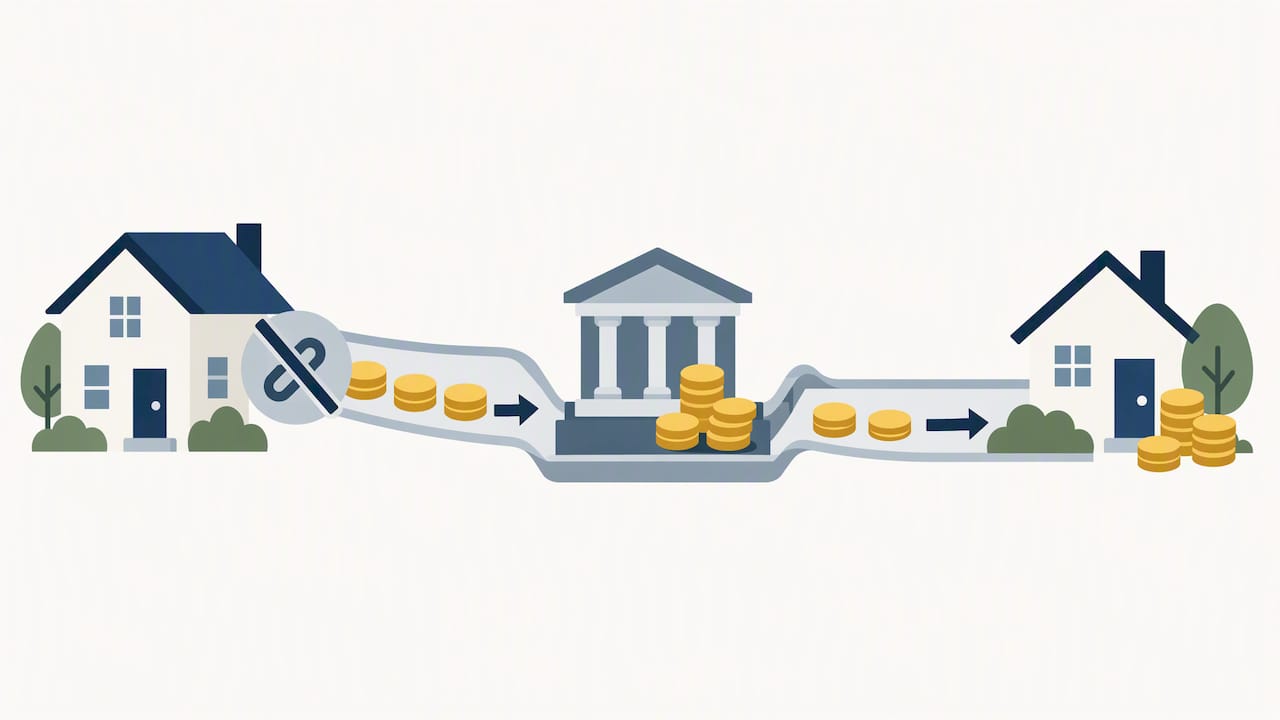
The title or closing agent holds the funds and disburses them to lienholders first. You typically receive your check or wire after the agent confirms the debts are satisfied.
What if your sale proceeds won’t cover the mortgage?
When the payoff is larger than what the sale brings in, you have a few paths, each with trade-offs.
- Bring cash to closing. If you have savings or other assets, you can cover the gap so the lien is released and the sale closes.
- Pursue a short sale. The lender agrees to accept less than the full balance. It typically requires approval and a documented hardship, and the review can take time, as the CFPB’s short sale overview describes.
- Negotiate with your servicer. Some servicers will discuss repayment plans or deficiency terms, though what they agree to varies.
- Check a reverse mortgage’s rules. A reverse mortgage must be repaid on sale. If the balance exceeds the price, mortgage insurance may cover the shortfall when the home sells for its appraised value, according to the CFPB’s reverse mortgage guidance.
If missed payments are already a concern, our guide on how to avoid foreclosure covers steps that overlap with an urgent sale.
How does closing pay off the mortgage and clear the lien?
At closing, the settlement agent acts as the go-between. Fannie Mae’s closing overview says the agent makes sure mortgage balances, taxes and other costs are paid from the sale proceeds. The agent collects your payoff statement, confirms wiring instructions and sends funds to each lienholder.
Once payoff funds arrive, the servicer must satisfy the loan and record a release of lien, per Fannie Mae’s servicing guide. Recording does not always happen the same day, and satisfaction paperwork can follow the payoff by days or weeks.
- Expect a Closing Disclosure showing the money flow, as the CFPB’s closing disclosure explainer outlines.
- Expect to sign the deed transferring title to the buyer.
- Expect copies of the payoff statements for each lien.
- Expect to receive your net proceeds only after debts are verified as paid.
Pro Tip: A few weeks after closing, ask the title company to confirm the lien release was filed with the county recorder, and keep a copy.
Do you owe taxes when you sell a home with a mortgage?
Paying off the mortgage is not itself taxable. Tax depends on your capital gain: the sale price minus your adjusted basis and selling expenses. Escrow balances returned to you are a separate matter from the gain.
Up to $250,000 of gain ($500,000 for married couples filing jointly) may be excluded if you meet the ownership and use tests, as IRS Publication 523 explains. Generally that means owning and living in the home for at least 2 of the prior 5 years.
- You may receive a Form 1099-S from the closing agent. If you do, you must report the sale even when the gain is fully excludable.
- The exclusion generally applies to one sale every two years.
- If you do not meet the tests, part or all of the gain may be taxable.
- Special rules, such as installment sales, are covered in the same IRS guidance.
If you are selling a property you inherited, basis works differently. Our article on tax consequences when selling an inherited house walks through it. For your own situation, a tax professional can confirm what applies.
How long does it take and what will it cost you?
A payoff quote is only good through the date it names, because per-diem interest keeps accruing. If closing slips, ask for an updated figure so the title company wires the right amount.
A conventional sale moves on the closing date set in the contract. A short sale adds a lender review step, and that approval can stretch the timeline well beyond a standard sale, so build in patience.
- Request the payoff statement as soon as you decide to sell.
- Budget for agent commissions if you list.
- Budget for title, recording and settlement fees.
- Budget for payoff of any second mortgage or HELOC.
- Budget for prorated taxes and per-diem interest through closing.
Add a cushion. A few days of interest and a surprise fee can shave your net more than you expect.
What should you gather and ask before you list?
Bring order to the paperwork now and you avoid scrambling at closing. Gather your mortgage note, recent escrow statements, the deed and the payoff statement. If a buyer is already under contract, add their Closing Disclosure.
Questions for your lender:
- What is the exact payoff for my specific closing date?
- What are the wire instructions?
- Is there a prepayment penalty?
- Are there any subordinate liens, and for how much?
Questions for the title or settlement agent:
- Who orders the payoffs?
- How long does lien release recording usually take?
- How should I deliver any funds I owe at closing?
Pro Tip: Put every answer in writing or save the email, so the numbers you were quoted are on file if a figure changes.
When does a fast sale make more sense than listing?
Speed and certainty sometimes matter more than the last dollar of price. Financial hardship, an inherited property you cannot maintain or an urgent move can all tilt the decision. A direct cash sale usually means a lower price in exchange for no repairs, no staging and fewer contingencies that can derail a deal.
My advice is to stop comparing headline prices. Compare what you net after costs and how long each route takes. A higher listing that sits for months and needs repairs can leave you with less than a quick, clean sale.
— Dave
How we help when you need to close fast

If speed and certainty matter, we buy houses for cash across Rhode Island, and we buy them as-is. You skip agent fees, commissions, repairs and cleaning, and you choose a closing date that fits your life.
A direct sale also simplifies the payoff side. We work with you on a timeline you can plan around, and the payoff is handled through closing like any other sale. Our offers are based on the After Repaired Value, and we explain the numbers up front.
- We buy homes in any condition, with no repairs or cleaning on your end.
- You pay no agent fees or commissions.
- You close on your terms, without pressure.
- You get a straightforward cash offer.
You can read how it works on our page about how cash home sales work, or request your cash offer and see what you would net before deciding.
For a broader look at how direct-cash transactions usually run, this cash home buyers guide offers helpful background.
FAQ
How does selling a house you owe money on work?
The lender is paid from your sale proceeds at closing, using a payoff statement. The settlement agent sends funds to each lienholder and gives you what is left. If proceeds fall short, you can bring cash or explore a short sale.
What happens to my mortgage if I sell?
Your mortgage is paid off at closing and the lender records a release of lien. The payoff amount includes per-diem interest and possible fees, so it can exceed your monthly balance, per the CFPB.
Can I sell my house without paying off the mortgage first?
Yes. You do not need to pay it off beforehand, because the sale proceeds satisfy the loan at closing. You only need enough in proceeds, or cash on hand, to cover the payoff and costs.
Do I owe taxes if I sell a house with a mortgage?
Paying off the loan is not taxable, but gain on the sale may be. Many sellers can exclude part or all of it under the IRS primary residence rules if they meet the ownership and use tests.
Sources
- What is a payoff amount and is it the same as my current balance? | Consumer Financial Protection Bureau
- Irs
- Consumerfinance
- Anticipated Sales Proceeds | Fannie Mae
- Satisfying the Mortgage Loan and Releasing the Lien | Fannie Mae