
You can sell a house with pet damage in Rhode Island. You have three real routes: repair it and list, list it as-is and price the damage in, or sell directly to a cash buyer who takes the house in its current condition. Whichever you pick, state law requires you to disclose the damage you know about. Hiding it with new carpet or fresh paint is the one choice that can cost you far more than the damage itself.
This guide covers what counts as pet damage, how it affects buyers and appraisals, what you must disclose, and how to decide between fixing and selling as-is.
TL;DR
- Pet damage ranges from cosmetic (scratches, worn carpet) to structural (urine in subfloors, chewed framing). Odor is the part buyers and inspectors find fastest.
- Rhode Island law requires you to disclose all deficient conditions you actually know about before signing a purchase agreement.
- Covering damage without disclosing it invites post-closing disputes. Repairing, discounting or selling as-is are all safer.
- Selling as-is to a cash buyer skips repairs, cleaning, showings and agent commissions. The trade-off is that the offer reflects the condition of the house.
Table of Contents
- What counts as pet damage
- How pet damage affects a sale
- What you must disclose in Rhode Island
- Repair, discount or sell as-is
- How a cash sale handles pet damage
- Our perspective
- A practical checklist before you decide
- Sell your damaged house to us
- FAQ
- Sources
What counts as pet damage
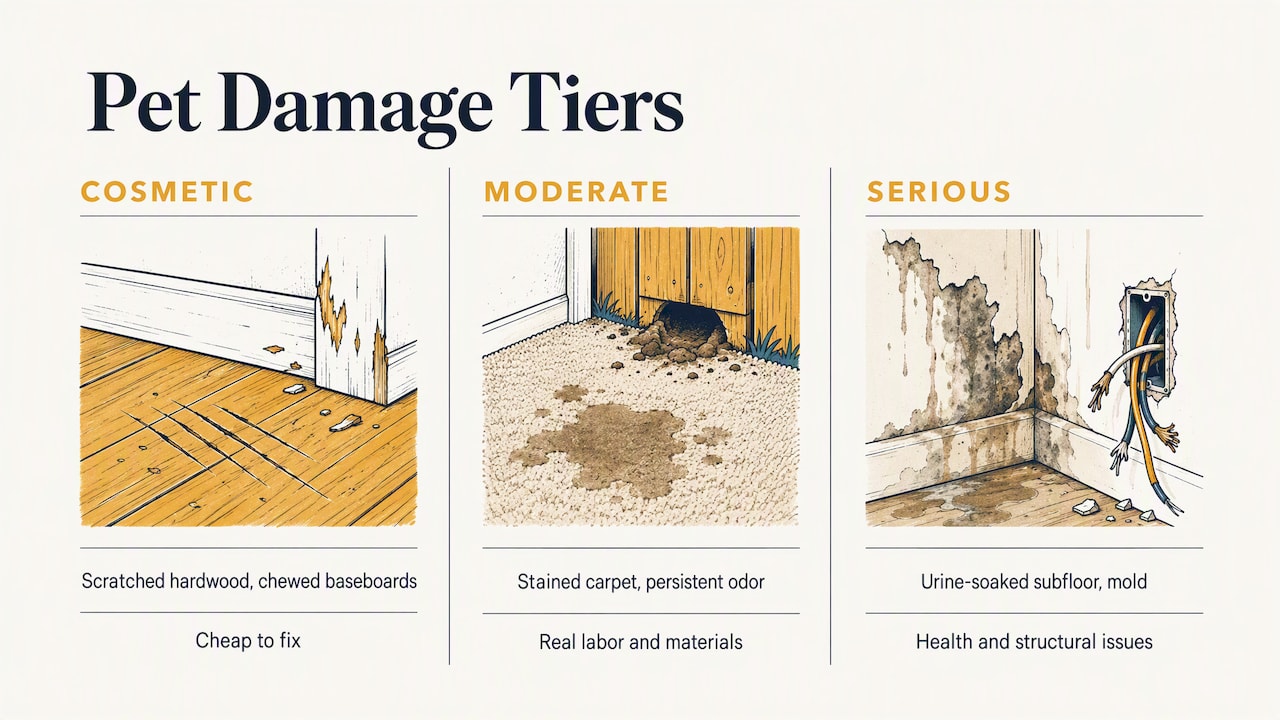
Pet damage is any wear, staining or contamination caused by animals that goes beyond normal living. It helps to sort it into three tiers, because each one changes your options.
Cosmetic. Scratched hardwood, chewed baseboards or door frames, scuffed paint, torn screens, pet hair in vents, a worn patch of lawn. These are annoying but cheap to fix.
Moderate. Stained or matted carpet, odor that stays after cleaning, claw damage deep enough to need refinishing, damaged blinds, a fence a dog has dug under. Expect real labor and materials here.
Serious. Urine that has soaked through carpet and pad into the subfloor, saturated drywall at floor level, mold from repeated moisture, chewed wiring or ductwork, or an infestation tied to animal waste. These are health and structural issues, not decoration.
The tiers matter because the same house can be a weekend of touch-ups or a five-figure renovation, and you often cannot tell which until the flooring comes up.
How pet damage affects a sale
Buyers notice. Zillow’s guidance for sellers treats removing signs of pets, repairing damage, deodorizing and deep cleaning as core preparation steps before listing. The reasoning is simple: damage that is visible reads as neglect, and a buyer who sees one chewed door frame starts wondering what else was ignored.
The numbers back that up. NAR data cited by Quicken Loans says 67% of Realtors reported that pet ownership affected the selling process to a moderate or major degree. The same page reports sellers commonly respond by professionally cleaning (41% do) and replacing damaged flooring, which 9% say is always necessary and 76% say is sometimes necessary.
Appraisals and financing
If your buyer needs a mortgage, the appraiser’s view of condition matters. Scratched floors, stained carpet and chewed trim can lower the condition rating and the appraised value, which can make it harder for the buyer to get financing. A deal that looked solid at the offer stage can fall apart when the appraisal comes in low or the lender asks for repairs.
Inspections
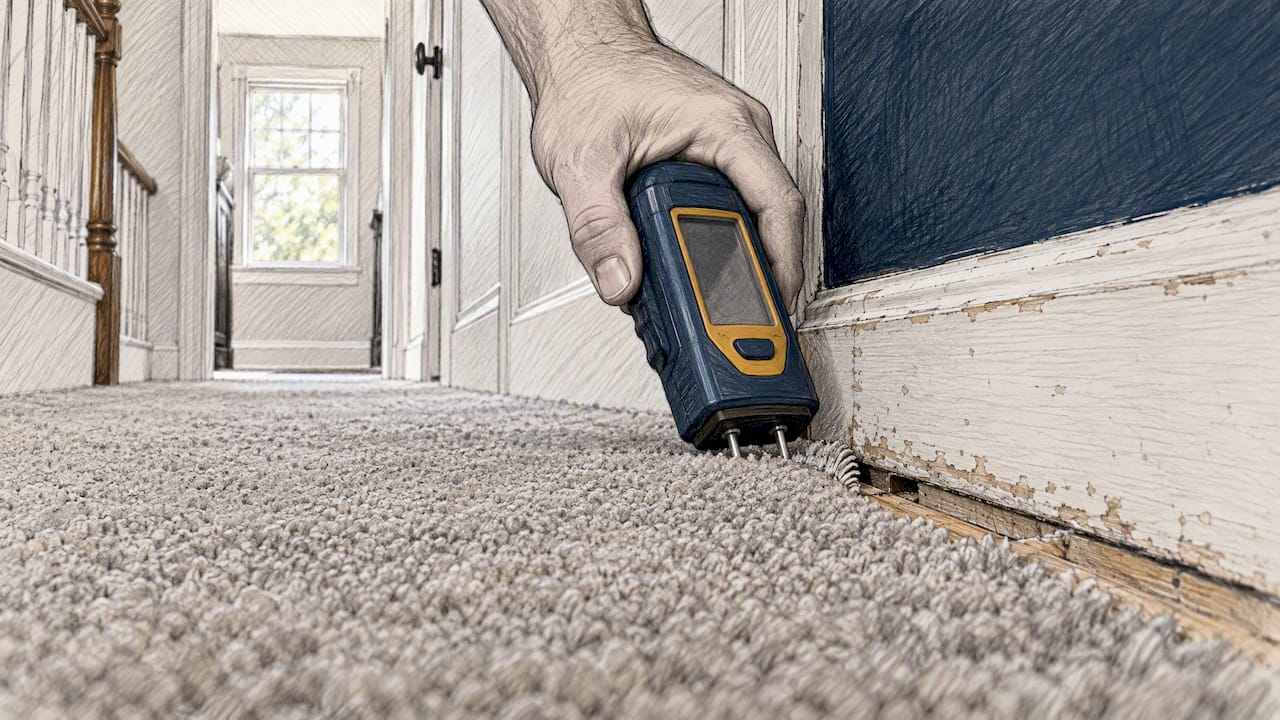
A pre-sale inspection is not required of sellers. NAR’s consumer guide says it can help you spot issues to repair before showing, but buyers will almost always run their own inspection as a contingency. An inspector with a moisture meter and a good nose will usually trace odor to its source. That is when buyers ask for credits, a lower price or a walk-away.
What you must disclose in Rhode Island
This is the part sellers most often get wrong. In Rhode Island, for homes with one to four dwelling units, the seller must deliver a written disclosure listing all deficient conditions of which the seller has actual knowledge, no later than before signing any agreement to transfer the property. The Rhode Island Association of Realtors publishes a standard sales disclosure form that sellers commonly use for this.
Three practical points follow.
- Disclosure is not a warranty. It is a report of what you know, not a promise about what you do not.
- Knowledge is the trigger. If you know the dog soaked through the carpet in the back bedroom, that is a known condition. Painting over the stain does not remove the knowledge.
- Investigating can create knowledge. The statute does not make you hunt for defects. But once you pull up carpet and find a stained subfloor, you now know about it. Plan to disclose whatever you find.
Courts take misrepresentation seriously. In one Tennessee appeals case over a home sale, buyers sued sellers over alleged intentional or negligent misrepresentation. That is a different state’s law, so it does not set a Rhode Island rule, but it shows the kind of dispute concealment invites. For a question about your own situation, talk to a Rhode Island real estate attorney.
A cautionary example
A seller posted a question describing a closing that went wrong: the buyers found urine in the only carpeted room and then hired a black light inspection for the tile floors. They demanded $6,600 in total reimbursement, made up of $2,600 for carpet and $4,000 for treatment. It is an anonymous post from 2013, so treat it as an illustration, not a benchmark. The pattern is the point: odor you stopped noticing can become a bill after closing.
Repair, discount or sell as-is
There is no single right answer. It depends on how bad the damage is, how much cash and time you have, and how soon you must close.
| Option | Best when | Main cost | Main risk |
|---|---|---|---|
| Repair, then list with an agent | Damage is cosmetic and you have weeks or months | Materials, labor, agent commission, carrying costs | Repairs uncover bigger problems mid-project |
| List as-is with a lower price | Damage is moderate and you can wait for the right buyer | Price discount, longer time on market | Financed buyers face appraisal and lender hurdles |
| Sell as-is for cash | Damage is serious, money or time is tight, or the house is inherited | Offer reflects condition | Offers vary, so compare them carefully |
When repairing makes sense
If the problems are scratches, paint and a carpet that is worn but not saturated, fixing them is usually cheap compared with the price discount buyers will apply. Deep clean, deodorize, remove stains and replace the flooring that cannot be saved. Do it before photos are taken, because visible wear signals deferred maintenance in a listing.
Get quotes before you commit. A common trap is to start with carpet and end with subfloor, baseboard and drywall.
When selling as-is makes more sense
Repairs are a poor bet when:
- The odor survived professional cleaning, which usually means the source is in the pad or subfloor.
- You are paying a mortgage, taxes and utilities while the house sits empty.
- The home was inherited and you live out of state or cannot manage a renovation.
- A divorce, job move, medical bill or looming foreclosure sets the clock for you.
- You do not have the cash to front repair costs you may not recover.
In those cases the question is not whether to take a discount. It is which kind of discount you accept: a lower price from a buyer who inspects and renegotiates, or a straight as-is offer with no repair requests.
How a cash sale handles pet damage
A direct cash buyer purchases the house in its current condition, so there is nothing to fix, clean or stage. There is no appraisal tied to a buyer’s mortgage and no repair negotiation after an inspection. That removes the steps where pet damage most often derails a traditional sale. If you want the full mechanics, our page on how cash home sales work walks through them.
A cash sale still requires honesty. You should tell the buyer what you know about the damage. That keeps the offer realistic and the closing clean. It also keeps you on the right side of Rhode Island’s disclosure rules.
Compare the numbers, not just the headline. Our guide on cash offers versus financing shows how to compare net proceeds: the final price minus repairs, commissions, carrying costs and the time you wait. A higher listing price can net less than a lower cash offer once those are counted. If you are weighing the agent route more broadly, see why skip the realtor and selling your house without repairs.
Our perspective
We buy houses across Rhode Island as-is, and pet damage is something we see regularly. Here is how we think about it.
Most homeowners who call us about pet damage are embarrassed. They should not be. Animals live in homes, and a house that shows it is not a house that failed. What hurts sellers is not the scratched floor. It is the months of trying to fix it, the listing that sits, the buyer who walks after inspection, and the repair money that never comes back.
Our offers are based on the After Repaired Value of the home, which means we look at what the house could be worth once restored and make a fair cash offer from there. We buy in any condition, with no agent fees or commissions and no repairs or cleaning on your side. You do not need to rip up carpet to find out how bad it is. You also do not need to pretend the damage is not there.
Our advice is plain. Be honest about what you know. Do not paint over odor. Do not start demolition unless you are ready to deal with what you find. And decide early whether you have the time and money to repair, because every month of carrying costs shrinks what you take home. If you do, repair and list. If you do not, a straightforward as-is sale lets you close on your own timeline.
— Dave
A practical checklist before you decide
- Walk the house with fresh eyes. Ask a friend without pets to tell you what they smell and see.
- List what you know. Write down every damaged area, even small ones. This becomes your disclosure.
- Check the flooring. Lift a corner of carpet in the room where the pet spent the most time. Look for stains on the pad or subfloor.
- Get two repair quotes for the worst items, so you can compare the cost of fixing against the discount a buyer will ask for.
- Add up carrying costs. Mortgage, taxes, insurance and utilities for each month the house sits.
- Compare net proceeds between listing and an as-is sale, not just the sticker prices.
- Talk to a professional for your specific case: a Rhode Island real estate attorney for disclosure questions, a licensed inspector for structural or mold concerns.
Sell your damaged house to us
If the repairs are too much, we can help. We are Rhode Island homebuyers who purchase houses as-is for cash, with no agent fees, no commissions and no cleaning. Tell us about the house, including the damage, and we will make a fair offer based on its After Repaired Value. You choose the closing date that fits your life. Start at Rhody Home Buyer or see how our fast cash process works.
FAQ
Do pets affect home appraisals?
They can. Appraisers rate the overall condition of the home, and visible damage such as scratched floors, stained carpet and chewed trim can lower that rating and the appraised value. A lower value can make financing harder for a buyer. A cash sale does not depend on a lender’s appraisal.
Do I have to disclose pet damage in Rhode Island?
Yes, if you know about it. Rhode Island requires sellers of one to four unit homes to state all deficient conditions they actually know about before signing an agreement to transfer the property. If you are unsure whether something qualifies, ask a Rhode Island real estate attorney.
Can I just replace the carpet and not mention the damage?
That is risky. New carpet over a stained pad or subfloor hides the problem without fixing it, and the odor can return. If you know the damage was there, it belongs on your disclosure. Concealment is the kind of conduct that leads to misrepresentation claims after closing.
Is a pre-sale inspection required?
No. NAR says a pre-sale inspection is not required, though it can show you what to fix first. Remember that anything you learn from it may then count as something you know and must disclose.
Sources
- Rhode Island General Laws § 5-20.8-2, Disclosure requirements (Justia)
- Rhode Island Association of Realtors sales disclosure form
- Tips For Selling Your Home With Pets (Quicken Loans)
- Consumer Guide: Preparing to Sell Your Home (NAR)
- Selling a House with Pets at Home (Zillow)
- Holland v. Forester, Court of Appeals of Tennessee
- Seller question: buyer demands reimbursement for pet damage (JustAnswer)