
Cash usually buys speed and certainty, while financing preserves liquidity and can let a buyer outbid cash on price. The real answer depends on net proceeds after you account for delay and fall-through risk, which is why the two documents worth comparing are a buyer’s proof of funds and, for financed offers, the Loan Estimate and Closing Disclosure.
TL;DR:
- Cash deals typically close in days to two weeks, compared with 30 to 60 days for financed purchases; price the extra carrying costs before comparing.
- A proof of funds letter confirms cash in an account, not its use; an underwritten loan commitment verifies income, assets, and credit.
- Subtract concessions, closing fees, and delay costs from each price, then weigh appraisal and underwriting risks against inspection and title risks in cash deals.
- Cash suits homes needing major repairs or sellers with urgent deadlines, while financing with a firm commitment and short closing window can win on price.
Table of Contents
- Why sellers often favor a cash offer
- When financing can still beat a cash offer
- Comparing cash and financed offers side by side
- What to check before accepting any offer
- Matching your situation to the right kind of offer
- A step-by-step method for comparing two real offers
- How a cash-buy process like ours actually works
- What sellers get wrong when comparing offers
- Get a straightforward cash offer without the wait
- FAQ
- Sources
Why sellers often favor a cash offer
A cash sale skips the mortgage approval chain entirely, and that shows up directly in how fast a deal closes. Cash purchases typically close in days to about two weeks, while financed purchases commonly take 30 to 60 days once you factor in loan application, underwriting, and appraisal scheduling.
That speed comes with fewer places for a deal to collapse. A financed purchase can fall apart over a low appraisal, a credit issue that surfaces in underwriting, or a lender that simply takes too long. Cash removes those specific failure points, though it does not remove every risk: inspection and title issues can still derail a cash deal.
- Cash buyers typically skip loan origination and underwriting fees, which lowers total closing costs on the buyer side.
- Sellers gain a shorter, more predictable path to their money and a faster possession date.
- Fewer parties (no lender, no appraiser requirement) means fewer scheduling delays.
- A seller facing a time-sensitive situation, like a looming relocation or a tight purchase contract elsewhere, often values that certainty over squeezing out a slightly higher price.
Cash sales represent a significant share of transactions in recent reporting from the National Association of Realtors. That share shows cash is common enough to be a real competitive factor in many markets, not a rare exception.
When financing can still beat a cash offer
Financing is not just a fallback for buyers who lack cash. It is often the smarter move, and in competitive situations a well-prepared financed offer can out-price cash entirely.
- Keeping cash in reserve preserves flexibility for renovations, investments, or emergencies instead of tying it all up in one asset.
- A mortgage lets a buyer leverage a smaller down payment into a larger purchase, which can support a higher offer price than paying cash outright would allow.
- Mortgage interest may be deductible, but that benefit is conditional on itemizing and on the debt limits described in IRS Publication 936, so it should never be assumed automatically.
- Making mortgage payments on time builds credit history, which has value beyond the single transaction.
A fully underwritten, short-window financed offer, one where the buyer already has a firm loan commitment rather than just a preapproval letter, can look nearly as safe as cash to a seller while offering a stronger price. A financial planner’s perspective from Fidelity’s learning center frames this as a tradeoff between liquidity and certainty rather than a simple better-or-worse choice.
Comparing cash and financed offers side by side
Choosing between two offers means running the same math on each one, not just comparing the headline price. Here is the sequence that produces a real answer.
- Compare timelines. Cash commonly closes in one to two weeks; financed deals commonly take 30 to 60 days, so multiply the extra weeks by your carrying costs (mortgage, taxes, insurance on the property you’re selling) to get a real delay cost.
- Weigh certainty. A financed offer carries appraisal and underwriting risk; a cash offer carries inspection and title risk. Neither is risk-free, and NAR’s reporting notes that cash deals still experience occasional contract problems.
- Calculate net proceeds. Take each offer’s price, subtract expected concessions, subtract the delay cost from step one, and subtract closing fees. The offer with the higher adjusted number, not the higher sticker price, is the stronger one.
- Check cash-to-close requirements. For a financed buyer, the Loan Estimate shows origination charges and services the borrower cannot shop around for, and the Closing Disclosure confirms the final numbers; both affect how reliably that buyer can actually close.
- Review negotiation levers. Contingencies, earnest money size, and proposed closing date all shift risk between buyer and seller independently of price, so weigh them alongside the number.
A buyer comparing loan offers against each other can also use a structured framework like comparing APR and interest rate to see which financed option is actually cheaper once fees are included, since two loans at the same rate can carry very different total costs.
What to check before accepting any offer
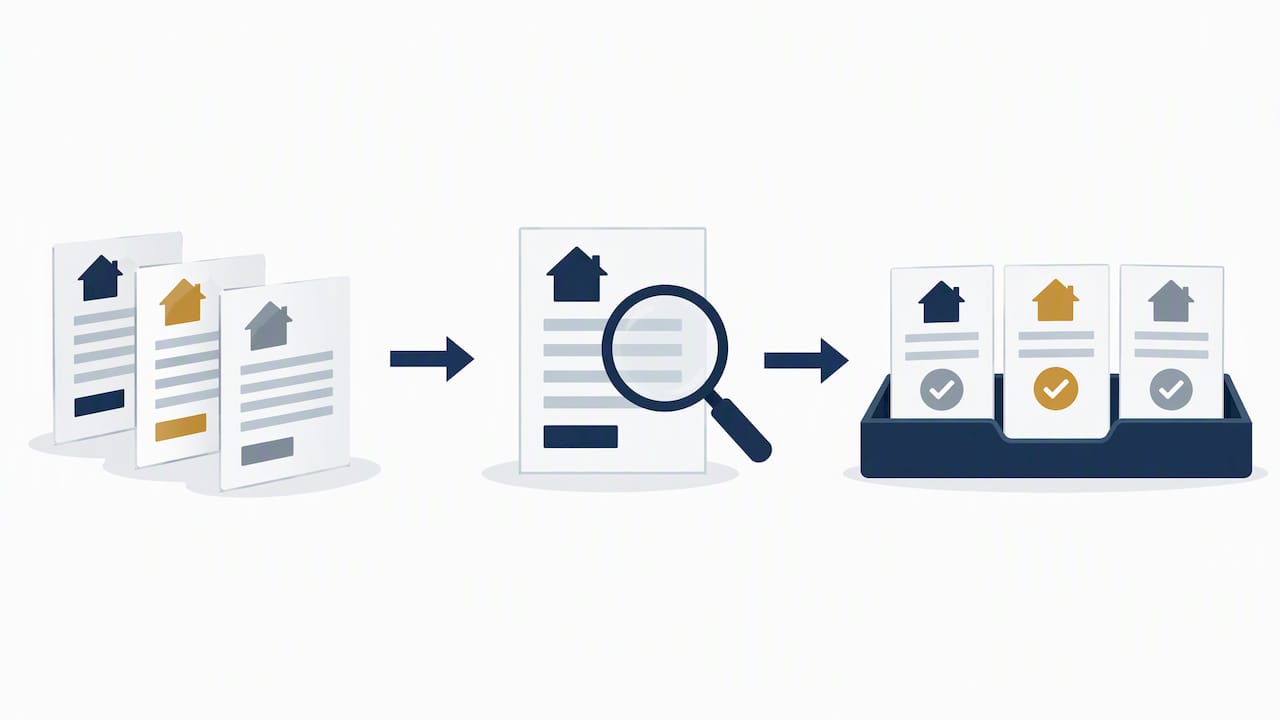
The price on an offer sheet tells you less than the paperwork behind it. A proof of funds letter, a preapproval letter, and an underwritten loan commitment are three different levels of assurance, and treating them as interchangeable is a common mistake.
- A proof of funds letter shows a buyer has the money sitting in an account; it does not guarantee they will use it for this purchase.
- A preapproval is a lender’s preliminary estimate based on stated information, while an underwritten commitment means the lender has verified income, assets, and credit.
- Contingency language matters as much as the contingency itself: an inspection contingency with a short response window is far less risky than one with no deadline.
- Earnest money amount, proposed closing date, and any termination rights spell out how much leverage you actually have if the buyer tries to back out.
Pro Tip: Ask every buyer for their proof of funds or loan commitment letter before you compare prices, not after you’ve already picked a favorite.
Reading those documents carefully, rather than taking “I’m approved” at face value, is how you turn a stack of offers into an honest comparison. A guide on verifying a proof of funds letter walks through what a legitimate one actually contains.
Matching your situation to the right kind of offer
Some situations point clearly toward one type of buyer over the other. Recognizing which one you’re in saves time.
- In a multiple-offer, fast-moving market, cash has a clear edge because it removes the appraisal and financing contingencies that slow everyone else down.
- A financed offer with a firm loan commitment and a short closing window can beat cash on price when the seller doesn’t need speed as much as top dollar.
- A property needing heavy repairs, or a seller facing a tight timeline such as foreclosure risk, tends to fit an as-is cash sale better than a financed buyer who will need the property to pass appraisal.
- An appraisal gap or a title defect can flip the advantage toward cash mid-negotiation, since those problems often stall or kill financed deals outright.
A step-by-step method for comparing two real offers
Running the numbers takes fifteen minutes and removes most of the guesswork from picking between a cash offer and a financed one.
- Collect documentation first. Request proof of funds from a cash buyer and either a preapproval or, better, an underwritten loan commitment from a financed buyer.
- Calculate each offer’s net proceeds. Start with price, subtract any requested concessions, subtract closing costs, and subtract an estimated cost for the extra weeks a financed closing typically adds.
- Review the Loan Estimate and Closing Disclosure. For the financed offer, check how origination fees, escrow requirements, and seller credits affect the buyer’s cash-to-close, since changes here can stall a closing even late in the process, per CFPB guidance.
- Set a decision rule in advance. Some sellers use a simple threshold, such as only accepting a financed offer if its adjusted net proceeds beat cash by a set margin; write your rule down before offers come in so you’re not deciding under pressure.
Pro Tip: Write your comparison numbers on paper or in a simple spreadsheet so you can explain your decision later, especially if a lower cash offer wins over a higher financed one.
How a cash-buy process like ours actually works
We buy homes directly, as-is, with offers based on After Repaired Value and no agent fees or commissions involved. That model tends to fit sellers facing a specific kind of pressure: an inherited property nobody wants to fix up, repairs that would cost more than a seller can front, or a timeline too tight for a financed buyer’s appraisal and underwriting process.
- Sellers who need to close on their own schedule rather than a lender’s schedule.
- Homeowners who can’t afford repairs or cleaning before listing.
- Anyone weighing foreclosure risk against a faster, more certain sale.
Before working with any cash buyer, ask for proof of funds and a clear explanation of how the offer was calculated. You can read more about how a cash sale actually proceeds from first contact to closing.
What sellers get wrong when comparing offers
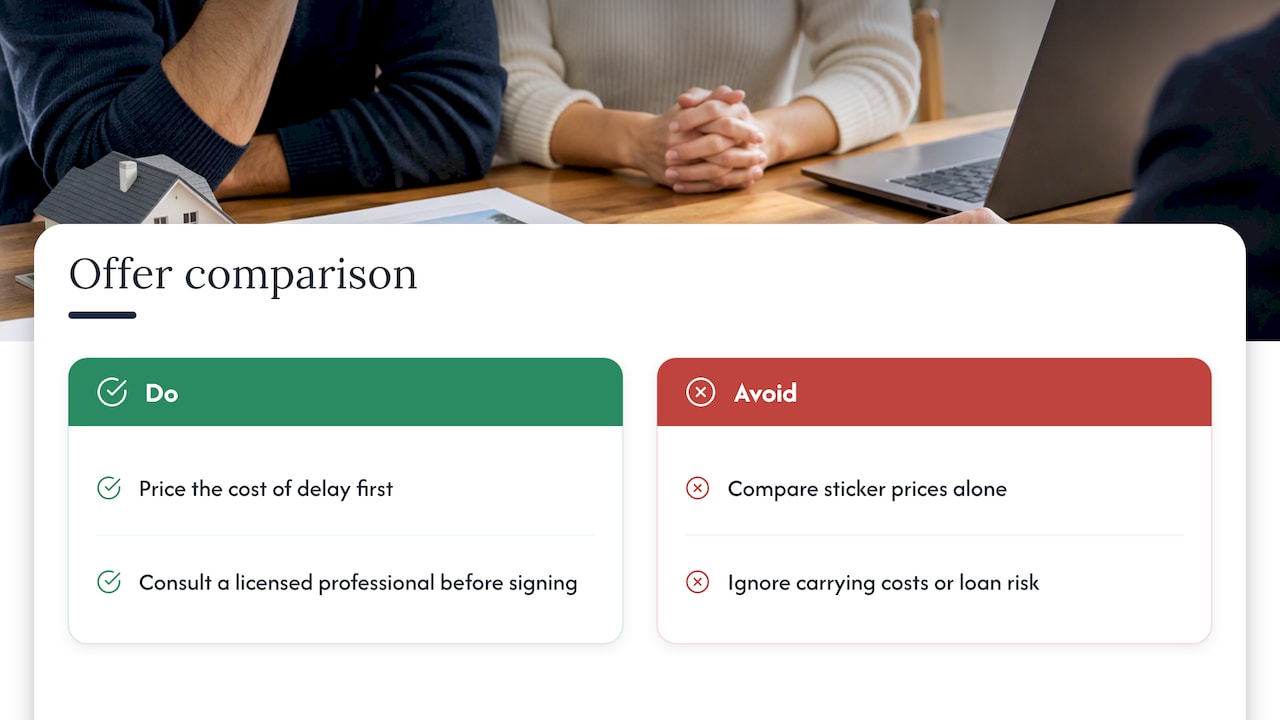
The most common mistake is comparing sticker prices without pricing in the cost of waiting. A seller who accepts a higher financed offer without accounting for six extra weeks of carrying costs, moving logistics, or the chance the loan falls through often ends up worse off than if they’d taken a lower cash offer that actually closed on time.
The fix is simple: put a dollar figure on delay before you compare anything else. If carrying the home for an extra month costs real money, that number belongs in your comparison, not just in your head. And whenever a decision touches taxes or contract law specific to your situation, a licensed professional should weigh in before you sign.
— Dave
Get a straightforward cash offer without the wait
We work with Rhode Island homeowners who need a fast, transparent sale, whether that’s an inherited house, a property that needs more repairs than you can take on, or simply a timeline that doesn’t match a traditional listing.

- Reach out through our cash offer request page to start, no obligation attached.
- Have your property details and any mortgage payoff information ready so we can put together an accurate offer.
- We’ll walk you through how the process works and confirm proof of funds before you commit to anything.
This article is general information, not a substitute for advice from a qualified financial advisor. Consult a qualified financial professional about your own circumstances before acting on anything here.
FAQ
Why would a seller prefer a cash offer?
Sellers often prefer cash because it closes faster, typically in one to two weeks versus 30 to 60 days for a financed deal, and it removes appraisal and loan-underwriting risk. That certainty can matter more than a slightly higher price, especially for a seller on a tight timeline.
Do cash offers ever fall through?
Yes. A cash deal can still fall apart over inspection findings, title defects, or a buyer simply changing their mind, and market reporting confirms that cash sales still experience occasional contract problems. Cash reduces risk compared to financing, but it doesn’t eliminate it.
Is it better to accept a cash offer on a house?
It depends on the adjusted net proceeds, not just the price on the page. A lower cash offer can beat a higher financed one once you subtract the financed deal’s closing delay, fees, and fall-through risk, but a strong, fully underwritten financed offer can also outperform cash.
How much lower is a cash offer?
There’s no fixed discount; it varies by property, market conditions, and how urgently the seller needs to close. The better approach is comparing each offer’s adjusted net proceeds, price minus concessions, fees, and the cost of any delay, rather than assuming cash always means a lower number.
Sources
- Buying a house with cash vs. getting a mortgage | Experian
- Closing disclosure explainer | Consumer Financial Protection Bureau
- NAR market indicators (August 2026) | National Association of Realtors
- Mortgage or cash: Fidelity learning center