Radon alone rarely makes a home unsellable. What matters is whether you have a reliable, documented test and a clear plan for what happens next. The EPA action guideline sits at 4 pCi/L, and testing is the only way to know where a specific house stands. Once you have results, the options are straightforward: fix the issue before closing, negotiate a credit or price adjustment, or have the buyer accept responsibility after closing.
TL;DR:
- Radon testing should be done by a qualified professional, ideally before listing the home, and retested if recent renovation or HVAC changes occur.
- If test results exceed 4 pCi/L, mitigation, a price credit, or buyer acceptance are typical options, with contracts clearly detailing each step.
- Fixing radon issues generally costs about the same as common home repairs and requires a post-mitigation retest to confirm effectiveness.
- Disclosure of radon testing and mitigation records is vital, and state rules vary, so early compliance checks can prevent delays.
- Selling directly for cash is an alternative for those who prefer to avoid mitigation processes, but documentation remains essential regardless of the sale method.
Table of Contents
- Why radon matters in a sale: health and documentation
- When and how to test during a home sale
- Interpreting results and settling the deal
- Mitigation basics: methods, costs, and verification
- Disclosure and state rules: a checklist before listing or closing
- A seller’s perspective: when fixing isn’t worth the wait
- FAQ
- Sources
Why radon matters in a sale: health and documentation
Radon is a known cause of lung cancer, and there is no level considered completely free of risk, according to ATSDR’s clinician guidance. That framing matters for a transaction because buyers are not just weighing a number against a threshold; they are weighing uncertainty. A dated test with a clear methodology and location removes much of that uncertainty and keeps negotiations grounded in facts rather than fear.
A few things tend to ease the process:
- A documented test (date, device location, conditions) gives both sides something concrete to negotiate around.
- A home with a working mitigation system and paperwork to prove it often sells just as easily as one that never had elevated radon.
- Buyers who see a clear paper trail are less likely to walk away or demand steep concessions late in the process.
Selling after mitigation is common and often unremarkable once the documentation is in order.
When and how to test during a home sale
Real estate transactions call for short-term testing under closed-house conditions: windows and doors stay shut except for normal entry and exit, usually for 48 hours, with the device placed in the lowest level of the home that could be used regularly. The EPA’s Home Buyer’s and Seller’s Guide to Radon outlines this protocol specifically for real estate timelines, since sale schedules and the risk of someone bumping or disabling a device make the process different from a routine household test.
A simple sequence to follow:
- Hire a state-approved or qualified tester rather than relying solely on a DIY kit, since testing for a sale carries more scrutiny than a personal check.
- Test before listing when possible, so results are in hand before buyers start asking questions.
- If a prior test exists but the home has been renovated or the HVAC system changed since then, retest rather than relying on old numbers.
Pro Tip: Avoid testing during unusually stormy or high-wind weeks; radon levels can shift with weather, and an outlier reading can complicate negotiations unnecessarily.
Interpreting results and settling the deal
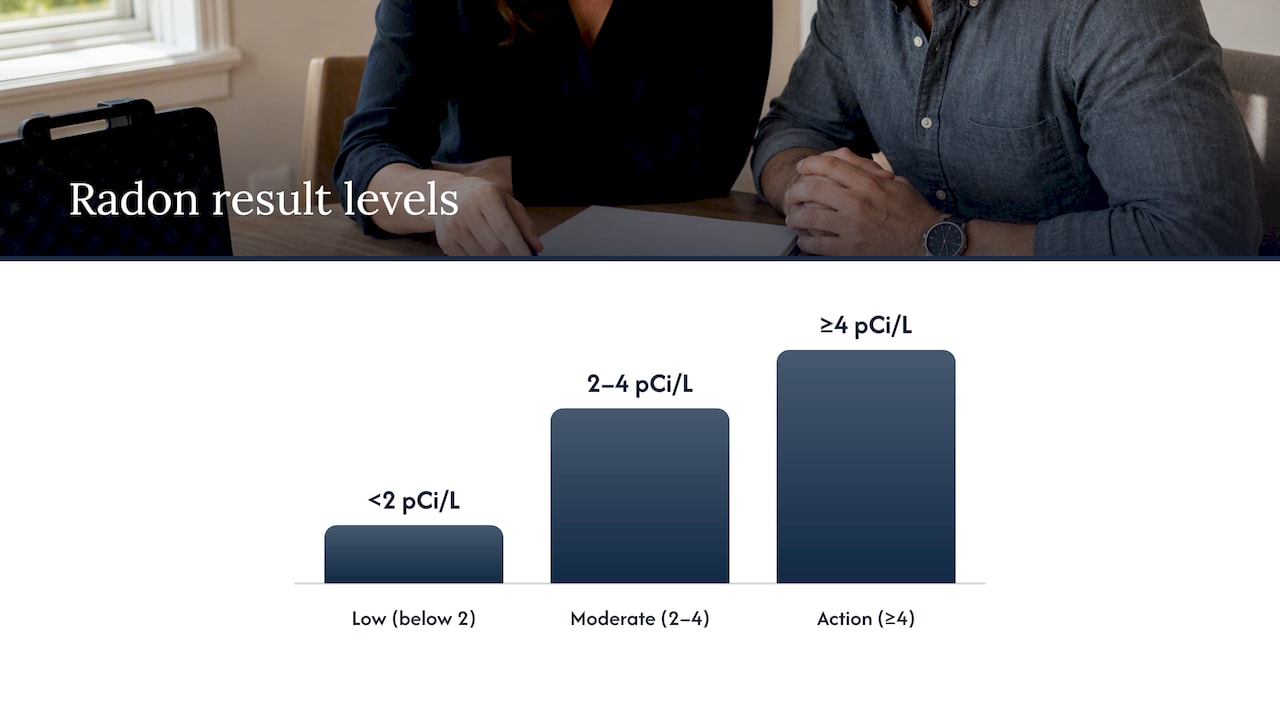
Short-term test results are compared against the 4 pCi/L action guideline set by EPA and referenced by the CDC. A single short-term test above that level typically calls for a second test, either another short-term test or a long-term one, and CDC recommends mitigation when the average of two short-term tests or a long-term result reaches or exceeds 4 pCi/L. Results that land between 2 and 4 pCi/L deserve attention too since there is no fully risk-free level, even though they fall below the action threshold.
Once results are in, three resolution paths typically come up:
- The seller arranges mitigation before closing, which tends to reassure buyers but adds time to the timeline.
- The seller offers a credit or price reduction, letting the buyer handle mitigation after closing on their own schedule.
- The buyer accepts the home as is, often paired with a lower offer or a separate escrow holdback.
Whichever route you choose, the contract should spell out who orders the test, who pays for it, what type of test is used, whether a retest is required, and how mitigation timing and verification will be documented.
Mitigation basics: methods, costs, and verification
Most radon problems trace back to soil gas entering through foundation cracks or openings, and the standard fix is sub-slab depressurization, a system that vents gas from beneath the foundation to the outside using a pipe and fan. Active venting systems of this kind address the large majority of residential radon issues.
EPA notes that fixing a home with elevated radon generally costs about the same as other common home repairs, though exact pricing varies by foundation type, house size, and local contractor rates, according to EPA’s guide. Getting two or three estimates from qualified mitigators is worth the time before committing to one.
A few things protect both sides after the work is done:
- Schedule an independent retest a few months after mitigation to confirm the fix worked.
- Keep the mitigation invoice, system details, and before-and-after test reports together as one file.
- Share that file proactively with a buyer rather than waiting for it to be requested.
Disclosure and state rules: a checklist before listing or closing
Disclosure requirements and testing or mitigation licensing rules vary by state, so checking your state radon office early in the process saves time later. Some states maintain lists of approved testers and mitigators, and local disclosure forms sometimes ask specifically about radon history, which is easy to miss if you are focused on other parts of the sale.
For sellers, a short checklist helps; you can also explore options to disclose, credit, or sell as is if your house has asbestos when dealing with hazardous conditions that may affect your sale.
- Test before listing whenever the timeline allows it.
- Collect every report and invoice related to testing or mitigation into one folder.
- Share those records with potential buyers before they ask, rather than after an offer is already on the table.
For buyers, a parallel checklist applies: verify the tester’s credentials, confirm exactly where in the home the test was taken, and ask for a retest if mitigation work happened after the original test or if renovations could have changed airflow.
A seller’s perspective: when fixing isn’t worth the wait
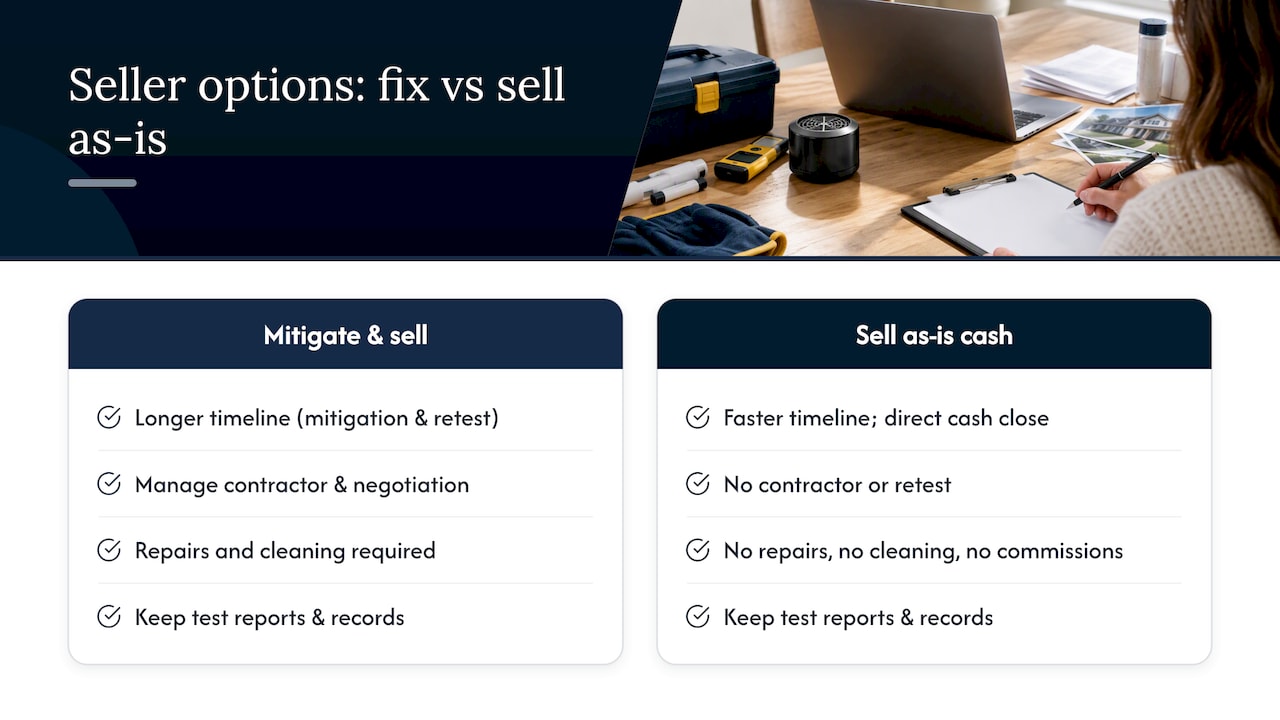
Professional testing and mitigation remain the right move for health reasons and for preserving market value, and we would never suggest skipping that step when time and budget allow it. But for sellers who would rather not manage a mitigation contractor, a retest, and a buyer negotiation all before closing, selling directly for cash is a legitimate alternative. We purchase homes in Rhode Island as is, radon systems or not, with no repairs, no cleaning, and no agent commissions standing between you and a closing date you choose.
If you want a faster path through a situation like this, our cash home sale process walks through how an as-is offer works from first contact to closing. Keep your test reports and any mitigation paperwork regardless of which path you take. If technical questions come up, your state radon office or a qualified mitigator is still the right resource.
— Dave
This article is general information, not a substitute for advice from a qualified doctor. Consult a qualified healthcare professional about your own circumstances before acting on anything here.
FAQ
What is radon in real estate?
Radon is a naturally occurring radioactive gas that can seep into homes through foundation cracks and openings, and it is a recognized cause of lung cancer with no level considered fully risk-free, according to ATSDR. In a real estate transaction, it typically comes up through a short-term test result that buyers and sellers use to decide on repairs or pricing.
Do air purifiers clear out radon?
Standard air purifiers are not designed to remove radon gas, since radon comes from the ground beneath a structure rather than from airborne particles that filters capture. The established fix is a vent-based mitigation system, such as sub-slab depressurization, rather than any filtration device.
How much is too much radon in a house?
The EPA and CDC set 4 pCi/L as the action guideline, meaning mitigation is recommended when a short-term test average or a long-term test reaches or exceeds that level. Results between 2 and 4 pCi/L still carry some risk since no level is considered completely safe, so some homeowners choose to act even below the threshold.
Is it hard to sell a house with radon?
Radon by itself does not typically block a sale; a documented test and a clear plan, whether that is mitigation, a price credit, or buyer acceptance, usually keeps the deal moving. Homes with a properly installed mitigation system and paperwork to prove it often sell without added friction.
Sources
- Testing for Radon in Your Home | Radon | CDC
- Home Buyer’s and Seller’s Guide to Radon (EPA, 2024)
- Radon clinician brief | ATSDR