
A deed in lieu is a voluntary transfer of your home’s title to the lender to settle the mortgage debt without a formal foreclosure, while foreclosure is the lender’s legal process to seize the property after default. A deed in lieu usually causes less credit damage and moves faster, but foreclosure may be unavoidable if your lender won’t agree to it. Contact your loan servicer or a HUD-approved housing counselor before you decide anything.
TL;DR:
- Deed in lieu typically resolves faster and causes less long-term credit damage than foreclosure, but it requires the lender’s approval and a clean title.
- Lenders prefer deed in lieu when the property is well-maintained, free of liens, and the borrower submits a hardship letter with supporting documents.
- Foreclosure can take 18 months to three years depending on state law and remains on credit reports for up to seven years, with more severe long-term impacts.
- To increase chances of approval, gather documentation, negotiate a written deficiency waiver, and consider consulting a HUD-approved counselor or attorney.
- Selling directly to a cash buyer or pursuing a short sale can be faster alternatives when a deed in lieu or foreclosure timeline is unfavorable or complicated by liens.
Table of Contents
- Deed in Lieu vs Foreclosure: Key Differences at a Glance
- How the Deed in Lieu and Foreclosure Processes Actually Work
- Weighing the Pros and Cons of Each Option
- Why Lenders Accept Some Deed in Lieu Requests and Reject Others
- How Long Each Process Takes and What It Does to Your Credit
- A Practical Checklist for Pursuing a Deed in Lieu
- Short Sale, Loan Modification, or a Cash Sale: Picking the Right Exit
- Why Some Homeowners Choose a Fast Cash Sale Instead
- FAQ
- Sources
Deed in Lieu vs Foreclosure: Key Differences at a Glance
The biggest difference is control. A deed in lieu requires your lender’s sign-off and your cooperation, so the deal only happens if both sides agree. Foreclosure, by contrast, moves forward whether you cooperate or not, once your lender files the legal paperwork.
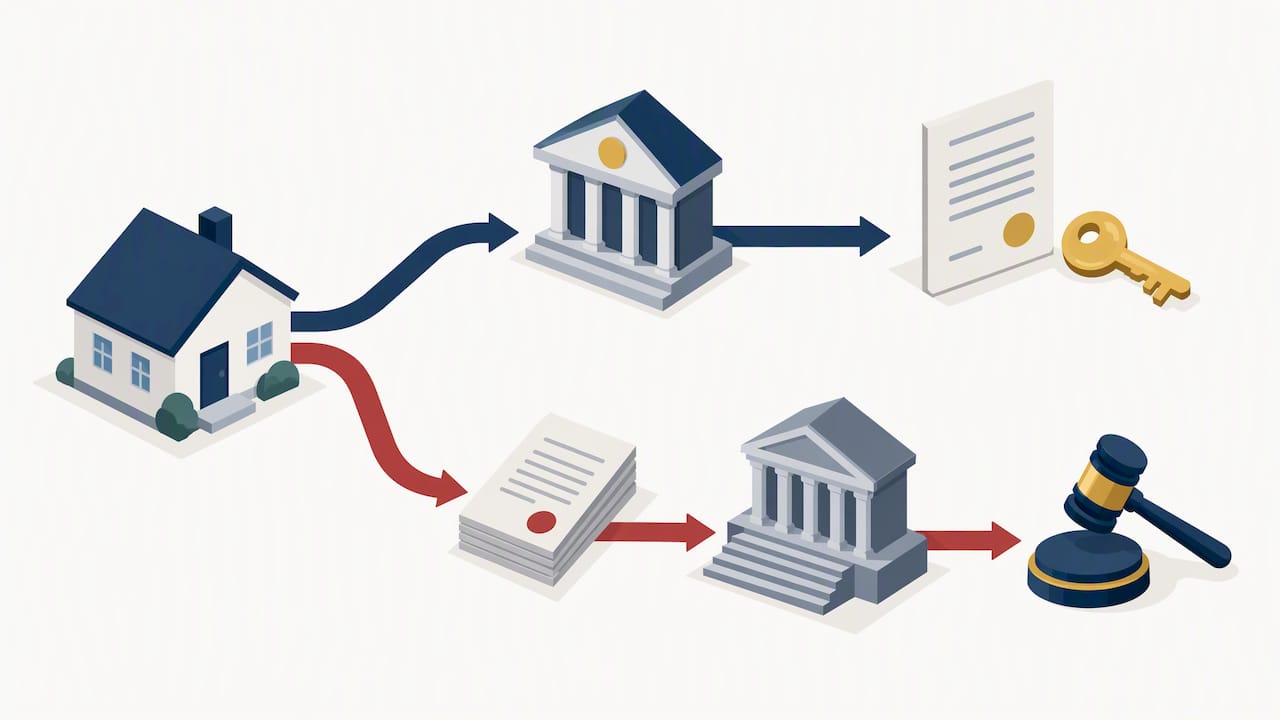
That one distinction shapes everything else. With a deed in lieu, you hand over the title directly and the debt is typically resolved in the same transaction, sometimes with a formal deficiency waiver attached. In foreclosure, the lender takes the property through a court or trustee process, then may pursue you separately for any shortfall between the sale price and what you owe, depending on state law.
The two paths diverge most sharply in these areas:
- Process type: deed in lieu is a negotiated agreement; foreclosure is a legal action the lender controls.
- Public record: foreclosure is a matter of court or county record and often involves a public auction; a deed in lieu is a private transaction between you and the lender.
- Credit damage: both hurt your score, but foreclosure tends to carry longer-lasting consequences for mortgage eligibility.
- Eviction risk: foreclosure can end in a forced eviction; a deed in lieu often includes an agreed move-out date, sometimes with relocation help.
- Lender preference: lenders are more open to a deed in lieu when the property is in good condition and free of other liens, since a messy title makes the deal harder to close.
Which path you end up on often has less to do with what you want and more to do with what your lender is willing to approve.
How the Deed in Lieu and Foreclosure Processes Actually Work
A deed in lieu starts with you, not the lender. You typically submit a hardship letter explaining why you can’t keep up with payments, along with income documentation, and ask your servicer to consider the option. The servicer reviews your file, checks whether other liens sit on the title, and decides whether a deed in lieu makes financial sense compared with foreclosing. If approved, you sign a deed in lieu agreement, often with move-out terms, and transfer the title.
Foreclosure follows a different sequence set largely by state law:
- You miss payments and the servicer sends a notice of default.
- A waiting period follows, during which you can still request alternatives like a deed in lieu or short sale.
- The lender files for judicial or non-judicial foreclosure, depending on the state.
- The home is sold at auction or reverts to the lender.
- An eviction process follows if you haven’t already vacated.
FHA-insured loans add another layer. HUD’s pre-foreclosure sale and deed-in-lieu guidance sets streamlined eligibility rules and documentation standards servicers must follow for government-backed mortgages, though private loans may apply stricter internal criteria. Gather pay stubs, bank statements, your mortgage statement, and photos of the property’s condition before you contact anyone: it speeds up whichever path you take.
Weighing the Pros and Cons of Each Option
Each path trades one kind of pain for another, and the right call depends on what matters most to you right now.
Deed in lieu tends to offer:
- Faster resolution than a drawn-out foreclosure case.
- Less public exposure, since there’s no auction notice or court filing tied to your name.
- Negotiating room for cash-for-keys or a short leaseback period while you find new housing.
- Potentially smaller credit hit when the lender reports it favorably compared with a foreclosure.
The downside is that you still lose the home, you must move out on the agreed date, and unless you negotiate a written deficiency waiver, you could remain liable for the gap between what you owed and what the home is worth.
Foreclosure’s drawbacks run deeper. The process is a matter of public record, can drag on for months, and in many states still exposes you to a deficiency judgment after the sale. The long-term credit damage tends to be more severe and harder to shake when you apply for new credit.
Pro Tip: Never sign a deed in lieu agreement without a written deficiency waiver spelled out in the contract, not just promised verbally.
— Dave
Why Lenders Accept Some Deed in Lieu Requests and Reject Others
Lenders don’t approve every deed in lieu request, and understanding their incentives helps you gauge your odds.
- Cost and speed: avoiding a lengthy foreclosure case, which can run well over a year in some states, saves the lender legal fees and carrying costs.
- Property condition: a well-maintained home is easier to resell quickly, which makes a deed in lieu more attractive.
- Junior liens: second mortgages or tax liens complicate the title transfer, and lenders often walk away from a deed in lieu rather than deal with clearing them; homeowners can learn more about selling with liens in Florida as a practical resource.
- Loan type: FHA-insured loans follow HUD’s pre-foreclosure sale and deed-in-lieu framework, while private investors set their own, sometimes stricter, internal rules.
If your title isn’t clean or your lender’s portfolio has different standards than FHA guidance assumes, foreclosure may be the only route available, regardless of your preference.
How Long Each Process Takes and What It Does to Your Credit
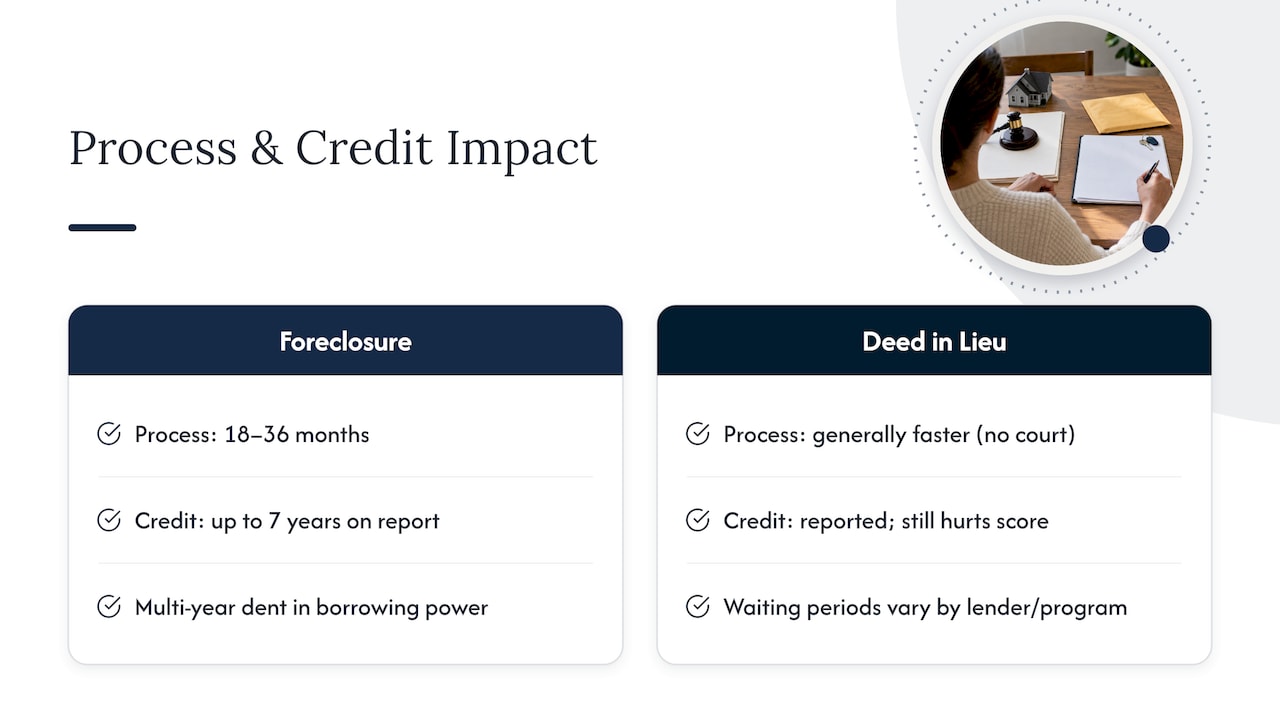
Foreclosure timelines vary widely by state, and some jurisdictions take 18 months to three years to complete the full process. A deed in lieu, once a lender agrees to it, generally resolves faster because there’s no court filing or auction to schedule.
A foreclosure can stay on your credit report for up to seven years, which can limit your ability to qualify for another mortgage during that window. A deed in lieu is also reported and will hurt your score, but it may carry different, sometimes shorter, waiting periods for future loan eligibility depending on the program and lender. Either way, the damage is real: plan your next housing move assuming a multi-year dent in your borrowing power, not a quick bounce-back.
A Practical Checklist for Pursuing a Deed in Lieu
If a deed in lieu looks like your best option, move through these steps in order:
- Write a clear hardship letter explaining your financial situation and why you can’t continue payments.
- Gather recent bank statements, pay stubs, your mortgage statement, and a title report showing any liens.
- Take photos documenting the property’s current condition.
- Call your servicer directly and ask specifically whether they offer a deed in lieu program.
- Review any offer for a written deficiency waiver, move-out date, and possible cash-for-keys or short leaseback terms before signing anything.
Negotiate hard on the deficiency waiver. Without it in writing, the lender could still pursue you later for the difference between your loan balance and the home’s resale value. If your servicer is slow to respond or the terms feel unclear, a HUD-approved housing counselor can walk through your options at no cost, and an attorney is worth consulting if junior liens or a large potential deficiency are on the table.
Pro Tip: Ask your servicer in writing, not just by phone, so you have a paper trail if the terms discussed later change.
Short Sale, Loan Modification, or a Cash Sale: Picking the Right Exit
A deed in lieu isn’t your only alternative to foreclosure, and the right choice depends on your equity, timeline, and whether you want to stay in the home.
- Short sale fits when a buyer exists and you want to avoid a deficiency, though it usually takes longer and may let you remain in the home a bit longer during the process.
- Loan modification or forbearance makes sense if your hardship is temporary and you want to keep the home rather than give it up.
- Selling directly to a cash buyer suits homeowners who need speed, certainty, and no repair costs, especially when a property’s condition would complicate a deed in lieu or a traditional listing.
Ask yourself four questions before choosing: Do you have equity to protect? How much time do you realistically have? Can you afford to stay, even temporarily? And how exposed are you to a deficiency judgment if you wait too long to act?
Why Some Homeowners Choose a Fast Cash Sale Instead
When a foreclosure clock is ticking or a deed in lieu negotiation stalls over lien issues or property condition, selling directly for cash sidesteps both problems. Some cash buyers purchase homes as-is, with no agent fees, no commissions, and no repairs required, sometimes basing offers on the home’s after-repaired value.
That matters most when timing is tight: a direct sale can close on your schedule rather than a court calendar or a servicer’s review timeline, and you skip the uncertainty of whether a deed in lieu will even be approved. The process is often built around transparency, so sellers know what they are getting before committing to anything. If foreclosure deadlines are closing in, check out how cash home sales work or get a no-obligation offer at Rhody Home Buyer.
This article is general information, not a substitute for advice from a qualified financial advisor. Consult a qualified financial professional about your own circumstances before acting on anything here.
FAQ
What are the disadvantages of a deed in lieu?
A deed in lieu still damages your credit and requires you to move out, often on a fixed timeline. Unless you secure a written deficiency waiver, you may remain responsible for any gap between your loan balance and the home’s value.
How long does a deed in lieu of foreclosure take?
A deed in lieu generally resolves faster than foreclosure once a lender agrees to it, since there’s no court filing or auction involved. The exact timeline depends on how quickly your servicer reviews your hardship documentation and finalizes the agreement.
Is it better to do a deed in lieu of foreclosure?
A deed in lieu is often less damaging to your credit and avoids the public process of foreclosure, making it preferable when a lender will agree to it. It isn’t automatically available, though, since lenders often reject requests when junior liens or property damage complicate the title transfer.
How long does a deed in lieu stay on your credit?
A deed in lieu is reported to credit bureaus and can hurt your score similarly to other derogatory marks, though waiting periods for new loan eligibility can differ from a standard foreclosure. A full foreclosure, by comparison, can remain on your report for up to seven years.
Sources
For guidance beyond this article, consult the CFPB’s deed-in-lieu overview, HUD’s mortgagee letter, and the IRS guidance on canceled debt. A HUD-approved housing counselor can help you weigh every option before you sign anything.
- What is a deed-in-lieu of foreclosure? | Consumer Financial Protection Bureau
- To Deed or Not to Deed? Question the Pros and Cons of Deed in Lieu
- Updated Pre-Foreclosure Sale and Deed in Lieu of Foreclosure Requirements | HUD Mortgagee Letter