
A prepared seller with clear title can often close a cash sale in about a week to two weeks, though the realistic range varies significantly depending on how clean the paperwork is. The pace is set mostly by title and escrow readiness, with probate, liens, surveys, or municipal holds as the usual complications. Start by pulling your deed and mortgage payoff information and ordering a title search, or contacting a cash buyer or title company directly.
TL;DR:
- A cash sale can close in about 7 to 14 days if the title is clear, but delays often arise from liens, probate, or municipal holds.
- Title search and clearance can take from hours to several weeks depending on issues like unpaid taxes or missing documentation.
- Using mobile or remote notarization can reduce closing delays by up to a week, especially if supported by the title company.
- The main factors causing delays include title defects, probate needs, municipal holds, and inadvertent paperwork slips at closing.
- Differences from financed deals include skipping lender underwriting and appraisal, allowing cash closings to often happen within days to a few weeks.
Table of Contents
- Timeline at a glance: stages and typical durations
- Step-by-step: what happens at each stage and who does it
- Documents, settlement items, and closing-day checklist for sellers
- Common causes of delay and how to prevent or fix them quickly
- Scenario timelines with realistic ranges
- Differences in cash closing timelines by property type or location
- Comparison of cash closing timelines versus financed purchase timelines
- Rhody Home Buyer perspective: how our process shortens timelines and what sellers should expect
- How Rhody Home Buyer can help: quick next steps and links to request an offer
- Sources
- FAQ
Timeline at a glance: stages and typical durations
A cash sale moves through five predictable stages, and knowing the typical window for each one helps you spot delays before they stack up.
- Initial contact and property information: 24 to 72 hours to get a preliminary offer or estimate once you share the address and basic condition.
- Property evaluation and written offer: usually 24 to 72 hours, stretching to about a week if an inspection or comparable sales review is needed.
- Title search and clearance: same day for a clean record, up to two weeks or more if there are prior liens, judgments, or missing documentation.
- Signing and closing day: typically scheduled within 1 to 7 days once title is clear, with funds transfer and recording taking a few additional days.
An escrow agent or title company holds the funds and paperwork until every closing condition is met, which is why that stage often decides how fast the rest of the timeline moves, according to the American Bar Association’s residential real estate resources.
Step-by-step: what happens at each stage and who does it
The initial inquiry moves fastest when you provide the property address, any remaining mortgage payoff amount, and an honest description of the home’s condition. That information lets a buyer skip a lot of back-and-forth and get you a preliminary number quickly.
Property evaluation can happen three ways: a drive-by look, a desktop review using public records and comparable sales, or an on-site walkthrough. A desktop or drive-by review is faster but less precise, while an on-site visit takes longer to schedule but usually produces a firmer number.
Once you accept an offer, the clock really starts. Contingencies like a buyer’s final walkthrough or a title cure period are the most common things that slow a cash deal down after acceptance.
- Confirm in writing what contingencies, if any, apply to your offer.
- Ask how long the buyer needs to complete their own due diligence before signing.
Title search and escrow work check for liens, judgments, unpaid taxes, and any gaps in the chain of ownership. Simple issues, like a paid-off loan that was never formally released, can often clear in a matter of days once the right paperwork is requested.
Signing logistics have gotten more flexible. Many closings now use mobile notaries who travel to the seller, and some states permit remote online notarization, both of which cut down on scheduling friction that used to add days to a deal.
Pro Tip: Ask your title company upfront whether they support mobile or remote notarization: it often shaves a week off scheduling alone.
Documents, settlement items, and closing-day checklist for sellers
Showing up prepared is the single biggest lever a seller has over the timeline. Most delays at the closing table come from missing paperwork rather than anything structural about the deal.
- Government-issued identification and proof of ownership.
- A current mortgage payoff statement from your lender, if you still owe a balance.
- Your existing deed or title paperwork, even if it is an old copy.
- Keys, garage door openers, and any access codes for the property.
The settlement sheet lists every credit and debit on both sides of the transaction, including prorated taxes, payoff amounts, and any agreed repair credits, and the American Bar Association explains how this document works in its overview of the closing meeting. Having your numbers ready before the meeting speeds up the title company’s review considerably. Before you leave the table, confirm that the deed has been signed correctly and that you understand when the escrow company will disburse funds and record the deed.
Common causes of delay and how to prevent or fix them quickly
Most cash closings that drag past two weeks hit one of a handful of predictable snags. Catching these early is far cheaper than discovering them the week you expected to close.
- Title defects and unknown liens: order an early title search and provide your mortgage payoff and any HOA statements as soon as you accept an offer.
- Probate or unclear inherited title: start probate proceedings or gather the required affidavits early, since inherited property almost always adds weeks rather than days.
- Municipal holds or code violations: request municipal records as soon as possible and negotiate a repair credit instead of delaying the closing to fix items yourself.
- Contingency and paperwork slips: set firm deadlines in the contract and use mobile or remote notarization to avoid losing days to scheduling gaps.
An escrow or title agent performing the search is often the one who surfaces these issues, and working with a company experienced in cash and investor transactions tends to resolve them faster, per the ABA’s description of escrow and title agent duties.
Scenario timelines with realistic ranges
Your own timeline will look like one of three broad patterns, depending on how clean the title is and how ready the buyer is to move.
- Fast case: clear title and a ready buyer close in roughly 7 to 14 days from accepted offer to recording.
- Typical quick sale: minor scheduling or small title items push the timeline to 2 to 4 weeks.
- Complicated case: probate, liens, or survey issues can stretch things to 4 to 8 weeks or longer, depending on how much legal clearance is needed.
Knowing which scenario you are in before you accept an offer helps set realistic expectations with movers, new landlords, or a closing on your next home.
Differences in cash closing timelines by property type or location
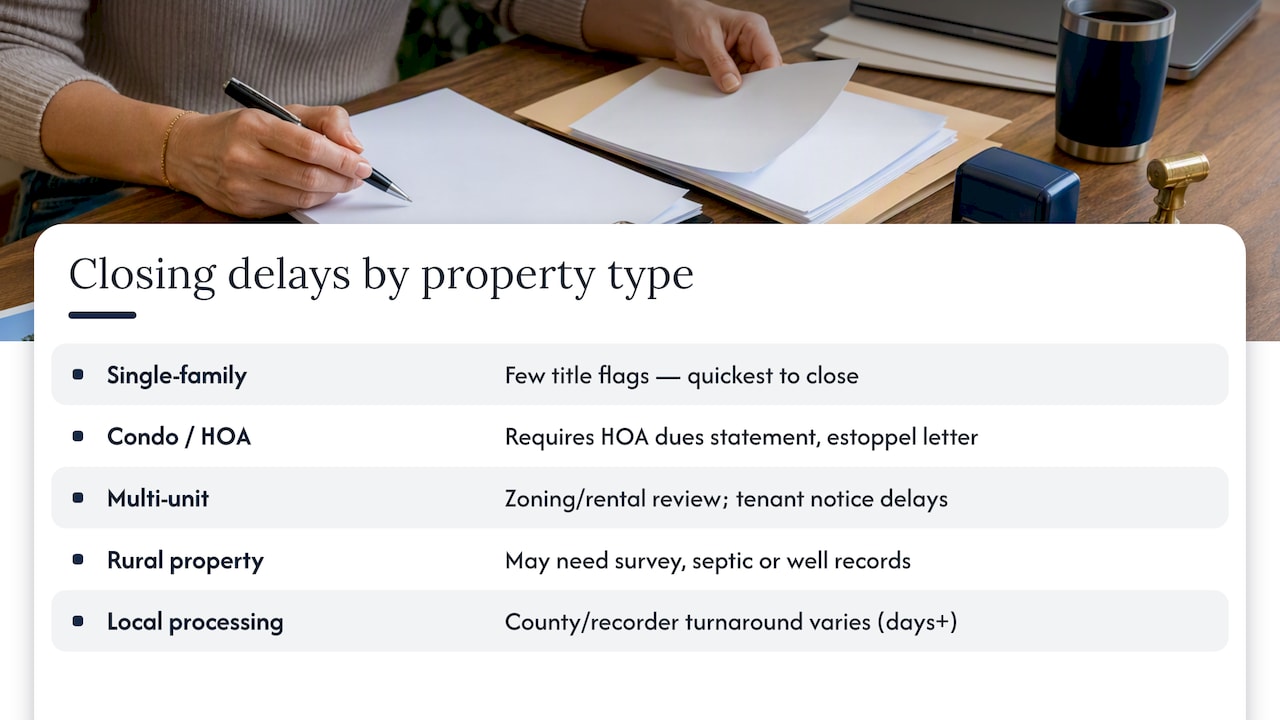
A standard single-family home with a recorded deed and no outstanding liens is the easiest property to close quickly, since there is little for a title search to flag. Condos and homes governed by a homeowners association often take a bit longer because the title company needs HOA dues statements and sometimes an estoppel letter confirming no unpaid assessments.
Multi-unit or mixed-use properties can add time if zoning records or rental agreements need review, especially when tenants are in place and need notice before a sale closes. Rural properties occasionally slow things down when a survey or septic and well documentation is missing from the county record, which the title search will catch early if ordered promptly.
Location matters less for the mechanics of closing than for how fast the local title company or recorder’s office processes paperwork. Some county or municipal offices turn around recording in a day or two, while others take longer during busy periods, which is one more reason to ask your title company about typical local processing time before you set a closing date.
Comparison of cash closing timelines versus financed purchase timelines
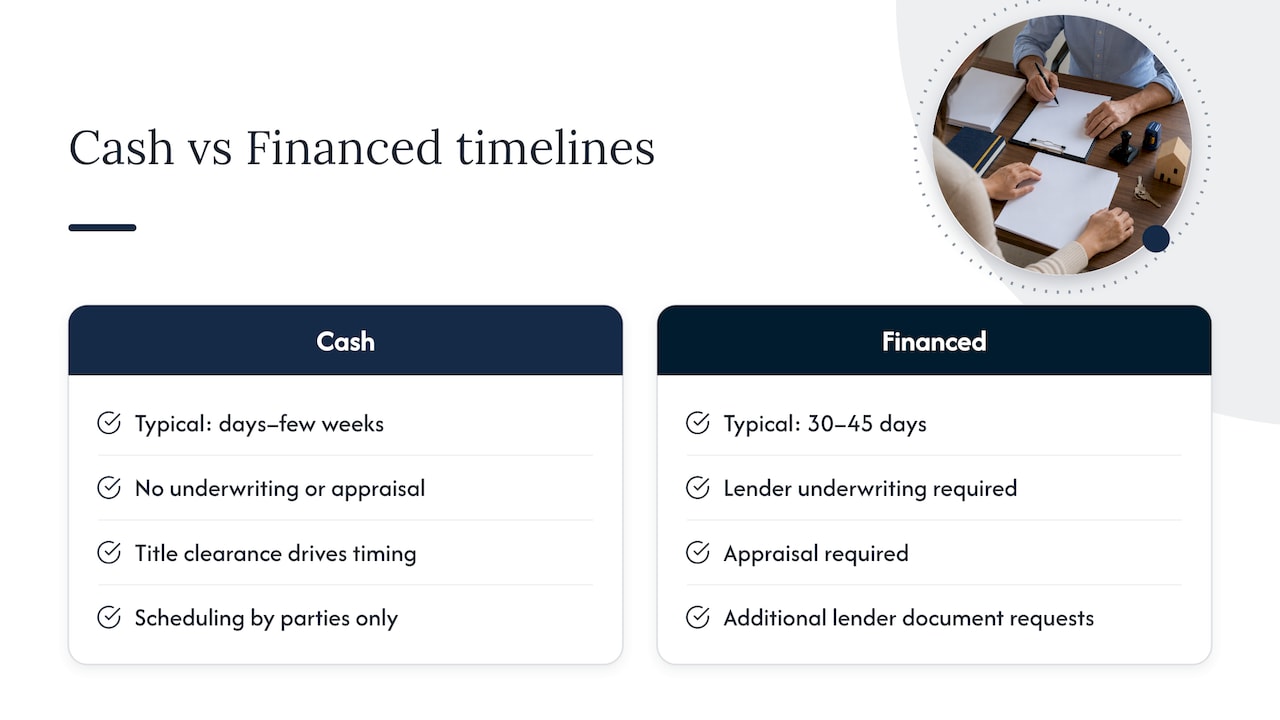
The biggest difference between a cash closing and a financed one is what happens between the offer and the signing. A financed purchase has to go through lender underwriting, an appraisal, and often a second round of document requests from the bank, all of which add weeks regardless of how organized the buyer and seller are.
A cash sale skips that entirely. There is no loan to underwrite and no appraisal contingency tied to a lender’s requirements, so the timeline is set almost entirely by title clearance and the parties’ own scheduling.
That is why a straightforward cash deal with clear title commonly closes in days to a few weeks, while a financed purchase frequently takes 30 to 45 days even when everything goes smoothly. When mortgage financing is involved, the settlement sheet and disclosures follow RESPA requirements, which add structured timing that a cash deal does not carry.
Rhody Home Buyer perspective: how our process shortens timelines and what sellers should expect
Some cash home buyers build their process around buying homes as-is and working toward a closing date that fits the seller, not a lender’s schedule. They handle the legwork on title resolution and scheduling so sellers are not chasing down paperwork on their own. A seller with a straightforward title and no outstanding liens can expect the fastest end of the typical cash closing range.
— Dave
How Rhody Home Buyer can help: quick next steps and links to request an offer
Selling for cash means skipping agent fees and commissions, and some buyers buy homes as-is, so there is no need to clean, repair, or stage anything before closing. They often aim to work around the seller’s schedule rather than impose one, which matters most for sellers dealing with an inherited property, a looming deadline, or a home that needs more work than they want to take on.

Getting started takes a few minutes; you can also learn more by reviewing this Cash Home Buyers Guide | Your Exit Strategy to understand what to expect and how to prepare for a cash sale. After you reach out, you can often expect a preliminary conversation about the property followed by a written cash offer.
- Submit your address and basic property details through our sell your house page.
- Review how the cash sale process typically works before you commit to anything.
- Visit Rhody Home Buyer to request a fair cash offer based on your home’s current condition.
Sources
Claims about closings, escrow, and settlement sheets draw on the American Bar Association’s closing overview and its residential real estate resources. For unresolved transaction issues, the Consumer Financial Protection Bureau accepts consumer complaints.
FAQ
Do you move in on closing day or the day after?
This depends on what the contract specifies, since some sales allow the seller to stay a short time after closing under a rent-back agreement. Absent that arrangement, possession typically transfers the same day the deed is recorded.
How soon can you close on a house if you pay cash?
A prepared seller with clear title can often close in about 7 to 14 days from an accepted offer. Timelines stretch toward 2 to 4 weeks or longer when title issues, probate, or scheduling conflicts come up.
Can a house fall through on closing day?
Yes, though it is uncommon when title has already been cleared and documents reviewed in advance. Issues that surface at the table, like an unresolved lien or a missing signature, can delay or cancel the signing until they are fixed.
Can a cash buyer back out before closing?
A cash buyer can back out if the contract includes contingencies, such as a final walkthrough or a title cure period, that have not yet been satisfied. Sellers should confirm what contingencies exist in writing before accepting an offer so there are no surprises later.
What documents does a seller need at a cash closing?
Sellers typically need government-issued identification, a current mortgage payoff statement, existing deed or title paperwork, and keys to the property. Having these ready before the closing meeting speeds up the title company’s review of the settlement sheet.