
Yes, you can sell a house with foundation issues, and you don’t need to fix everything first. Disclose what you know in writing, then choose your path based on time and money: if you have both, get a licensed structural engineer’s diagnosis before you decide on repairs. If you need to sell now or can’t afford repairs, prepare your disclosure paperwork and market directly to cash buyers instead of the general market.
TL;DR:
- Most foundation cracks are cosmetic or manageable with minor repairs, but horizontal and stair-step cracks often indicate serious structural issues needing professional evaluation.
- Disclosing foundation problems in writing before sale is mandatory and helps avoid post-sale liability, with documents like engineer reports and repair invoices strengthening the transaction.
- Repair costs vary: small fixes may be worthwhile for financing, while major work could cost more than the home’s increased value, especially if repair delays increase holding expenses.
- The pool of potential buyers shrinks to cash buyers, rehab investors, and renovation loan users, since traditional lenders often refuse to finance homes with active foundation issues.
- A quick cash sale usually involves a straightforward process at an after-repair value, making it suitable for properties with costly or ongoing foundation problems that hinder traditional sales.
Table of Contents
- Common foundation problems and how professionals rate severity
- Disclosure obligations and the documents buyers expect
- Repair vs sell as is: weighing cost, timeline, and return
- Who will buy your house and how they’ll finance it
- Inspections, appraisals, and lender red flags
- Pricing and negotiation tactics that actually work
- What cash sales for foundation issues typically look like
- A faster path when repairs aren’t realistic
- Where to check the technical standards yourself
- Sources
- FAQ
Common foundation problems and how professionals rate severity
Not every crack means structural failure, but knowing the difference changes your entire selling strategy. Hairline cracks in a basement wall are often cosmetic settling. Horizontal cracks, stair-step cracks in brick or block, bowing walls, and visible sinking are different: they usually point to soil pressure, drainage failure, or ongoing movement.
- Hairline vertical cracks: usually cosmetic, low risk to financing.
- Horizontal or stair-step cracks: often signal soil pressure or wall failure.
- Bowing or leaning walls: indicates active structural stress.
- Sloping floors or sticking doors and windows: sign of uneven settling.
- Water infiltration or persistent dampness: drainage failure that can worsen structural damage over time.
A general contractor can patch a crack, but only a licensed structural engineer can tell you whether the movement is finished or ongoing, and that distinction is what determines whether a buyer’s lender will touch the property at all.
Disclosure obligations and the documents buyers expect
Sellers who know about foundation problems have to put that knowledge in writing before closing. Skipping this step doesn’t make the problem disappear, it just moves the argument to after the sale, when you’re the one holding the liability. Full, early disclosure tends to shorten negotiations rather than kill them, because serious buyers expect full disclosure and realistic pricing more than they expect a perfect house.
Before you list, assemble:
- Any structural engineer’s report, even an older one.
- Contractor bids or completed repair invoices.
- Permit records tied to any past foundation work.
- Photos documenting the damage and any repairs.
- Warranties for completed structural work.
Pro Tip: Keep every foundation-related document in one folder from day one. Buyers and appraisers move faster when they can see a full paper trail instead of piecing one together.
Repair vs sell as is: weighing cost, timeline, and return
The decision usually comes down to three numbers: repair cost, carrying cost while repairs happen, and how much price the repair actually recovers. Start with an engineer’s diagnosis, then get two independent contractor bids, then estimate the after repair value for your market.
- Small fixes, like sealing hairline cracks or correcting drainage, are often worth doing because they can unlock standard financing for buyers.
- Major structural work, like underpinning or wall replacement, may cost more than it adds back to your sale price.
- Every month of repair work adds holding costs: taxes, insurance, utilities, and a mortgage payment if you still owe one.
- A hot market can absorb repair delays better than a slow one, where a stalled listing loses momentum.
Redfin’s market commentary notes that the as-is cash sale trades price for speed, and for many sellers the time saved and the carrying costs avoided outweigh what a repair might add to the final price. Before committing to a repair timeline, run the math on what a direct cash sale versus a repair-first listing actually nets you after months of holding costs.
A licensed structural engineer’s diagnosis is the reference point every other decision in this section depends on, since neither a repair budget nor a realistic ARV estimate means much without knowing whether the damage is active or resolved.
Who will buy your house and how they’ll finance it
Your buyer pool shrinks the moment foundation issues are on the table, but it doesn’t disappear. It shifts toward buyers who don’t need a lender’s approval or who have financing built for exactly this situation.
- Cash investors and rehabbers who buy based on after repair value and plan the work themselves.
- Buyers using renovation loans, such as an FHA 203(k), who can finance the purchase and the repair together.
- Owner-occupants willing to pay cash or absorb the repair risk themselves.
- Standard FHA, VA, or conventional buyers, who are usually the hardest to close with unless repairs are done first.
Marketing a foundation-damaged home to the general buyer pool wastes time, because most of those buyers can’t close even if they love the house. Aim your listing at investors, contractors, and renovation-loan buyers instead, since they’re the ones who can actually get to closing.
Inspections, appraisals, and lender red flags
Appraisers don’t just eyeball a crack and move on. Under HUD’s property analysis guidance, they’re required to evaluate drainage, soil conditions, and any evidence of continuing settlement, and to mark a property as unacceptable for financing until a defective condition is remedied. Foundation deficiencies including cracking, water infiltration, and continuing settlement are specifically flagged under NSPIRE and VC criteria.
- Inspectors look for exposed rebar, spalling concrete, missing foundation vent covers, and signs of active movement.
- Drainage problems that push water against the foundation are treated as a root cause, not a cosmetic issue.
- An appraiser’s “defective condition” finding can block FHA, VA, and most conventional loans until the issue is fixed or an as-repaired appraisal is completed.
- Correcting surface drainage, grading, and gutter runoff often resolves the easiest flags without touching the foundation itself.
A defective condition finding on an appraisal is often the single biggest obstacle to a financed sale, since it stops the loan regardless of how motivated the buyer is. Bring engineer reports and permit records to the appraisal walkthrough. Documentation doesn’t erase the defect, but it gives the appraiser something concrete to reference instead of guessing at the severity.
Pricing and negotiation tactics that actually work
Start pricing from your ARV, then subtract a realistic repair cost estimate, not a rough guess. Investors and appraisers commonly adjust comps for repair costs using the same math, so pricing your listing the same way builds credibility with the buyers most likely to close.
- Decide on listing language: “as-is” signals no negotiation on condition, “priced for repair” invites offers below market with the gap already built in, and a repair credit keeps the sale price higher on paper while giving the buyer cash to fix it after closing.
- Ask for proof of funds early, especially from investors, so you’re not wasting weeks on a buyer who can’t close.
- Limit financing contingencies where you can, since a lender-dependent buyer is the one most likely to walk once the appraisal flags the foundation.
- Accept inspection contingencies, but attach firm timelines so the buyer can’t sit on the decision indefinitely.
What cash sales for foundation issues typically look like
A cash sale usually moves through the same basic steps: initial contact and a description of the property, a quick walkthrough or review, an offer based on after repair value, and a closing date the seller picks. There’s no appraisal contingency to clear and no lender underwriting to wait on, which is the main reason how cash sales work end up faster than a financed transaction.
This route tends to fit specific situations best: an inherited property nobody wants to renovate, a vacant home costing money every month it sits empty, a seller who needs to close on a tight deadline, or a foundation problem serious enough that repair costs would eat most of the equity anyway. For lighter cosmetic issues with a normal timeline, a repaired listing may still net more.
— Dave
A faster path when repairs aren’t realistic
If the numbers on repair versus sell-as-is aren’t working in your favor, some homebuyers offer a more direct option: a fair cash offer based on your home’s after repaired value, no agent commissions, no repair or cleaning requirements, and a closing date that works around your schedule rather than a lender’s underwriting queue.

- Skip the engineer report, contractor bids, and repair timeline entirely if you’d rather not manage the work.
- Avoid the appraisal contingency that stalls or kills financed offers on structurally damaged homes.
- Close on your own timeline instead of waiting on loan approval.
This route makes the most sense when your foundation repair estimate would eat deeply into your equity, or when you simply don’t have months to spend on permits and construction. If that’s where you are, get a cash offer from Rhody Home Buyer and see what your property is worth as-is.
Where to check the technical standards yourself
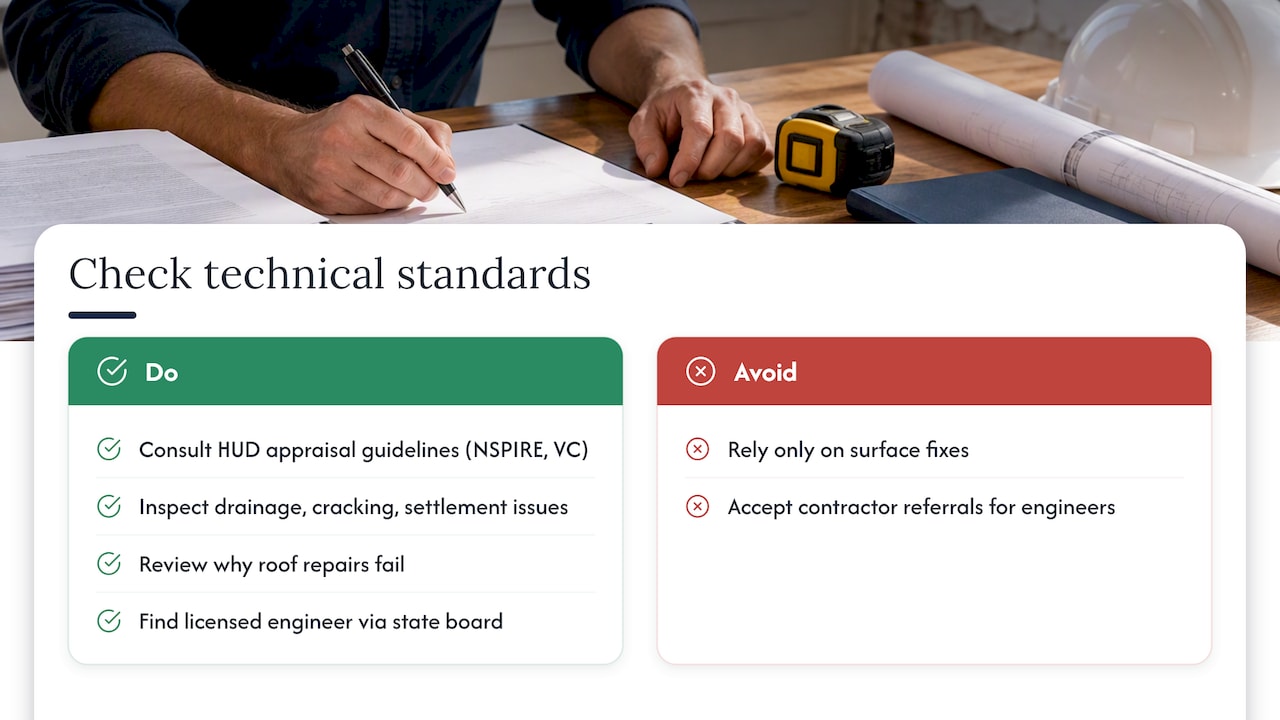
HUD’s property analysis guidelines lay out exactly what appraisers must flag under NSPIRE and VC standards, including drainage, cracking, and continuing settlement. For repair quality, a look at why residential roof repairs fail is a useful reminder that surface fixes without addressing root causes rarely satisfy an appraiser or a lender. Find a licensed structural engineer through your state’s professional engineering board rather than through a general contractor referral.
Sources
- HUD 4150.2: Property Analysis (VC/NSPIRE guidance)
- Realtor
- Selling a House With Foundation Issues — Redfin
FAQ
How hard is it to sell a house with foundation issues?
It’s harder than selling a house in good condition, mainly because financed buyers often can’t get loan approval until the issue is fixed or documented. It’s not impossible: cash buyers, investors, and renovation-loan buyers routinely buy homes with foundation problems, often at a price that reflects the repair cost.
Do sellers have to disclose foundation issues?
Yes, sellers must disclose known foundation problems in writing before the sale closes. Leaving them out doesn’t remove the liability, it just shifts the risk of a legal claim to after closing.
Is it a good idea to sell a house after foundation repairs?
It depends on the size of the repair relative to what it adds back to the sale price. Small fixes that unlock standard financing are usually worth doing, but Redfin’s market commentary suggests major structural work often costs more than it recovers, so weigh the repair estimate against your carrying costs before committing.
Is it okay to buy a house with foundation issues?
It can be, provided the buyer gets a licensed structural engineer’s diagnosis first and understands whether the damage is resolved or ongoing. Buyers using standard loans should expect the lender to require repairs or an as-repaired appraisal before closing.