
Yes, you can sell a house without making repairs, but a buyer usually keeps the right to inspect it first, and refusing repairs does not eliminate your disclosure duties. Lenders can still force fixes before they release financing, especially with FHA or VA loans, which often pushes a “no repairs” listing toward cash buyers instead. Sellers should disclose known defects and price accordingly. Buyers should confirm their inspection contingency and talk to their lender before assuming a deal will close as written.
TL;DR:
- Most houses sold “as-is” still require proper disclosure of known defects, and buyers retain inspection rights unless they waive contingencies entirely.
- Lenders, especially for FHA and VA loans, enforce property standards independent of the sale terms, often halting financing over safety or code violations.
- A pre-inspection and honest disclosure can help sellers avoid surprises, with repairs costing more than their added value typically leading to lower sale prices in as-is conditions.
- Buyers should request repairs or credits within the inspection window, but lenders’ property standards take precedence over seller agreements for safety and compliance issues.
- Focusing on repairs that improve safety or structural integrity is often worthwhile, while cosmetic fixes generally do not justify the expense if the property is priced accordingly.
Table of Contents
- What “As-Is” Really Means in a No Repairs Home Sale
- How Inspection Contingencies and Buyer Remedies Work
- When Lenders Override an As-Is Agreement
- Your Best Options If You Don’t Want to Do Repairs
- What to Do When a Seller Refuses Repairs
- Realistic Negotiation Outcomes on As-Is Deals
- Where This Advice Comes From
- A Personal Take on Choosing Certainty Over Top Dollar
- Get a Cash Offer Without Fixing a Thing
- Sources
- FAQ
What “As-Is” Really Means in a No Repairs Home Sale
Listing a home “as-is” tells buyers you won’t fund repairs or offer concessions after inspection. It does not cancel the buyer’s right to inspect, and it does not erase your legal duty to disclose what you know is wrong with the house. Those are two separate things, and conflating them is where sellers get into trouble.
Most states require a property condition disclosure form listing known issues: roof age and leaks, foundation cracks, past water damage, mold, pest history, and failed systems. Concealing a defect you knew about can expose you to fraud claims even after closing, no matter what the listing said.
“As-is” language in marketing copy is not the same as a contractual inspection contingency. A listing that says “no repairs, no concessions” is a negotiating posture. The contract’s inspection clause is a legal right the buyer holds unless they sign it away. Sellers commonly get this backward and assume the listing wording does the legal work.
Typical disclosure items include:
- Known roof leaks or replacement age
- Foundation settling or visible cracks
- Electrical or plumbing problems you’ve had repaired or ignored
- Past flooding, mold, or pest infestations
- Permit issues on additions or renovations
How Inspection Contingencies and Buyer Remedies Work
An inspection contingency gives buyers a set window, generally about a week to two and a half weeks, to inspect the property and decide how to proceed. Selling as-is doesn’t shorten or remove this window unless the buyer explicitly waives it in writing, and few buyers do that without a strong incentive.
Within that window, buyers generally have three moves:
- Request repairs or credits. Even in an as-is sale, buyers can ask, though the seller can decline outright.
- Renegotiate price. A lower offer sometimes replaces a repair request when both sides want to avoid coordinating contractors.
- Terminate and recover earnest money. If the contingency isn’t met and the buyer walks within the window, they usually get their deposit back.
Waiving the inspection contingency entirely removes all three options. Buyers who do this in competitive markets take on real risk, and sellers should not assume a waiver protects them from every dispute that follows.
When Lenders Override an As-Is Agreement
A seller’s “no repairs” stance means nothing to an underwriter. Mortgage lenders, particularly for FHA and VA loans, enforce minimum property standards that exist independent of what the purchase contract says.
Common flags that stop financing include:
- Exposed wiring or unsafe electrical panels
- Structural roof damage or active leaks
- Missing handrails or safety hazards
- Mold, standing water, or significant moisture intrusion
- Peeling paint on pre-1978 homes, which triggers lead paint rules
When an appraiser or underwriter flags one of these, lenders typically withhold funding until it’s resolved. That leaves three outcomes: the deal collapses, the seller pays for the fix anyway, or the buyer switches to cash financing that doesn’t require the same inspection.
Some buyers work around this with a renovation loan (like an FHA 203k) that finances the repair into the mortgage. Others negotiate a repair escrow, where funds are held back at closing until work is done. Sellers can also offer a credit toward the fix, though most loan programs cap how large that concession can be.
Your Best Options If You Don’t Want to Do Repairs
A pre-inspection before you list is one of the cheapest ways to avoid a blown deal later. It tells you exactly what a buyer’s inspector will find, which means no surprises mid-contract and far less renegotiation risk. Pairing that with full, honest disclosure narrows a buyer’s ability to claim they weren’t told, and it can genuinely shorten your time on market.
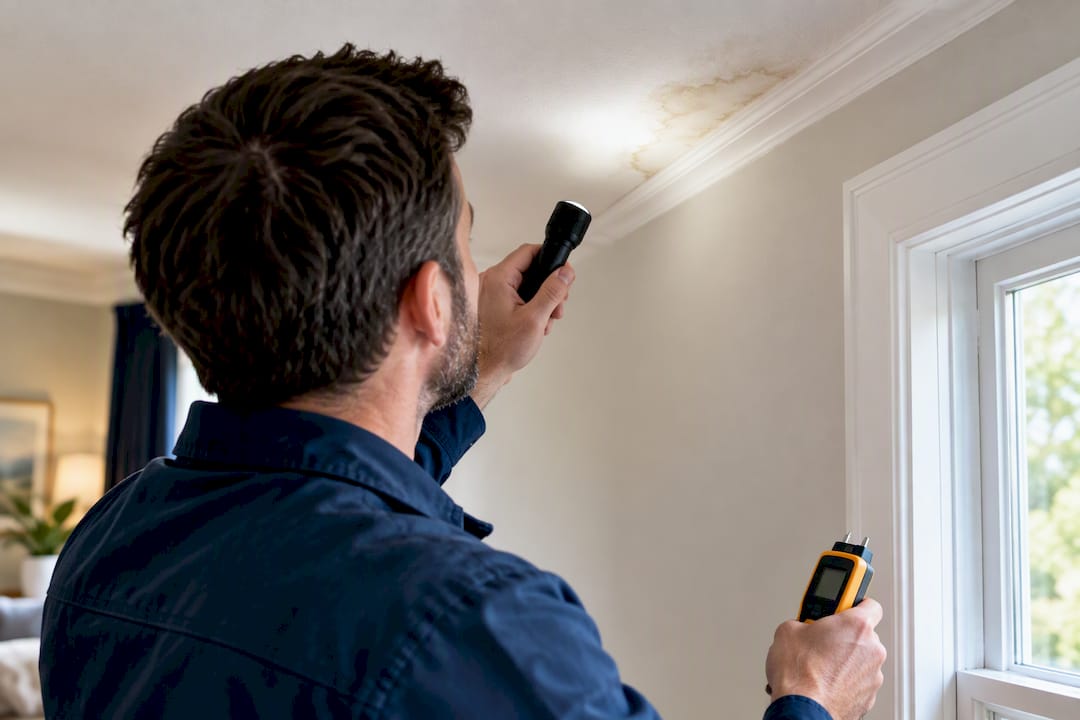
Not every repair deserves your money. A cost-benefit comparison works better than gut instinct: if fixing something costs more than the value it adds to the sale price, skip it and price accordingly. Roof damage, foundation issues, and active safety hazards are usually worth fixing when you can afford it, since they scare off both buyers and appraisers. Cosmetic items like paint, landscaping, and light fixtures often deliver outsized visual impact for very little cost.
Pro Tip: Get a written contractor estimate for your biggest repair item before you decide to sell as-is. A real number, not a guess, changes how you price the home and what you tell buyers.
If you skip repairs, price for it. As-is homes commonly sell 5% to 30% below market value depending on condition, and that gap widens the more severe the issues are. A property with unpermitted work or code violations narrows your buyer pool even further, similar to what sellers face with code violation properties in other markets.
What to Do When a Seller Refuses Repairs
If you’re the buyer and the seller won’t budge, protect yourself with a short sequence of moves rather than an emotional standoff.
- Call your lender immediately. Ask what property conditions could trigger an appraisal flag for your specific loan type, especially if you’re using FHA or VA financing.
- Request credits instead of repairs. Sellers often accept a closing credit faster than they’ll coordinate contractors, since it keeps the transaction simple on their end.
- Keep your list short. A focused request covering 2 to 4 costable items tied directly to the inspection report succeeds more often than a long wish list of minor complaints.
- Know your walk-away line. If financing won’t clear, if there’s an unresolved safety hazard, or if the seller’s disclosures don’t match what the inspection found, terminating within your contingency window is usually the right call.
Realistic Negotiation Outcomes on As-Is Deals
Sellers frequently prefer a credit at closing over coordinating repair work themselves. It’s less hassle, it avoids scheduling contractors before closing, and it keeps the seller out of the repair business entirely.
Lender-required repairs are a different story. Those aren’t optional line items to negotiate away. When an appraiser flags something, the seller typically pays for it or the deal dies. Faced with that choice, many sellers pay the smaller repair bill rather than relist and start over.
Watch for red flags on both sides: a seller who won’t share prior inspection reports, disclosures that seem thinner than the home’s visible condition suggests, or a buyer whose “credit request” balloons into a full renovation wish list. Market conditions also shape how much leverage either side has. In a seller’s market, as-is listings face smaller discounts; in a buyer’s market, expect steeper price cuts or longer time on market.
Where This Advice Comes From
This article is published by Rhody Home Buyer, which works directly with Rhode Island homeowners selling homes as-is for cash. The team builds offers using an after-repair value model, meaning the offer reflects what the home would be worth fixed up, minus estimated repair costs, so sellers know exactly what they’re trading for speed and simplicity. That structure tends to make the most sense for sellers dealing with inherited property, major repairs they can’t afford, or a timeline too tight for a traditional listing. Read more about the company’s approach on the Rhody Home Buyer page.
A Personal Take on Choosing Certainty Over Top Dollar
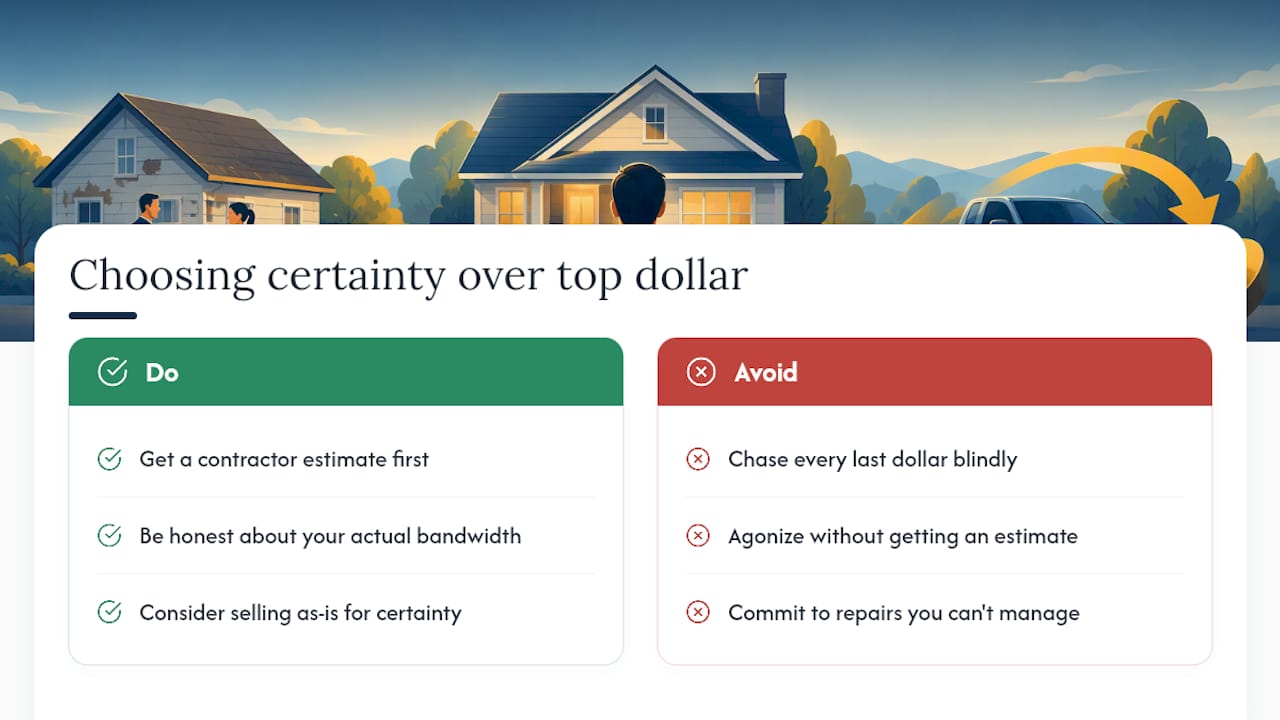
Some sellers chase every last dollar. Others have priorities that outrank the top offer: a fixed closing date, zero repair coordination, or simply the relief of being done. Neither approach is wrong, but I’ve seen too many sellers agonize over a decision that one contractor estimate would have settled in a day.
If you’re weighing as-is against fixing things up, get that estimate first. Then be honest about your actual bandwidth, not your ideal one. Selling as-is isn’t giving up; it’s trading a percentage of sale price for certainty, and for a lot of people in a stressful situation, that trade is the right one.
— Dave
Get a Cash Offer Without Fixing a Thing
You can opt for a cash home buyer as an alternative to listing your house, waiting on buyer financing, and hoping an appraiser doesn’t flag something you can’t afford to fix. This option may involve no agent commission, no repair list, no cleaning, and no waiting on a buyer’s lender to approve the deal. Sellers receive a cash offer based on the home’s after-repair value, with flexibility to choose the closing date.

This route tends to fit homeowners facing inherited property, major repairs beyond their budget, or a timeline that a traditional sale simply can’t meet. If that sounds like your situation, see how the cash sale process works or request an offer directly at Rhodyhomebuyer.
Sources
- Home inspection contingency (Zillow)
- Sell home as-is or make repairs first (HomeLight)
- Can you sell a house as-is without inspection? (Redfin)
FAQ
What to do if the seller won’t make repairs?
Request a closing credit instead of repairs, since sellers often prefer that over coordinating contractors. If the seller still refuses and your lender requires the fix for financing, you can renegotiate price, walk away within your inspection contingency, or in some cases pursue a cash sale route that skips lender requirements entirely.
What happens if the seller does not make repairs before closing?
If the repair isn’t lender-required, the deal can typically still close as-is, sometimes with a credit replacing the repair. If it’s a lender-required fix flagged by the appraiser, financing usually won’t fund until it’s resolved, which forces either seller payment, a switch to cash financing, or the deal falling through.
Can I sell my house even if it needs repairs?
Yes. You can list as-is and disclose known issues rather than fixing them, though expect offers roughly 5% to 30% below market value depending on severity. Selling to a cash buyer like Rhody Home Buyer avoids the repair question altogether, since offers are based on the home’s current condition.
What is the hardest month to sell a house?
This varies by local market and isn’t specific to as-is sales, but winter months, particularly December and January, typically see fewer buyers and slower activity in most regions. Market conditions matter more for as-is listings than for move-in ready homes, since discounts tend to widen in slower buyer’s markets.