
Pre-foreclosure is the stretch of time after a homeowner falls seriously behind on mortgage payments but before the lender finalizes a foreclosure sale. The homeowner still holds the title and lives in the house during this window. It’s the last real chance to fix the problem before a lender takes over, whether that means catching up on payments, negotiating with the servicer, or selling on your own terms.
TL;DR:
- Pre-foreclosure begins after missed payments, giving homeowners the chance to reinstate, modify, or sell before ownership transfers to the lender.
- The duration varies widely, from several weeks to over a year, depending on state laws and homeowner response, and ends with resolution or auction.
- Homeowners can leverage early negotiations by reinstating the loan, setting up repayment plans, or pursuing short sales to avoid foreclosure.
- Buying pre-foreclosure properties generally involves standard negotiations with homeowners, but requires verifying payoff amounts and liens beforehand.
- Pre-foreclosure marks on credit reports are minor compared to the significant and long-lasting damage caused by a completed foreclosure.
Table of Contents
- What Is Pre-Foreclosure, and How Is It Different From Foreclosure?
- How Does Pre-Foreclosure Start, and How Long Does It Last?
- What Can Homeowners Do During Pre-Foreclosure?
- What Should Buyers Know About Pre-Foreclosure Properties?
- Does Pre-Foreclosure Hurt Your Credit Score?
- Where Can You Get Real Help During Pre-Foreclosure?
- A Practical Note From Someone Who Talks to Sellers Every Week
- How Rhody Home Buyer Helps Homeowners Facing Foreclosure
- Sources
- FAQ
What Is Pre-Foreclosure, and How Is It Different From Foreclosure?
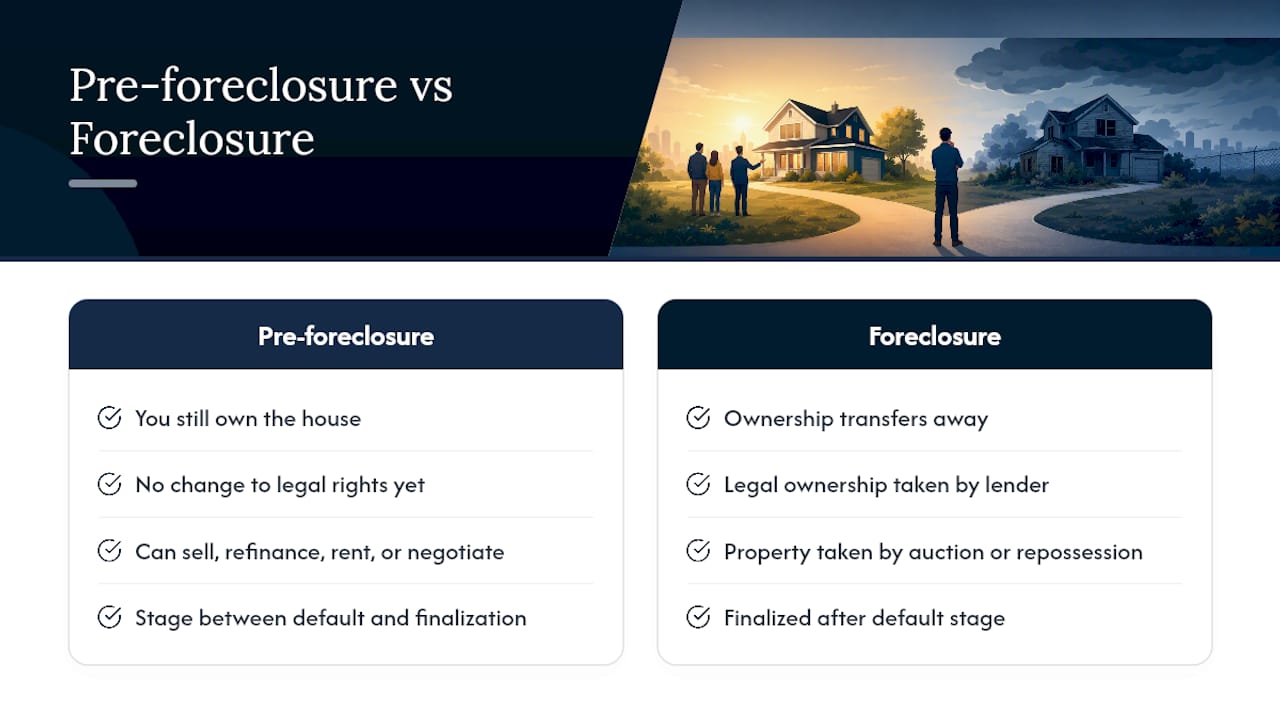
Pre-foreclosure means the loan has defaulted, but you still own the house. Nothing about your legal rights to the property changes yet. You can still sell it, refinance it, rent it out, or negotiate with your lender, because your name is still on the deed.
Foreclosure is what happens when that window closes without resolution. The lender takes the property, either through a public auction or by repossessing it directly, and ownership transfers away from you. Experian defines pre-foreclosure as the period between default and the finalization of a foreclosure order or auction. Nolo’s legal breakdown frames it similarly: pre-foreclosure is the stage where borrowers still have room to pursue reinstatement, a loan modification, or a short sale before the court or lender forces the issue.
That gap between “in trouble” and “lost the house” is the whole point of the term. Lenders generally don’t want to foreclose. It’s expensive, slow, and often leaves them with a property worth less than what’s owed. That’s why pre-foreclosure exists as a distinct phase rather than a straight line from missed payment to auction.
How Does Pre-Foreclosure Start, and How Long Does It Last?
Pre-foreclosure kicks off after a pattern of missed payments, not a single late fee. Investopedia notes that most mortgage contracts treat multiple missed payments as a default trigger, at which point the lender issues a formal notice.
Pro Tip: The 90-day mark isn’t universal law, it’s a common contractual threshold. Check your loan servicing agreement or call your servicer directly to find your specific default terms.
What happens next depends heavily on your state. Some states use judicial foreclosure, meaning the lender must file a lawsuit and get a court order before selling the home. Others use nonjudicial foreclosure, which moves faster because it skips the courtroom and relies on a Notice of Default or Notice of Trustee’s Sale recorded with the county.
That difference in process is why the pre-foreclosure period has no fixed length. It can run several weeks in a fast-moving nonjudicial state, or stretch past a year in a state with heavy court backlogs and required mediation steps.
A rough sequence of what typically happens:
- Payment 1 missed: late fee, servicer contact begins
- Payments 2 to 3 missed: formal default notice, pre-foreclosure officially begins
- Weeks to months later: Notice of Default or lis pendens filed in public records
- Ongoing: homeowner can reinstate, modify, sell, or negotiate
- End of window: foreclosure auction, deed transfer, or resolution
The period ends one of four ways: you cure the default, you sell the home, you land a loan modification, or the lender completes the foreclosure sale. For state-specific deadlines, a state court foreclosure flowchart can show exactly where your timeline stands.
What Can Homeowners Do During Pre-Foreclosure?
You have more leverage during pre-foreclosure than most people realize, mainly because lenders would rather negotiate than foreclose. Foreclosure costs the lender money and time, so most are open to alternatives if you reach out early.
- Reinstate the loan. Pay the full past-due amount plus fees in one lump sum, if you have access to cash.
- Set up a repayment plan. Spread the missed payments across future months on top of your regular bill.
- Request a loan modification. Change the interest rate, term, or principal to make payments affordable long term.
- Pursue a short sale. Sell for less than what’s owed, with lender approval, avoiding foreclosure on your record.
- Offer a deed in lieu of foreclosure. Hand the title back to the lender voluntarily, skipping the auction process.
- Consider bankruptcy. This can delay or stop foreclosure temporarily, but it’s a serious last resort with long-term credit consequences.
Pro Tip: If an investor or “rescue” company contacts you offering to “save your home,” verify them before signing anything. Check their license through NMLS Consumer Access, and never sign over your deed to a stranger who asks for upfront fees.
What Should Buyers Know About Pre-Foreclosure Properties?
Buying a pre-foreclosure home is usually a normal real estate transaction, not a courthouse auction. The homeowner still controls the sale, negotiates the price, and can accept inspections and a reasonable closing timeline, unlike an auction purchase where you often buy sight-unseen.
The complications sit in the paperwork. You need clean payoff figures from the lender, and you need to confirm there’s no second mortgage or hidden lien sitting behind the first one.
Before making an offer on a pre-foreclosure property, buyers should watch for:
- A tight timeline: sellers under pre-foreclosure pressure may need to close fast, so understanding how to buy and sell simultaneously without two mortgages can be crucial for navigating this process
- Multiple liens: confirm the full payoff amount, not just the primary mortgage
- Title issues: run a full title search before submitting an offer
- Short sale delays: lender approval can add weeks to closing
Does Pre-Foreclosure Hurt Your Credit Score?
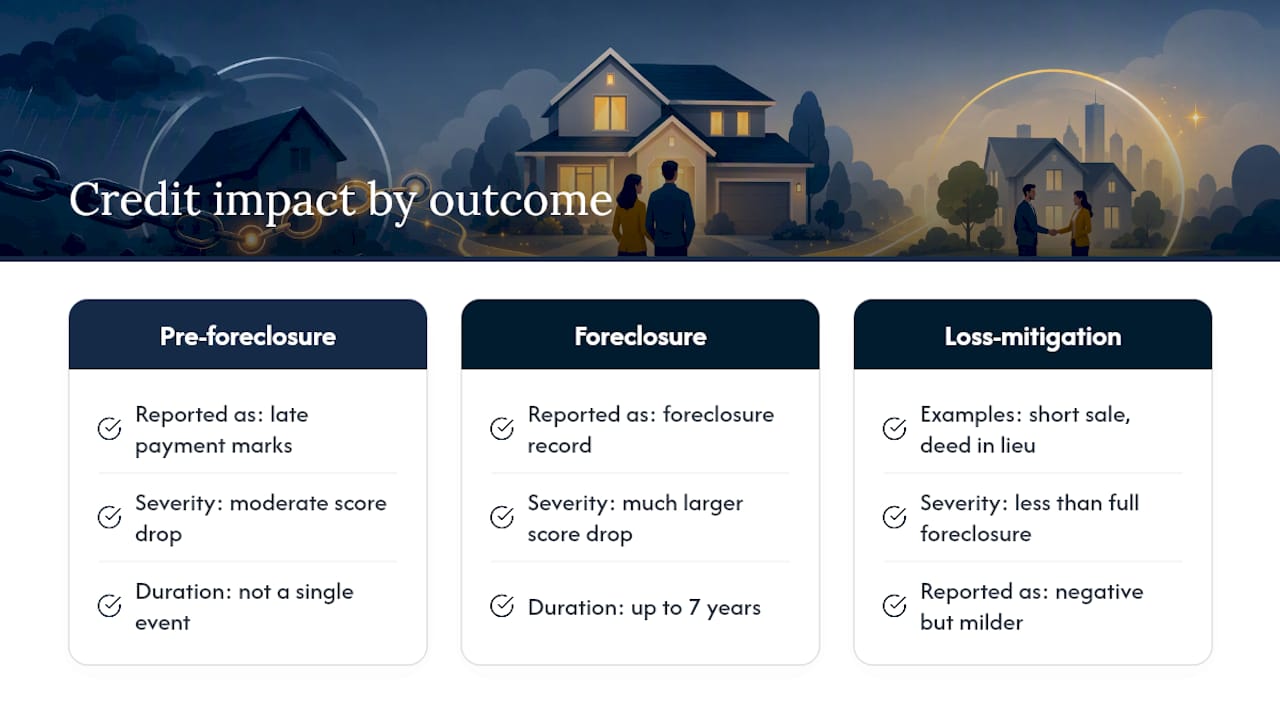
Pre-foreclosure itself, meaning the notice of default, typically shows up on your credit report as a series of late payment marks rather than a single catastrophic event. The damage escalates sharply if the process completes into an actual foreclosure, which can stay on your credit report for up to seven years and drop your score significantly more than late payments alone.
Loss-mitigation options tend to be gentler on your credit than a full foreclosure. A short sale or deed in lieu still hurts, but generally less than letting the process run its full course, according to Chase’s homeowner education materials. To rebuild afterward: keep every other bill current, check your credit report for errors, and consider a secured card or credit builder loan once you’re stable.
Where Can You Get Real Help During Pre-Foreclosure?
Start with free, vetted resources before you start returning calls from strangers offering to buy your house. HUD-approved housing counselors walk you through your specific options at no cost, and most state court systems publish foreclosure flowcharts showing exactly where your case stands.
- HUD housing counseling: free guidance on modification, reinstatement, and your rights
- State court foreclosure resources: procedural timelines specific to your jurisdiction
- NMLS Consumer Access: verify any servicer or “buyer” contacting you is legitimately licensed
Pro Tip: Homeowners in pre-foreclosure often get flooded with mail and calls from investors. Some offers are legitimate. Others are scams asking you to sign over your deed or pay a large fee upfront. When in doubt, verify first. For homeowners exploring a faster path out, our guide on how to avoid foreclosure covers realistic timelines for a direct cash sale.
A Practical Note From Someone Who Talks to Sellers Every Week
Most people in pre-foreclosure wait too long to make a call, hoping the problem resolves itself. It rarely does on its own. Document every conversation with your servicer, including dates and names, and move faster than feels comfortable. Whether that means a HUD counselor or a trusted cash buyer, get a real conversation going this week.
— Dave
How Rhody Home Buyer Helps Homeowners Facing Foreclosure
If you’re weighing a short sale, a loan modification, or a slow negotiation with your servicer, there’s also a faster route: sell the house outright before the clock runs out. A company buys homes as-is, based on the After Repaired Value, with no agent fees, no commissions, and no repair or cleanup requirements before closing.

This route fits homeowners who need speed more than top dollar, people managing an inherited property they don’t want to fix up, or anyone who wants to skip the paperwork of a short sale or modification application. You set the closing timeline. There’s no waiting on lender approval like a short sale requires, and no showings or staging like a traditional listing demands. If a fast, direct sale sounds like the better fit for your situation, visit Rhody Home Buyer to request a no-obligation cash offer and see your numbers before you decide anything.
Sources
- What Is Pre-Foreclosure? | Experian
- What does pre-foreclosure mean? | Nolo
- Pre-foreclosure definition | Investopedia
FAQ
How long does a house stay in pre-foreclosure?
There’s no fixed answer. The pre-foreclosure period can run several weeks or stretch past a year, depending on whether your state uses judicial or nonjudicial foreclosure and how the homeowner responds. It ends when the default is cured, the home sells, a modification is approved, or the lender completes the foreclosure sale.
Is buying a pre-foreclosure home a good idea?
It can be, since you typically get inspection access and a normal negotiation process instead of an auction gamble. The trade-off is more paperwork: confirm the exact payoff amount and check for second liens before making an offer.
Can you get out of pre-foreclosure?
Yes. Homeowners can reinstate the loan, set up a repayment plan, request a loan modification, sell the home, or complete a short sale, all of which can stop foreclosure before it finalizes. Acting early, rather than waiting for the servicer to call again, gives you the most options.
Does pre-foreclosure affect your credit score?
Pre-foreclosure notices generally show up as late payment marks, which hurt less than a completed foreclosure. A finished foreclosure can stay on your credit report for up to seven years and cause significantly more damage than the missed payments alone.
What if I need to sell fast to avoid foreclosure?
A direct cash sale is one option worth comparing against a short sale or modification, since it skips lender approval delays and agent commissions. Rhodyhomebuyer buys Rhode Island homes as-is and lets sellers set their own closing date, with current details available on the Rhody Home Buyer site.