
Yes, certain title defects can stop or delay a home sale until they’re cleared. The three moves that matter most right now: order or confirm a title search, get your title company or closing officer on the phone, and start collecting payoff letters and proof of satisfaction on any old loans. If you’re dealing with probate, a missing heir, or a deed that looks forged, call a real estate attorney before you do anything else.
TL;DR:
- Unpaid liens, unreleased mortgages, and recording errors are the most common title issues that delay home sales, often requiring only paperwork fixes.
- Starting a title search early and gathering all payoff letters before listing can prevent last-minute surprises that stall closing.
- Title companies typically coordinate lien payoffs from proceeds, but if liens exceed sale equity, sellers must negotiate or consider short sales.
- Resolving complex disputes like probate or quiet title actions can take months or more, making cash offers a practical alternative in urgent situations.
- Sellers should order a preliminary title search, confirm all ownership and lien satisfaction, and address defects before accepting an offer to avoid costly delays.
Table of Contents
- What Title Issues Most Often Derail a Sale
- How Title Problems Get Found: The Search and Commitment
- Who Pays Off Liens, and How Releases Get Recorded
- Step-by-Step Fixes for the Most Common Defects
- How Long Fixes Take and What They Cost
- Your Pre-Listing Checklist Before Anything Goes Wrong
- When a Cash Buyer Makes Sense Instead
- Order the Title Search Before You Order the Moving Truck
- Selling As-Is When Title Problems Are Eating Your Timeline
- Sources
- FAQ
What Title Issues Most Often Derail a Sale
Not every title problem carries the same weight. Some get fixed with a phone call and a $50 recording fee. Others can freeze a closing for months.
The most frequent culprits, according to title industry data, include a mix of financial and paperwork problems that surface once a title company starts digging:
- Unpaid liens — property tax liens, mechanic’s or contractor liens, HOA liens, and judgment liens from lawsuits or unpaid debts
- Unreleased mortgages — a prior loan that was paid off years ago but never got an official satisfaction recorded with the county
- Recording errors — a misspelled name on a deed, a transposed lot number, or a legal description that doesn’t match the actual parcel
- Probate and inheritance gaps — property passed down without clear documentation, or an heir who never signed off on the transfer
- Boundary disputes and easements — a fence that’s two feet over the property line, or a utility easement nobody disclosed
- Forged or fraudulent deeds — rare, but devastating, often tied to identity theft or a scam involving vacant or inherited property
Most of these are common title issues that delay home sales, and the majority trace back to paperwork nobody bothered to file correctly the first time. An old mortgage satisfaction that never made it to the county recorder’s office is a paperwork fix. A dispute over who legally inherited the house from a parent who died without a will is a different animal entirely, and it can take considerably longer to sort out.
How Title Problems Get Found: The Search and Commitment
Title searches typically happen once your home goes under contract, though nothing stops you from ordering one earlier. A title company or attorney pulls the public record, tracing ownership back several decades to confirm a clean chain of title.
Here’s what happens next, in order:
- The title company issues a title commitment, a document listing every recorded item affecting the property, including mortgages, liens, easements, and any “exceptions” that must be cleared before the policy will insure the title.
- Your lender’s underwriter reviews that commitment because financed buyers can’t close on a property with unresolved defects. Lenders require clear, insurable title as a condition of funding.
- If something concerning shows up, such as an old lien or a name discrepancy, contact your title company immediately. Waiting rarely makes the paperwork easier to track down.
Title searches and title insurance exist specifically to catch these issues before they become the buyer’s problem.
Who Pays Off Liens, and How Releases Get Recorded
Here’s the part that surprises a lot of sellers: you usually don’t need to pay liens out of pocket before closing. The title company coordinates directly with creditors and pays them from your sale proceeds at the closing table, as long as your equity covers what’s owed.
- If your equity exceeds the liens, the title company cuts payoff checks and closes as scheduled.
- If liens exceed your equity, you’ll need to negotiate a reduced payoff, consider a short sale, or cover the shortfall from savings.
- Payoff letters, official statements from each creditor showing the exact amount owed through a specific date, are required before the title company can calculate what’s due.
- Once paid, the creditor must file a lien release or satisfaction of mortgage with the county. If this step gets missed, the “cleared” lien can still show up on a future title search.
Title companies typically coordinate payoffs directly from sale proceeds when equity allows it, which is why keeping them in the loop early matters more than most sellers realize.
Pro Tip: Request payoff letters the moment you list, not after you accept an offer. Some creditors, especially HOAs and smaller municipal tax offices, take two to three weeks to generate one.
Step-by-Step Fixes for the Most Common Defects
Every title defect has a cure. Some take an afternoon. Others take a court order.
- Old liens and mortgages. Get the payoff letter, pay through closing, and confirm the creditor records a release. If the original lender no longer exists, title officers can often trace the successor company or use a sworn affidavit paired with your recorded payment history to secure release.
- Recording errors. A misspelled name or wrong legal description typically gets fixed with a corrective deed, filed to amend the original recording. This is a paperwork correction, not a new transfer of ownership.
- Minor ownership transfers between known parties. A quitclaim deed can clear up situations like a divorced spouse still listed on title, but use it carefully. It transfers whatever interest the grantor has, with zero guarantees about clear title, so it’s not the right tool for resolving disputed ownership.
- Probate and inherited property. If a will names a clear executor, an executor’s deed can transfer the property. Without a will, some states allow an affidavit of heirship for straightforward cases; more complicated estates need full probate.
- Deep or contested disputes. When a cloud on title can’t be resolved through negotiation, a quiet title action asks a court to formally declare who owns the property, wiping out competing claims. A cloud on title need not be valid to stop a sale; even a questionable, colorable claim creates enough doubt that a title company won’t insure around it.
- Boundary and easement problems. Order a current survey, then negotiate a boundary line agreement or easement modification with the neighboring owner if lines don’t match up.
Most title defects fall into the procedural bucket, not the litigation bucket. That distinction should shape how much you panic when your title commitment comes back with exceptions.
How Long Fixes Take and What They Cost
Timelines swing wildly depending on which defect you’re dealing with.
- Simple payoff and release: days to a couple of weeks, mostly waiting on the creditor to file paperwork
- Tracing a defunct lender or fixing a recording backlog: one to three weeks, sometimes longer in counties with slow recorder’s offices
- Probate transfers: weeks if uncontested with a clear will, months if the estate is disputed
- Quiet title actions: several months to over a year, since these go through the court system
Budget for recording fees (usually under $100), possible attorney fees if you need a corrective deed or affidavit drafted, and the actual payoff amounts on any liens. A colorable recorded claim can stop a closing even when it’s later proven invalid, which is exactly why sellers should weigh a quick negotiated settlement against a slower court remedy based on cost and how much time they actually have.
Your Pre-Listing Checklist Before Anything Goes Wrong
Do this work before you accept an offer, not after — following a practical Capitola home selling checklist for a polished launch can help ensure everything is in order.
- Order a preliminary title search the moment you decide to sell, not once you’re under contract.
- Track down every recorded mortgage satisfaction and old payoff letter you still have.
- If your property sits in an HOA, request the resale package early and confirm your dues account is current.
- Confirm every owner on the deed, including an ex-spouse or a co-inheritor, is available and willing to sign at closing.
- Order a survey if you’ve added a fence, shed, or addition since your last one, or if boundaries have ever been unclear.
Experts consistently recommend ordering a preliminary title search early in the process, precisely because payoff letters and corrective filings take time you won’t have once you’re 10 days from closing.
Pro Tip: If you inherited the property, gather probate documents and death certificates now. A detailed look at inherited property sales can help you understand what paperwork title companies will expect.
When a Cash Buyer Makes Sense Instead
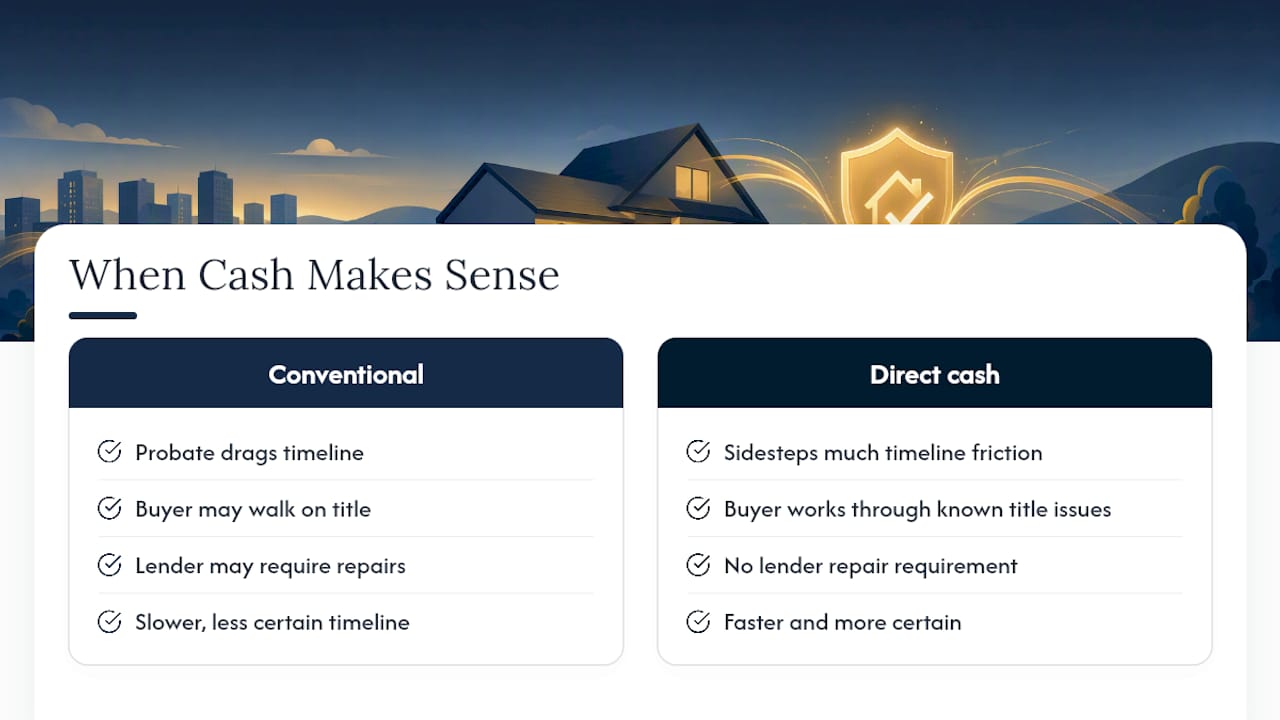
Sometimes the timeline doesn’t cooperate. Probate is dragging, a buyer just walked because of a cloud on title, or the repairs needed to satisfy a lender are more than you can front. In those cases, a direct cash sale sidesteps a lot of the friction, since companies like Rhodyhomebuyer often work through known title issues directly with sellers rather than requiring every defect resolved before an offer. You still get to weigh price against speed and certainty, but it’s a legitimate option when conventional financing timelines won’t bend.
Order the Title Search Before You Order the Moving Truck
Get a preliminary title search moving before you list, and stay in close contact with your title company or attorney the second anything odd shows up in the record. If the timeline doesn’t cooperate with a traditional sale, a direct or cash-buyer path is worth a serious look instead of forcing a defect through a standard closing.
— Dave
Selling As-Is When Title Problems Are Eating Your Timeline
Cash home buyers can be an alternative when a traditional sale can’t absorb the delay a title defect creates. Instead of waiting on a quiet title action or a probate court date while a buyer’s financing deadline ticks away, some buyers purchase homes as-is, in cash, with no agent fees or commissions eating into proceeds.

That matters most for sellers dealing with inherited property tangled in probate, homes that need repairs no lender will finance around, or a deal that just fell apart because a buyer got spooked by something on the title report. Some cash home buyers base offers on After Repaired Value and work on the seller’s timeline rather than a lender’s underwriting calendar. If your closing is stuck and you need a straight answer instead of another delay, reach out to Rhody Home Buyer for a no-pressure cash offer and find out whether a direct sale gets you to closing faster than fighting the defect through a traditional deal.
This article is general information, not a substitute for advice from a qualified lawyer. Consult a qualified legal professional about your own circumstances before acting on anything here.
Sources
- The most common title issues that delay home sales
- Can you sell a house with a lien on it? Here’s what you should know
- Cloud on title — Cornell Legal Information Institute
FAQ
What Are Examples of Title Issues?
Common examples include unpaid tax or contractor liens, an old mortgage that was never officially released, clerical errors like a misspelled name on a deed, boundary disputes with a neighbor, and gaps in ownership documentation after someone inherits a property. Forged deeds are rarer but fall into this category too.
Does the Buyer or Seller Fix Title Issues?
The seller is typically responsible for clearing title defects before or at closing, since they’re the one conveying ownership. In most transactions, the title company handles payoffs directly from the seller’s proceeds, so the seller rarely writes a separate check unless liens exceed their equity.
What Does a Title Issue Actually Mean?
A title issue, sometimes called a cloud on title, is any recorded claim, error, or unresolved interest that creates doubt about who legally owns a property. It doesn’t need to be a valid claim to cause problems; even a questionable recorded document can stop a title company from insuring the sale until it’s cleared.
Can You Get a Clear Title With Just a Bill of Sale?
No, a bill of sale alone typically doesn’t establish clear title to real property. Real estate ownership is documented and transferred through a recorded deed, and a title search confirms that chain of ownership is intact before a sale can close.
How Long Does It Take to Clear a Title Issue?
Simple fixes like recording a missing mortgage release can take days to a few weeks. More complicated problems, such as probate transfers or quiet title actions, can stretch from several months to over a year depending on court schedules and whether anyone contests the claim.