
Signing an “as is” contract means the seller won’t fix a single thing before closing, and the buyer accepts the property in its current condition, defects included. It doesn’t cancel the seller’s duty to disclose known problems, and it doesn’t cancel your right to inspect. If you’re buying, get every inspection you can afford and keep your contingency. If you’re selling, disclose what you know, and if speed matters more than top dollar, a cash buyer can close in weeks instead of months.
TL;DR:
- An “as is” clause shifts repair responsibilities to the buyer but does not exempt the seller from legally disclosing known material defects or misrepresenting the home’s condition.
- Inspectors should conduct a thorough review before waiving contingencies, including general and specialty inspections, to maintain leverage and protect against hidden repairs.
- Sellers must disclose structural issues, past flooding, hazardous materials, and illegal modifications regardless of the “as is” language, and concealment can lead to legal consequences.
- Financing hurdles often prevent “as is” homes from closing with FHA, VA, or conventional loans due to safety and structural issues flagged by appraisers, especially when repairs are needed.
- Proper contract language should specify inspection periods, maintenance responsibilities until closing, and protections if new damage occurs, minimizing risks for both buyers and sellers.
Table of Contents
- What “As Is” Legally Covers, and What It Doesn’t
- Inspection Rights and How to Protect Yourself in an As Is Deal
- What Sellers Still Have to Disclose, and When “As Is” Won’t Save Them
- Pricing, Repair Risk, and Financing Hurdles on As Is Homes
- Contract Language: What to Check Before You Sign
- A Seller’s Fast Path Through an As Is Cash Sale
- Rhody Home Buyer: A Direct Route to Selling As Is
- Where to Find Sample Addenda and Legal Explainers
- Sources
What “As Is” Legally Covers, and What It Doesn’t
An as is clause shifts repair responsibility onto the buyer. The seller makes no promise to patch the roof, fix the furnace, or address anything found during a walkthrough. But that clause is a repair disclaimer, not a liability shield. It does not erase the seller’s legal duty to disclose known material defects, and it doesn’t protect a seller who lies about the home’s condition, according to the Texas Real Estate Research Center.
Two warranty concepts matter here, and buyers often confuse them:
- Implied warranties (that a home is habitable or fit for use) get disclaimed by “as is” language.
- Express warranties don’t disappear. If a seller states in writing that “the roof was replaced in 2022,” that statement can be enforced even inside an as is deal, per Cornell Law’s Legal Information Institute.
The real signal buyers miss: an as is clause changes negotiation leverage far more than it changes legal protection. If a seller actively hides a known defect, courts don’t care what the contract says about “as is.” Fraud voids the shield entirely.
Inspection Rights and How to Protect Yourself in an As Is Deal
Not every inspection carries the same legal weight. An inspection contingency lets you walk away from the deal, renegotiate, or cancel and get your deposit back if the report turns up problems. An informational inspection gives you the same knowledge, but without a built-in exit. Buyers who skip the contingency to look competitive in a hot market are the ones who end up stuck with a bad roof and no leverage.
Here’s what a smart inspection sequence looks like on an as is purchase:
- General home inspection first, usually $300 to $600 depending on square footage and region.
- Specialty inspections next if the general report flags concerns, termite/pest, HVAC, roof, or structural, each typically running $100 to $500.
- Review and decide within your inspection period: walk away, ask for a price reduction, negotiate an escrow holdback for repairs, or accept the risk and move forward.
Inspections remain the single most valuable protection a buyer has in an as is deal, and they matter even more when there’s no contingency backing them up, according to guidance from the North Carolina Real Estate Commission.
Pro Tip: Never let “as is” talk you into skipping the inspection contingency to make your offer look stronger. Losing that contingency means losing your only clean exit if the roof turns out to be rotted underneath.
What Sellers Still Have to Disclose, and When “As Is” Won’t Save Them
An as is clause covers repairs. It does not cover honesty. Sellers still carry state-mandated disclosure duties, and those obligations survive the clause completely, per the Texas Real Estate Research Center.
Common disclosures that typically apply regardless of an as is sale include:
- Known structural defects (foundation cracks, water intrusion, roof failures)
- Past flooding, mold remediation, or pest infestations
- Lead paint, asbestos, or other known hazardous materials
- Nonpermitted additions or code violations the seller is aware of
There’s a real legal line between silence and concealment. A seller who simply doesn’t volunteer information they weren’t asked about is in a different position than one who painted over a water stain or unplugged a sump pump before a showing. If a seller actively conceals a defect or misrepresents the property’s condition, buyers can pursue rescission, damages, and in some cases punitive remedies, according to LegalClarity. Proving that kind of case usually means pulling repair invoices, insurance claims, permit records, or old text messages and emails, so gather that paper trail early if fraud is even a possibility.
Pricing, Repair Risk, and Financing Hurdles on As Is Homes
As is homes tend to sell below what they’d fetch after repairs, and that’s not an accident. Buyers price in the cost of anticipated repairs plus a cushion for whatever the inspection didn’t catch, and that combination pulls offers down, sometimes significantly, according to Realtor.com.
Financing is where as is deals frequently stall. FHA and VA loans require the home to meet minimum property standards, meaning an appraiser who spots a missing handrail, exposed wiring, or a failing roof can force repairs before the loan closes, no matter what the contract says about “as is.” Conventional loans have more flexibility but still hit trouble when an appraiser flags safety or structural issues.
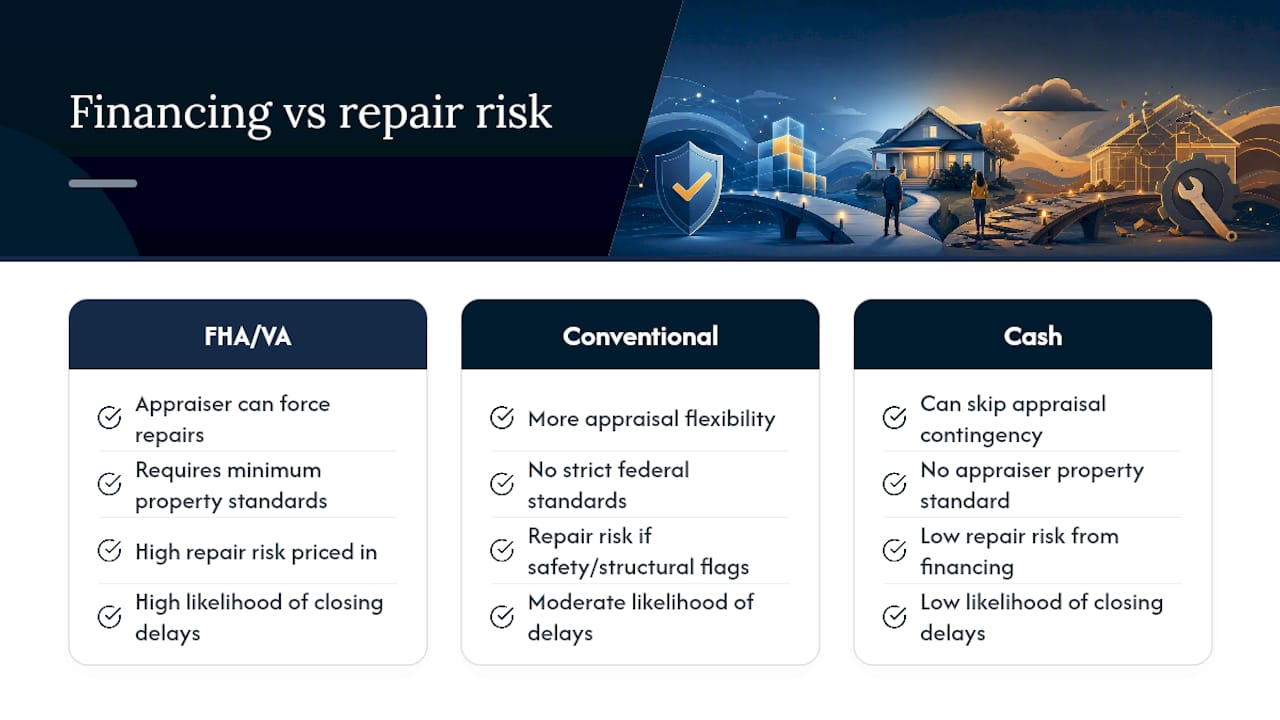
Buyers using mortgage financing run into far more friction than cash buyers, because appraisers and underwriters can require fixes or block the loan outright when they find health, safety, or structural red flags. If that happens, your options are: switch lenders, negotiate an escrow holdback for post-closing repairs, or find a cash buyer willing to skip the appraisal contingency entirely.
Contract Language: What to Check Before You Sign
The words in the addendum decide who actually bears the risk. A generic “sold as is” line is thin. A proper as is addendum should specify inspection rights, a maintenance-until-closing obligation, and what happens if the buyer waives further inspection, according to standard as is addendum forms used across the industry.
Buyers should push for these specific protections:
- A defined inspection period, commonly 5 to 10 days
- A seller obligation to maintain the property (no draining the pool, no disconnecting utilities) until closing
- Deposit protections tied to the inspection contingency
- Notice and cure language spelling out what happens if new damage appears before closing
| Clause type | What it protects | Who benefits most |
|---|---|---|
| As is with right to inspect | Preserves buyer’s exit rights while limiting seller repair duty | Buyer |
| Maintenance until closing | Prevents property damage between signing and closing | Both |
| Waiver of inspection | Speeds closing but removes buyer’s contingency | Seller |
Watch for red-flag phrasing that waives disclosure rights entirely or bars any inspection access. That’s not a normal as is clause. That’s a seller trying to hide something.
A Seller’s Fast Path Through an As Is Cash Sale
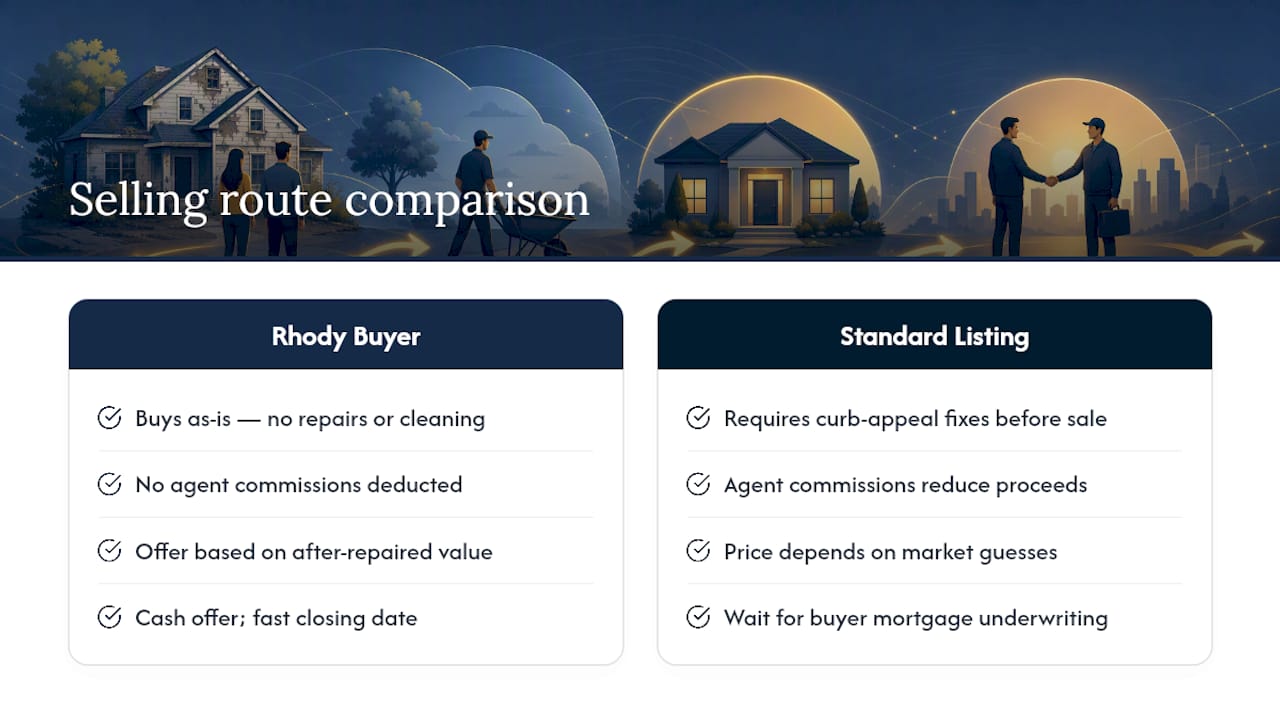
A typical as is cash sale moves in four steps: an initial call about the property, a walkthrough or review of photos and repair needs, a cash offer built off the after repaired value, and a closing date the seller picks. There’s no agent commission, no repair list, and no showings. The tradeoff is straightforward: sellers usually net less than a fully repaired listing price would bring, in exchange for speed and zero repair risk. That trade makes sense for inherited homes, properties with expensive damage, or anyone who simply needs the sale done.
— Dave
Rhody Home Buyer: A Direct Route to Selling As Is
If you’re weighing inspection periods, repair negotiations, and financing delays against just being done, Rhody Home Buyer buys homes in Rhode Island exactly as they sit, no repairs, no cleaning, no agent commissions eating into your payout. Offers are based on after repaired value, so you know the math behind the number instead of guessing.

This route fits sellers facing an inherited property they don’t want to manage, a home with repair costs that would eat any profit from a traditional sale, or a timeline that can’t wait for a buyer’s mortgage to clear underwriting. Compare that to a standard listing, where you’re covering curb appeal fixes and waiting on financing contingencies that can fall through at the last minute.
If a fast, no-repair sale sounds like the better fit, reach out to Rhody Home Buyer for a cash offer and a closing date that works on your schedule.
Where to Find Sample Addenda and Legal Explainers
If you want to see the actual language lenders and title companies use, a sample as is contract template shows how inspection periods and maintenance clauses get written into a real agreement. For a deeper legal breakdown of disclosure duties and buyer remedies, LegalClarity’s explainer covers rescission and damages in plain terms, and USRealtyTraining walks through why maintenance-until-closing provisions matter. None of these replace a conversation with a real estate attorney or a licensed inspector before you sign anything, but they’re a solid starting point for understanding what you’re agreeing to.
Sources
- Texas Real Estate Research Center — A clause for concern
- LegalClarity — As‑is sales contract: what buyers and sellers need to know
- As is | Wex | Legal Information Institute (Cornell Law)