
The fastest way to sell a condo is to accept a vetted cash offer, which can close in as little as 7 to 21 days when you sell as-is to an investor or cash-buyer channel. If you have more time, an aggressively market-priced MLS listing works too, but expect a longer timeline once financing, inspections, and HOA reviews enter the picture.
TL;DR:
- Cash offers can close within 7 to 21 days because they bypass appraisal, lender underwriting, and loan contingencies, reducing delays.
- Preparing HOA documents and mortgage payoff details early can save several days during closing, especially in Rhode Island’s attorney-led process.
- Pricing at market value from the start prevents prolonged listings, particularly in non-warrantable buildings where comps are limited and the buyer pool shrinks.
- Selling as-is with minimal repairs and clear disclosures speeds up the process by avoiding delays from permits and contractor scheduling.
- Verifying buyer proof of funds, requiring written offers, and involving an attorney early help prevent scams and last-minute complications.
Table of Contents
- Why Selling for Cash Usually Gets You the Quickest Close
- Step-by-Step: How to Get an Offer and Close Fast
- Pricing and Comps: The Fastest Pricing Strategy That Actually Works
- Condo-Specific Issues That Force Cash Buyers or Slow Sales
- Quick Prep vs. Sell As-Is: What Small Fixes Help and What to Skip
- Closing Logistics and Realistic Timelines
- Risks and Red Flags: How to Vet Fast Cash Buyers and Avoid Scams
- How Rhody Home Buyer Fits Into the Fast-Sale Path
- What Actually Matters When You Need to Sell Fast
- Ready to Sell? Here’s How to Reach Rhody Home Buyer
- Sources
Why Selling for Cash Usually Gets You the Quickest Close
Cash deals move fast because they skip almost every step that slows down a financed sale. There’s no appraisal to schedule, no lender underwriting timeline, and no loan contingency that lets a buyer walk if their bank gets cold feet three weeks into escrow. Fewer moving parts means fewer chances for something to derail the deal.
You also skip agent commissions and the usual listing prep: no photographer, no open houses, no weeks of showings while you keep the place spotless for strangers. That adds up to real time and money saved, even if the top-line offer looks lower than a retail listing price.
Speed comes with a trade-off. Cash buyers price in the risk and effort they’re taking on, so offers typically land below what a fully prepped, financeable listing might fetch on the open market. You’re trading some equity for certainty and calendar time. For a lot of sellers facing a deadline, a job relocation, an inherited unit they don’t want to manage, or a building with issues that scare off lenders, that trade is worth it.
Cash buyers also dominate in a few specific situations:
- Non-warrantable buildings where conventional lenders won’t approve financing
- Units needing repairs a bank’s appraiser would flag before approving a loan
- Sellers who need funds within weeks, not months, due to job moves, probate, or financial pressure
- Buildings mid-litigation or facing a large special assessment that scares off traditional buyers
In each of these, the buyer pool for financed purchases shrinks dramatically. Cash becomes the majority, sometimes the entire market, for that unit.
Step-by-Step: How to Get an Offer and Close Fast
Getting from “I need to sell” to “funds in my account” comes down to sequencing. Skip a step and you’ll lose days waiting on paperwork you should have started earlier.
- Pull your documents together first. Get your mortgage payoff statement, HOA financial documents (budget, reserve fund balance, meeting minutes), and a plain list of the unit’s condition, including anything that needs repair.
- Request written offers from cash buyers or investor channels. Ask specifically for proof of funds, a proposed closing date, and whether the offer is contingent on anything beyond a title check.
- Compare offers on net proceeds, not just headline price. A slightly lower offer with no fees and a faster close often beats a higher one loaded with contingencies.
- Accept the offer and sign the purchase contract. This locks in the price and closing timeline both sides agreed to.
- Coordinate your mortgage payoff and title work in parallel with HOA paperwork, not after it. Waiting to start title checks until the contract is signed is one of the most common ways sellers lose a week they didn’t need to lose.
- Close. Funds disburse, the deed records, and you’re done.
Running title checks, attorney engagement, and HOA document requests at the same time, rather than one after another, is what separates a 10-day close from a 30-day one.
Pro Tip: Call your HOA management company on day one and ask how long they need to produce a resale package or estoppel letter. Some boards take two weeks to turn around paperwork that a buyer’s attorney needs before closing, and that delay is entirely avoidable if you start early.
Pricing and Comps: The Fastest Pricing Strategy That Actually Works
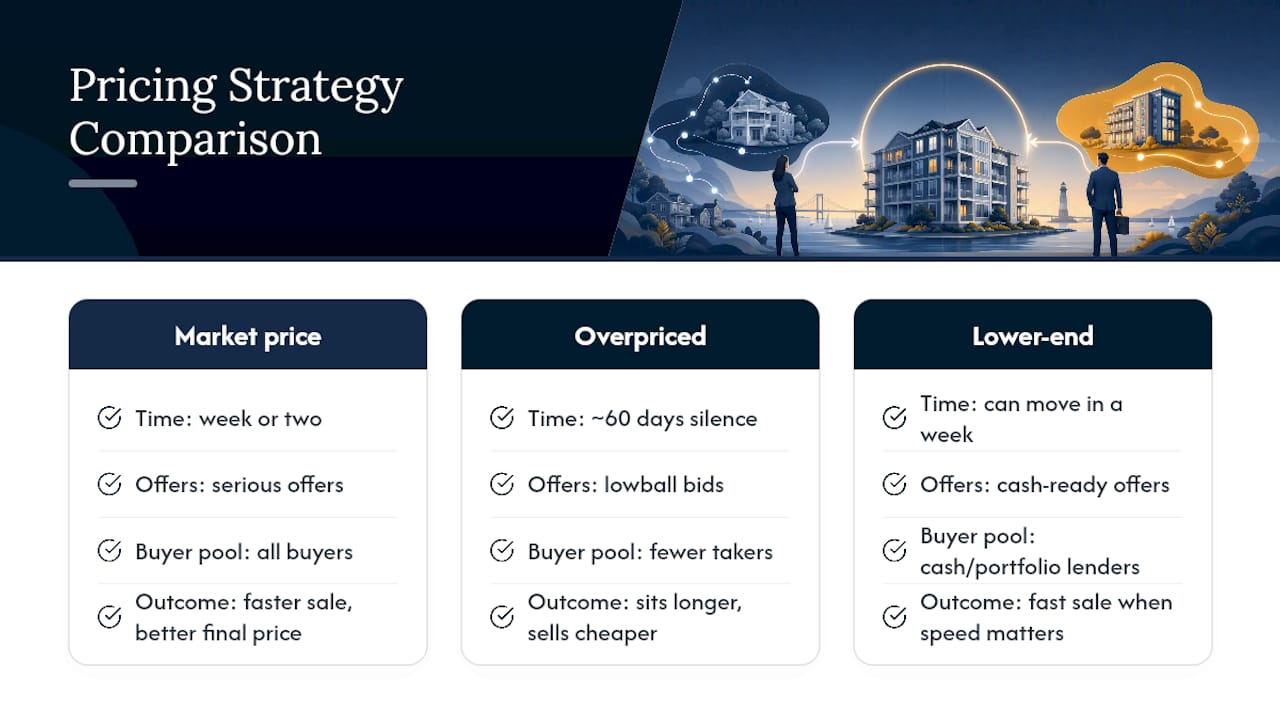
Overpricing is the single biggest reason condos sit. A unit priced to the actual market, not to what you hope it’s worth, attracts serious offers in the first week or two instead of drawing lowball bids after 60 days of silence.
Correct pricing from day one is the biggest lever you control over how fast your condo sells, according to HomeLight’s guidance on condo sales, which also notes that top-performing agents consistently sell homes faster and for more money than average agents by nailing this step early.
Comps get trickier with condos than with single-family homes because building-specific issues change who can even buy the unit. If your building is non-warrantable, meaning it has deferred maintenance, an underfunded reserve fund, or a pending structural report, standard comps from financeable units in similar buildings won’t apply to you. You need to look at what cash-only-ready units in comparable non-warrantable buildings actually sold for, not what a move-in-ready unit in a healthy building fetched.
Non-warrantable status often requires pricing adjustments below warrantable equivalents, since the buyer pool shrinks to cash buyers and portfolio lenders willing to work outside conventional guidelines. That’s not a penalty for bad luck, it’s the market pricing in the financing risk your building carries.
If you have the time, a conversation with an agent who specializes in condos and pulls accurate comps can sharpen your number. But if speed is the priority, price toward the lower end of what comparable cash-ready units have sold for. A slightly conservative number that moves in a week beats an optimistic one that sits for two months and eventually sells for less anyway.
Condo-Specific Issues That Force Cash Buyers or Slow Sales
Condos carry baggage single-family homes don’t: an HOA, shared reserves, and a building-wide financial picture that lenders scrutinize before approving anyone’s mortgage. Surface these issues before you market the unit, not after a buyer’s lender finds them.
Buyers and their lenders will ask for:
- Current HOA budget and most recent financial statements
- Reserve fund balance and the percentage funded relative to the building’s needs
- CC&Rs (covenants, conditions, and restrictions) governing the unit and building
- Recent board meeting minutes, especially any mentioning litigation, assessments, or major repairs
- Any pending or recently completed special assessment notices
- Structural or engineering reports, particularly for older buildings
Warrantability is the term that determines whether a conventional lender will finance a unit at all. A building becomes non-warrantable when too many units are rented out, when a single entity owns too large a share of the units, when litigation is pending against the HOA, or when reserves are too thin to cover expected repairs. If your building falls into that category, most financed buyers are automatically disqualified before they ever tour the unit.
Special assessments and structural reports compound the problem. A building facing a $2 million facade repair, split across owners, will scare off buyers who’d otherwise be interested, regardless of how nice your individual unit looks. According to Redfin’s guide to selling a condo, gathering HOA documents and disclosing financial issues early, rather than letting them surface during a buyer’s due diligence, is one of the clearest ways to keep a deal from falling apart midstream.
The fix is simple: request every one of these documents before you list or reach out to buyers. Know your building’s warrantability status before someone else finds out for you.
Quick Prep vs. Sell As-Is: What Small Fixes Help and What to Skip
You don’t need a renovation to sell fast. You need to know which five hours of work actually move the needle and which weeks of work don’t.
High-impact, low-effort fixes worth doing:
- Declutter every room and clear countertops
- Deep clean, especially kitchens, bathrooms, and any pet-related odors
- Touch up obvious paint scuffs and nail holes
- Take clear, well-lit photos, even phone photos beat dark, cluttered ones
Staging and clean photography measurably increase buyer interest, even on a compressed timeline. It takes an afternoon, not a contractor.
Skip repairs that require permits, contractors, or more than a weekend, like flooring replacement, kitchen remodels, or bathroom updates. Those investments rarely pay back their cost when you’re optimizing for speed, and they delay your listing while you wait on materials or labor.
If you’re selling as-is, say so clearly in your listing and disclosures. Buyers who know upfront that a unit is being sold in current condition don’t come back later demanding repairs or price reductions when their inspector finds the same issues you already knew about. Transparency here prevents the renegotiation that eats up the most time in a slow sale.
Pro Tip: If you’re deciding between a quick cosmetic pass and going fully as-is, ask yourself one question: would this fix change a buyer’s financing decision? If not, skip it and put your energy into paperwork instead.
Closing Logistics and Realistic Timelines
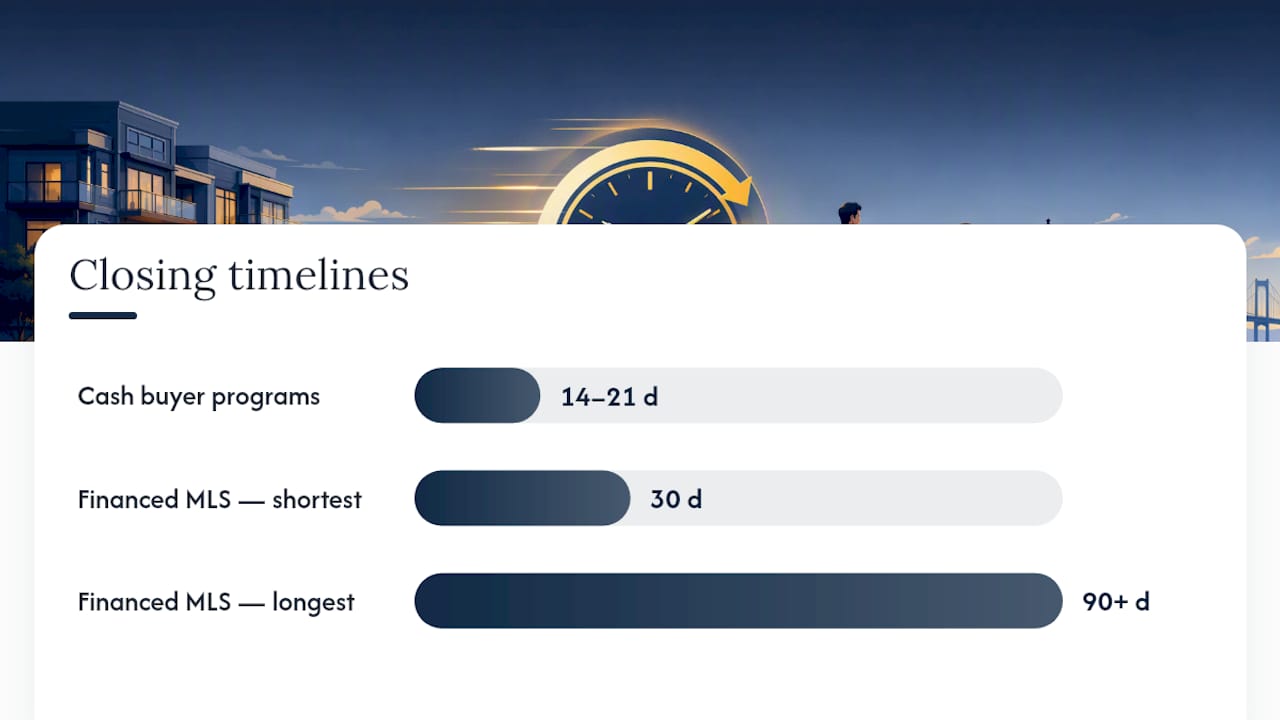
Set your expectations by sale type. Cash buyer programs typically close in 14 to 21 days, sometimes faster when title is clean and HOA paperwork is already in hand. A traditional financed MLS sale runs 30 to 90-plus days once you account for listing time, buyer financing, appraisal, and inspection negotiations.
Rhode Island is an attorney-closing state, meaning a real estate attorney, not a title company alone, leads the closing process, handling title searches, municipal record checks, and fund disbursement. Engaging that attorney early, ideally the same week you accept an offer, shaves days off the back end because they’re not starting title work cold at the last minute.
The most common closing-day headaches:
- Title issues discovered late, like unresolved liens or boundary disputes, mitigated by ordering a title search immediately after contract signing
- HOA paperwork delays, mitigated by requesting resale packages the day you list or accept an offer
- Payoff timing mismatches, mitigated by contacting your mortgage servicer early to confirm the exact payoff figure and any prepayment terms
On closing day itself, have your government ID, payoff authorization, and any HOA clearance letters ready. Confirm with your attorney the morning of that all figures match the closing statement. Discrepancies between preliminary and final numbers are one of the most frequent last-minute complications, and catching them a day early beats catching them at the closing table.
Risks and Red Flags: How to Vet Fast Cash Buyers and Avoid Scams
Speed attracts opportunists along with legitimate buyers. Knowing what a real offer looks like protects you from losing time, or worse, losing money, to someone who isn’t serious.
Watch for these red flags:
- Pressure to sign within hours with no time to review terms
- No written offer, everything communicated verbally or informally
- Vague or hidden fees mentioned only after you’ve committed
- No proof of funds or an unwillingness to provide one
Before you sign anything, require a written offer, documented proof of funds, and clear escrow or title instructions naming a real title company or attorney. If your buyer resists involving an attorney or title agent to handle funds, that’s a signal to slow down, not speed up.
Ask every buyer directly: Who holds the earnest money? Which title company or attorney handles closing? Can you provide a recent proof-of-funds letter? A legitimate buyer answers all three without hesitation. Having your own closing attorney involved from the start protects your funds regardless of how the other side operates.
If a buyer can’t or won’t answer those questions, or keeps changing terms after you’ve verbally agreed, walk away. A fast sale isn’t worth a bad one.
How Rhody Home Buyer Fits Into the Fast-Sale Path
Rhody Home Buyer buys condos and homes across Rhode Island as-is, which means no repairs, no cleaning, and no staging required before you get an offer. Offers are based on After Repaired Value, a transparent way of pricing that accounts for what the unit would be worth fixed up, minus the cost of getting it there.
Because Rhode Island requires an attorney-led closing, Rhody Home Buyer coordinates directly with a closing attorney from the start, which keeps title work, HOA paperwork, and fund disbursement moving in parallel instead of stacking up sequentially. That’s the same principle covered earlier: parallel action beats sequential waiting.
Contact Rhody Home Buyer and you can expect a straightforward exchange: you share the unit’s condition and any HOA or assessment details, and you get a no-obligation written offer with a proposed timeline back. There’s no pressure to accept, and no fees deducted from a final number that surprise you later. For sellers dealing with a non-warrantable building, an urgent deadline, or a unit that needs work they don’t have time to do, that directness is the entire point.
What Actually Matters When You Need to Sell Fast
Most advice on selling a condo quickly focuses on staging tips and listing photos, as if the biggest obstacle between you and a fast close is a cluttered countertop. It isn’t. The real bottleneck, almost every time, is paperwork: HOA documents nobody requested until week three, a payoff figure nobody confirmed until the week of closing, a warrantability problem nobody flagged until a lender’s underwriter found it.
The sellers who close fastest aren’t the ones with the best-staged units. They’re the ones who pulled their HOA financials, reserve fund statements, and mortgage payoff on day one and let the paperwork run in parallel with everything else. That’s not a glamorous insight, but it’s the one the evidence actually supports.
If your building has any warrantability question mark, skip the guessing game entirely and go straight to cash buyers who don’t need lender approval. That’s not a compromise. For a lot of condo sellers, it’s the only route that was ever going to work.
— Dave
Ready to Sell? Here’s How to Reach Rhody Home Buyer
If you’ve read this far, you probably already know a traditional listing isn’t the right fit for your timeline. Rhody Home Buyer is the direct alternative: no agent commissions, no repair list, no waiting on a buyer’s financing to fall through at week six. You get a straight cash offer based on your condo’s After Repaired Value, and you decide whether it works for you.

Before you reach out, have a few things handy: your unit’s address, your mortgage payoff balance, your HOA’s contact information, and a quick, honest rundown of the unit’s condition. That’s enough for Rhody Home Buyer to put together a written, no-obligation offer with a realistic closing timeline, and because Rhode Island requires attorney-led closings, that attorney coordination starts right away rather than after you’ve already signed.
There are no hidden fees subtracted from your final number, and no pressure to accept if the offer doesn’t work for your situation. If you’re ready to see what a fast, as-is cash offer looks like for your condo, start the process with Rhody Home Buyer today, or see exactly how the closing process works before you make a decision.
Sources
For deeper detail on the specifics covered here, HomeLight’s condo-selling guide breaks down pricing strategy, and Redfin’s condo guide covers HOA documentation and staging in more depth. Pure Equity Realty’s piece on warrantability explains how building-level financing issues affect your buyer pool, using South Florida examples that illustrate the broader principle. For Rhode Island specifics on attorney-led closings, McCormick Law’s closing attorney resource walks through what the attorney actually does and when to bring one in.
- 8 Tips for Selling Your Condo in 2026’s Real Estate Market
- How to Sell a Condo the Smart Way | Redfin
- Real Estate Closing Attorney RI | McCormick Law